Top 10 Best Greek Yogurt Brands in India 2026, Ranked on the Label
Ten plain Greek yogurts and skyrs you can buy in India, compared on what's in the cup: how much protein, how much sugar, what's been added to thicken it, and what each 10 g of protein really costs.
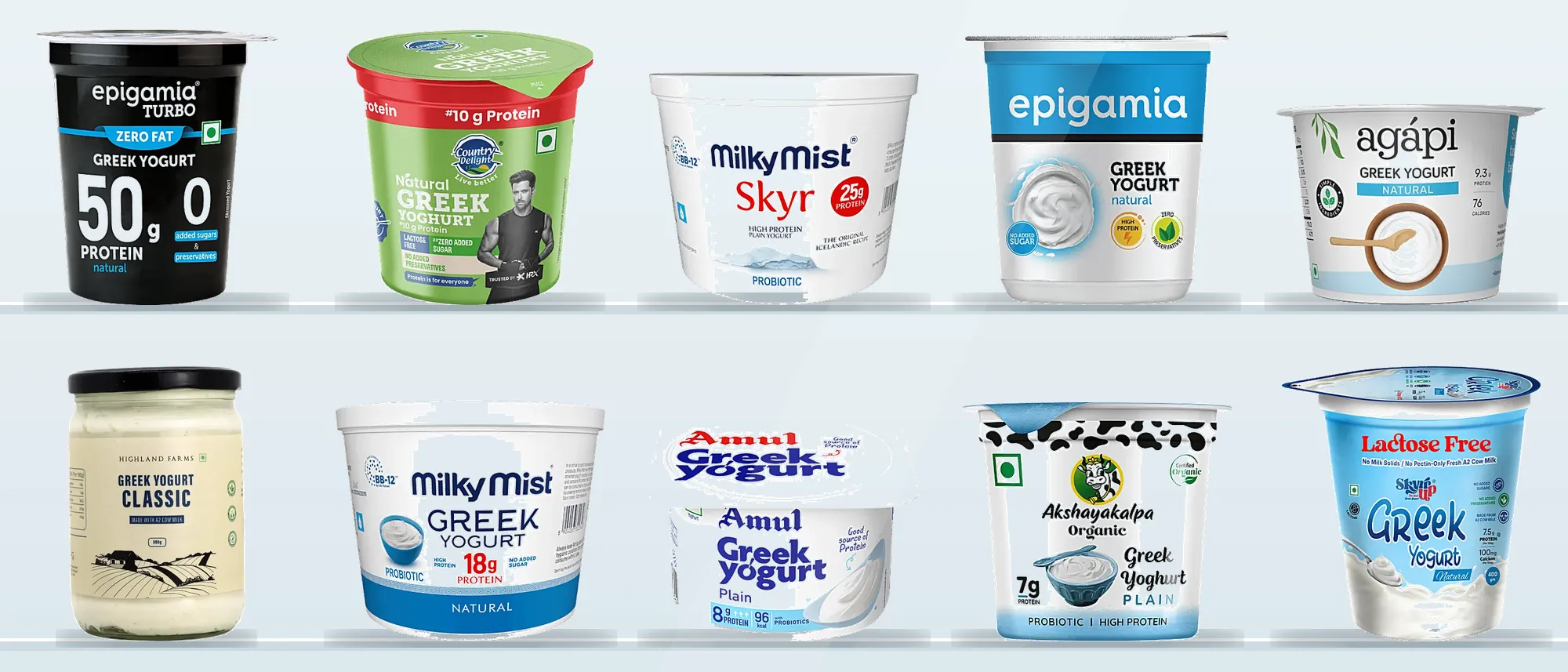
All ten picks. Pack images from retailer and brand listings.
The best Greek yogurt in India for most people is Epigamia Turbo Natural: 12 g of protein per 100 g, only 4 g of sugar, almost no fat and no added sugar, for about ₹6 per 10 g of protein. Country Delight's 10 g Protein Natural is the best lactose-free pick, Milky Mist Skyr is the cheapest high-protein cup, and Epigamia Natural is the plain Greek yogurt you'll find everywhere. Always buy plain: flavoured "Greek" cups can carry 10–18 g of added sugar per 100 g. And if protein per rupee is all you care about, plain dahi you strain at home still costs less than half.
- Best overall
- Epigamia Turbo Natural
- Best lactose-free
- Country Delight 10g Protein
- Cheapest high protein
- Milky Mist Skyr
- Easiest to find
- Epigamia Natural
- Lowest sugar per cup
- Agapi Natural
- Best traditional full-fat
- Highland Farms A2 Classic
- Best budget tub
- Milky Mist Natural Greek
- Cheapest single cup
- Amul Plain Greek
- Best organic
- Akshayakalpa Organic
- Best A2, lactose-free tub
- Skyrrup Natural
Researched by the Naked Compound Research Team · Last updated · Ranked on published nutrition panels, ingredient lists, brand and retailer listings and Indian prices. Not lab-tested, and no brand paid for a place.
On this page
Top 10 Greek yogurt brands in India 2026: at a glance.
| Greek yogurt (plain) | Protein | Sugar* | Fat | What's in it | ₹ / 100 g | ₹ / 10 g protein |
|---|---|---|---|---|---|---|
| Epigamia Turbo Natural | 12 g | 4 g | 0.1 g | Skimmed milk, pectin, cultures | ~₹76 | ~₹6.3 |
| Country Delight 10g Protein | 10.5 g | 6 g | 4.5 g | Milk, lactase, culture | ₹50–55 | ₹4.8–5.2 |
| Milky Mist Skyr | 11 g | 9.5 g | 1.5 g | Skimmed milk, milk solids, cultures | ₹45–71 | ₹4.1–6.5 |
| Epigamia Natural | 8 g | 2.9 g | 2.2 g | Not on retailer listing | ₹56–63 | ₹7.0–7.8 |
| Agapi Natural | 9.3 g | 2.6 g | 2.0 g | Not on retailer listing | ₹52–60 | ₹5.6–6.5 |
| Highland Farms A2 Classic | 10 g | 1.5 g | 15.3 g | A2 cow milk, cultures | ~₹118 | ~₹11.8 |
| Milky Mist Natural Greek | 8 g | 9.5 g | 2.2 g | Not on retailer listing | ₹33–50 | ₹4.2–6.3 |
| Amul Plain Greek | 8 g | 9.3 g | 3.0 g | Not on retailer listing | ₹40 | ₹5.0 |
| Akshayakalpa Organic | 7.8 g | 7.6 g | 3.9 g | Organic cow milk, cultures | ₹67–70 | ₹8.5–9.0 |
| Skyrrup Natural | 7.5 g | 3.8 g | 4.0 g | A2 cow milk; no milk solids or pectin (pack) | ₹62–69 | ₹8.3–9.2 |
All values per 100 g from the brand's nutrition panel. *Total sugar is milk sugar (lactose, or glucose and galactose in lactose-free products); none of the ten has added sugar. Prices from BigBasket sale price and MRP and brand stores, checked 8 October 2026. Prices change weekly and depend on pack size and city.
Five years ago "Greek yogurt" in India meant one brand in a blue cup. Now the chiller at any quick-commerce dark store has a dozen: Epigamia, Milky Mist, Amul, Country Delight, Akshayakalpa and newer names like Agapi and Skyrrup, plus skyr and "protein yogurt" tubs with 50 g of protein printed in huge type.
The labels make them look interchangeable. They aren't. Protein in plain Greek yogurt ranges from 7.5 g to 12 g per 100 g, sugar from 1.5 g to 9.5 g, fat from almost none to 15 g, and the price of 10 g of protein varies nearly three-fold. Some top lists still recommend brands that aren't sold here any more: Danone shut its Indian dairy business in 2018. [2]
So we read the labels. We looked at every plain Greek yogurt and skyr we could find on BigBasket's Greek yogurt shelf and on brand stores in October 2026, took protein, sugar, fat and ingredients from each nutrition panel, worked out the price per 10 g of protein, and ranked the ten that are worth buying. We haven't lab-tested them, and none of the brands publishes an independent protein test.
"Read the nutrition panel, not the front of the cup. Protein up, sugar down is what straining does. If the sugar is as high as plain dahi's, the cup was probably thickened some other way."— Naked Compound Research Team
Four checks, no sponsored slots.
Grams per 100 g
The reason to pay more than you would for dahi. We use the per-100 g figure, not the "50 g protein" printed for a whole tub.
Added and total
Only plain, no-added-sugar products made the list. Lower total sugar for the same protein usually means more whey was strained off.
What thickened it
Milk and cultures is the gold standard. Milk solids, pectin or protein concentrates aren't harmful, but they mean the cup wasn't thickened by straining alone.
₹ per 10 g of protein
Cup sizes run from 85 g to 700 g, so we compare the cost of 10 g of protein. And it has to be easy to buy, ideally on a quick-commerce app.
Greek yogurt vs curd: what's the difference?
Greek yogurt is curd with a lot of its liquid removed. Traditionally that's done by straining dahi through cloth, which is exactly how Indian kitchens make hung curd and shrikhand. The whey that drips out takes water, lactose and some minerals with it, so what's left is thicker, higher in protein and lower in milk sugar. Industrial makers get a similar texture faster by adding milk solids, milk protein or a thickener such as pectin instead of draining whey.
| Per 100 g | Plain dahi (curd) | Strained Greek yogurt, low-fat | Strained Greek yogurt, whole milk |
|---|---|---|---|
| Protein | 3.5–4 g | ~10 g | ~9 g |
| Total sugar (lactose) | 4.6–4.7 g | ~3.6 g | ~4 g |
| Fat | 3.1–3.3 g | ~1.9 g | ~5 g |
| Energy | 61–65 kcal | ~73 kcal | ~97 kcal |
| Texture | Spoonable, sets in a bowl | Thick, stands on a spoon | Thick and rich |
| Price per 10 g protein | ~₹1.9 (Amul Masti dahi) | ₹4–12 for the brands on this list | |
Dahi: Amul Masti Dahi label and USDA plain whole-milk yogurt. Greek yogurt: USDA reference values for plain strained Greek yogurt. [1] [14]
Greek yogurt's protein is mostly casein, the slow-digesting milk protein. That's why it keeps you full and why some lifters eat it at night; our casein evidence page covers what that does and doesn't do. If you're vegetarian and struggle to reach your protein target, a cup of Greek yogurt is one of the easiest 8–12 g to add. See the Pure-Veg protocol for where it fits in a whole day.
The 10 best Greek yogurt brands in India, reviewed.
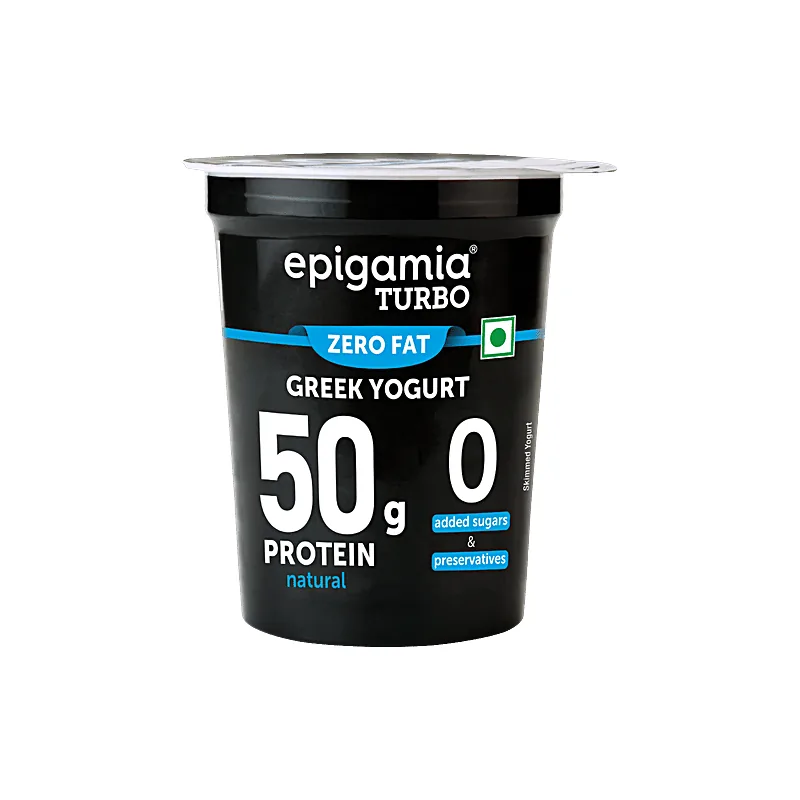
Epigamia Turbo 50 g Protein Yogurt, Natural
The highest-protein plain yogurt we found in India, and the best balance of everything we measure. Each 100 g has 12 g of protein, 4 g of milk sugar and essentially no fat, so almost all of its 65 kcal come from protein. The low sugar for that much protein suggests a lot of whey has been removed. The tub's "50 g protein" headline is for the whole 430 g, which is about four servings, not one. At ₹325 a tub it's about ₹6 per 10 g of protein: not the cheapest, but very good for what you get.
Ingredients: skimmed milk, pectin, permitted lactic acid culture. Watch for: pectin is a fruit fibre used to firm the texture. It's harmless, but it means this isn't thickened by straining alone. Zero fat makes it tangy; stir in fruit or a little honey. Epigamia's flavoured Turbo cups (15 g protein, 140 g) are a different product. [3]
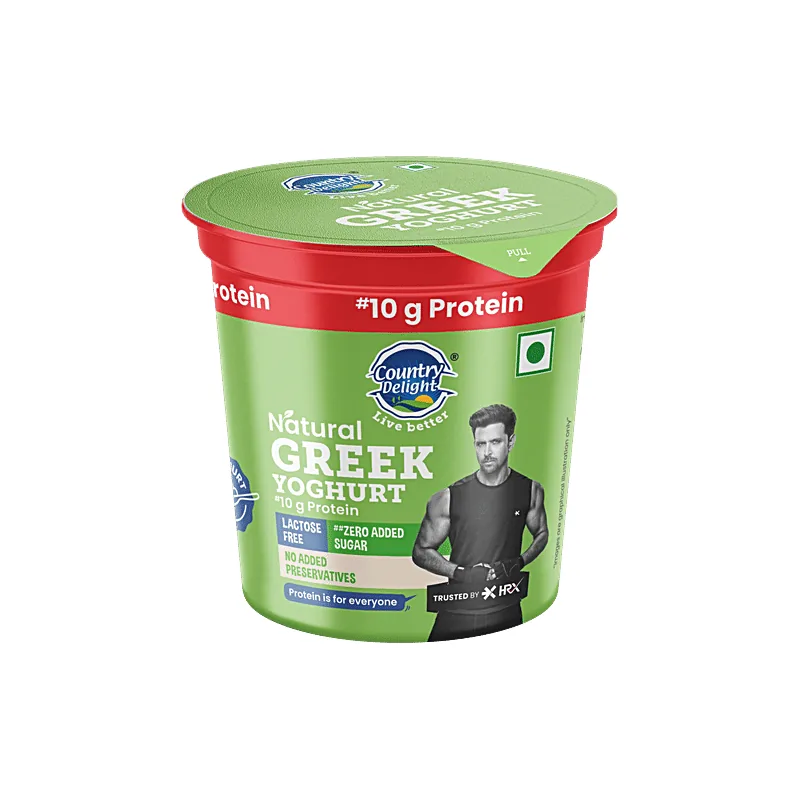
Country Delight 10g Protein Natural Greek Yoghurt
The cleanest high-protein label on the list, and the one to buy if milk upsets your stomach. There are just three ingredients: pasteurised milk, lactase (the enzyme that breaks down milk sugar) and culture, giving 10.5 g of protein per 100 g. The lactase brings lactose below 0.1 g. The 6 g of "sugar" on the panel is the glucose and galactose that lactose splits into, not added sugar. With 4.5 g of fat it's creamier than Epigamia Turbo, and one cup costs about ₹5 per 10 g of protein.
Ingredients: pasteurised milk, enzyme (β-galactosidase), active lactic culture. Watch for: sold mainly through Country Delight's own app and quick-commerce, so availability depends on your city. Mango and blueberry versions add fruit. [4]
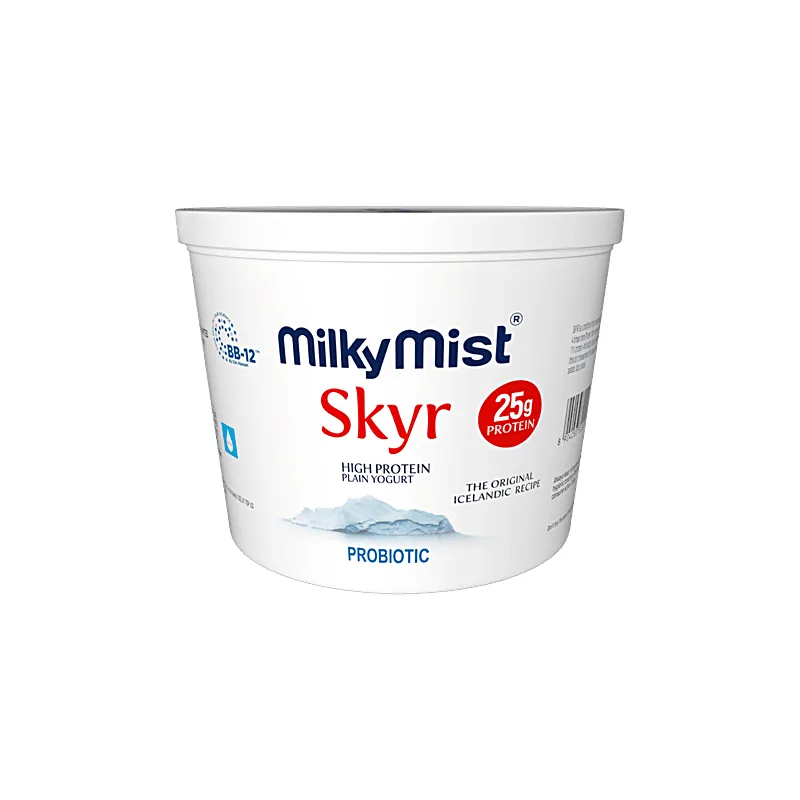
Milky Mist Skyr High Protein Plain
Skyr is Iceland's version of strained yogurt, traditionally made from skimmed milk and even thicker than Greek. Milky Mist's has 11 g of protein and only 1.5 g of fat per 100 g. The 100 g cup is the cheapest way on this list to buy 10 g of protein, at about ₹4. The catch is on the ingredient list: it adds milk solids. That explains why its milk sugar (9.5 g) is as high as plain dahi's in proportion to protein. It isn't added sugar, but a strained skyr would have less.
Ingredients: pasteurised skimmed milk, milk solids, active lactic culture, probiotic culture. Watch for: the 100 g cup is much cheaper per gram than the 225 g tub. Also high in calcium (314 mg per 100 g). Strong in South India; patchier in the north. [5]
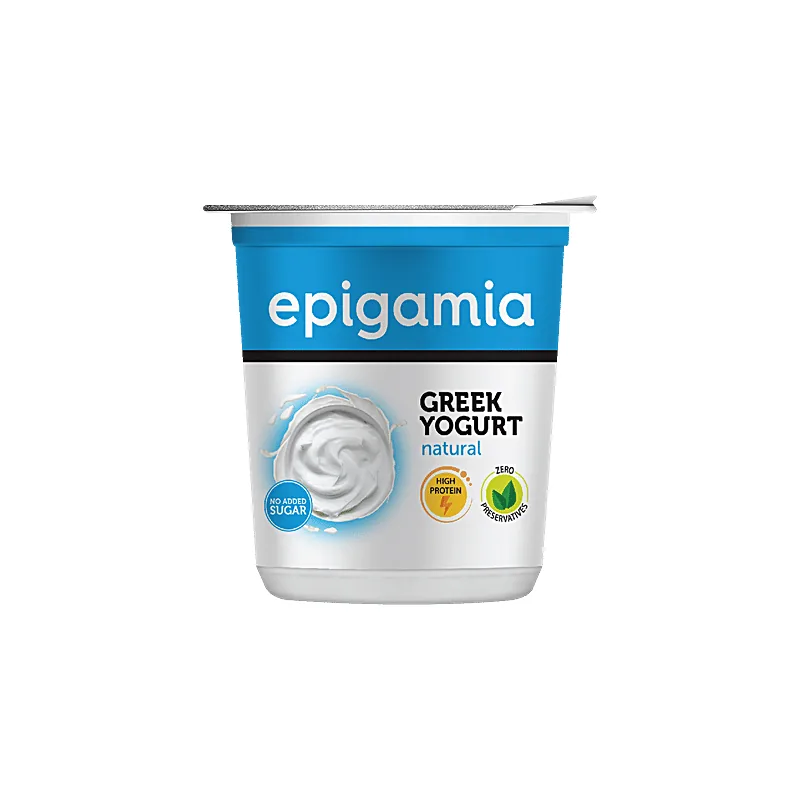
Epigamia Greek Yogurt, Natural
The Greek yogurt most Indians have actually tried, sold in nearly every quick-commerce app and supermarket chiller. The plain 400 g tub has 8 g of protein, just 2.9 g of milk sugar and 2.2 g of fat per 100 g. That low sugar is a sign of a properly concentrated yogurt, and it gives the mild, not-too-sour taste Epigamia is known for. It's the default choice for raita, dips and smoothies. It ranks below the top three only on protein and price.
Watch for: the small 85 g cup has slightly less protein (about 7 g per 100 g) and costs more per gram than the tub. Epigamia's ingredient list wasn't shown on the retailer or brand listing we checked. Most of the range is flavoured, so pick the white-and-blue "Natural". [6]
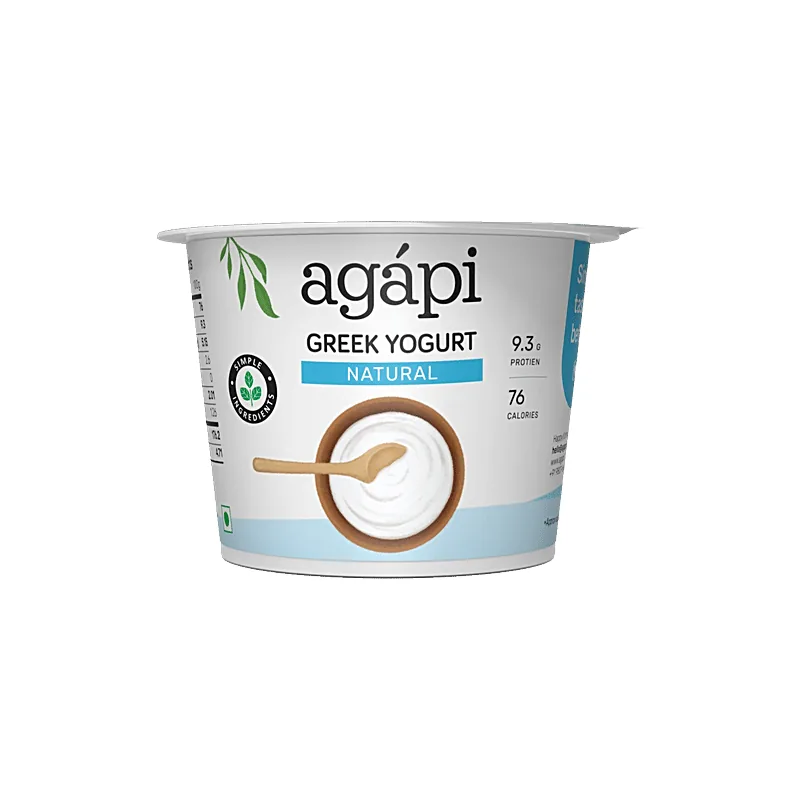
Agapi Natural Greek Yogurt
A smaller brand with one of the best panels on the shelf: 9.3 g of protein and only 2.6 g of milk sugar per 100 g, with 2 g of fat. That's more protein than Epigamia Natural at a similar price, and the ratio of sugar to protein is as low as the USDA's reference for strained Greek yogurt, which points to a well-strained product. It would rank higher if it were easier to find and if the full ingredient list were published.
Watch for: the retailer listing gives nutrition but not ingredients, and availability is mostly BigBasket in larger cities. Flavoured cups (blueberry, mango) are separate products. [7]
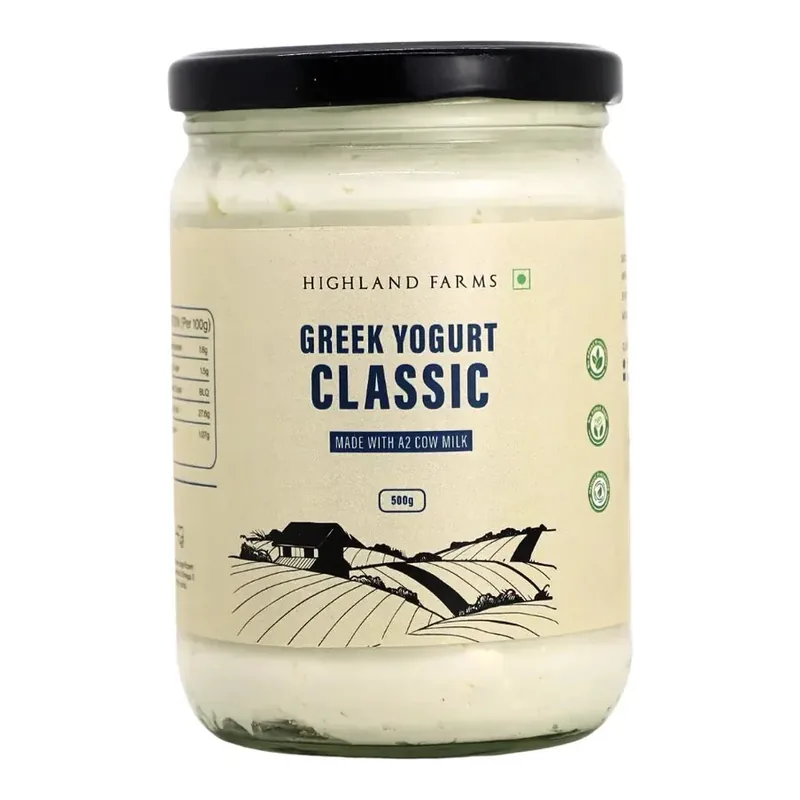
Highland Farms A2 Greek Yogurt Classic
The closest thing here to the thick, rich Greek yogurt of a Mediterranean café. It's made only from A2 cow milk and live cultures and strained the traditional way, and the panel shows it: 10 g of protein and just 1.5 g of milk sugar, the lowest on the list. But it's also full-fat (15.3 g per 100 g) and 184 kcal, more than twice the calories of Epigamia Turbo, and the most expensive protein here. Buy it for taste and a clean label, not for a lean protein snack.
Ingredients: A2 cow milk, live cultures. Watch for: same-day delivery in Delhi NCR only. The "A2" claim is about the milk's beta-casein type; the evidence that A2 milk is easier on digestion than ordinary milk is still limited. [8]
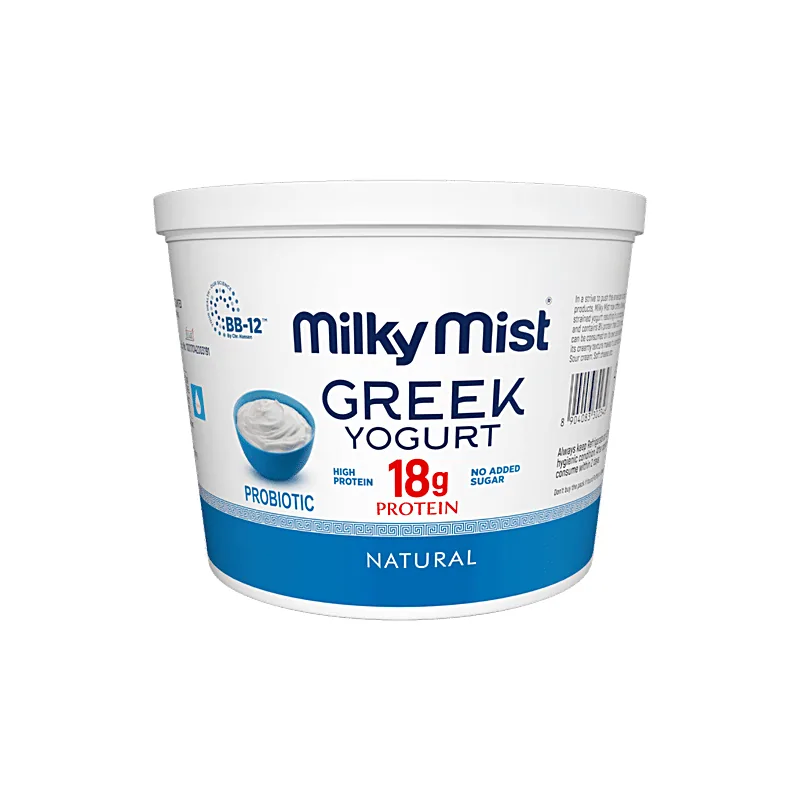
Milky Mist Natural Greek Yogurt
The cheapest plain Greek yogurt per kilo on this list: the 225 g tub costs about ₹33–36 per 100 g. Protein is the same as Epigamia Natural (8 g), but milk sugar is more than three times higher (9.5 g vs 2.9 g). That ratio of sugar to protein is the same as plain dahi's, which suggests the thickness comes from concentrating milk or adding milk solids rather than draining much whey. It's still no-added-sugar and a good, cheap base for raita, marinades and smoothies.
Watch for: ingredients weren't on the listing we checked. The 225 g tub is cheaper per gram than the 700 g tub at current prices. Flavoured Milky Mist Greek cups (honey fig, blueberry, mango) add sugar. [9]
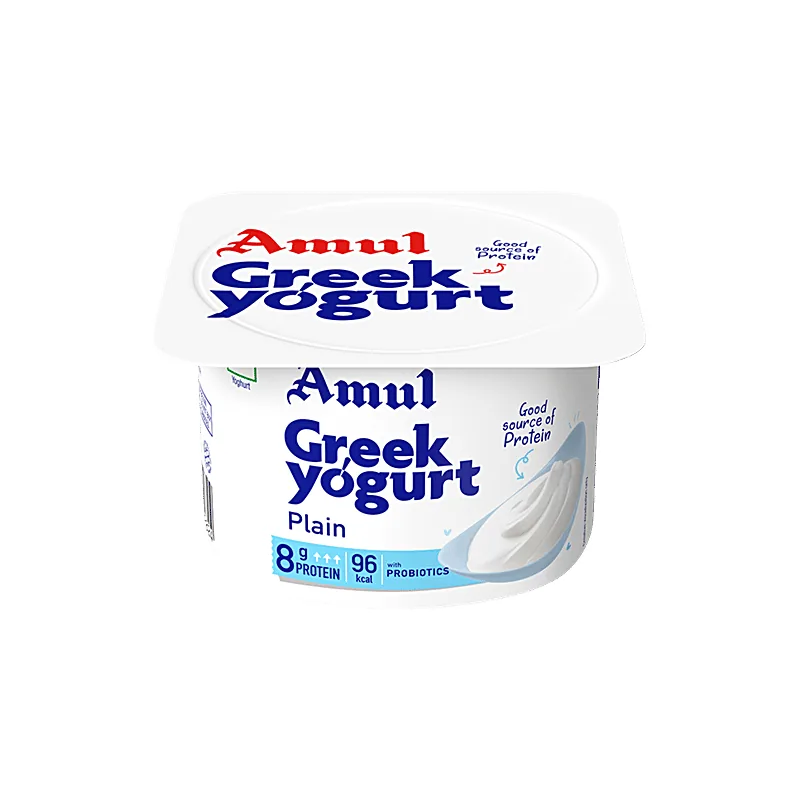
Amul Plain Greek Yogurt
Amul's newer plain Greek yogurt is the cheapest single cup on the list at ₹40, and it will likely become the easiest to find once Amul's distribution catches up. Nutritionally it's almost identical to Milky Mist Natural: 8 g of protein, 9.3 g of milk sugar and 3 g of fat per 100 g, with a good 253 mg of calcium. Like Milky Mist, the sugar-to-protein ratio looks more like thickened dahi than strained yogurt.
Watch for: ingredients weren't on the listing we checked. Don't confuse it with Amul's flavoured "Flaavyo" yogurts or Masti dahi. [10]
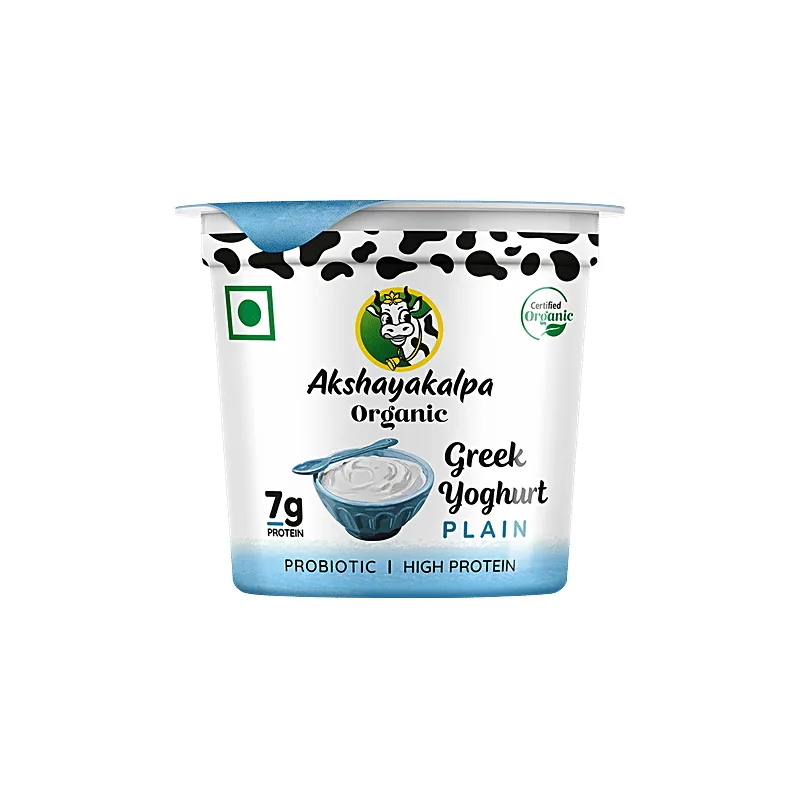
Akshayakalpa Organic Greek Yoghurt, Plain
The pick for people who want organic milk and nothing else. Akshayakalpa lists only organic cow milk plus starter and probiotic cultures. Per 100 g it gives about 7.8 g of protein, 7.6 g of milk sugar and 3.9 g of fat (the label gives figures per 90 g cup). It's one of the more expensive ways to buy protein here, and it's mainly delivered in three southern cities. A good, honest product, not a high-protein one.
Ingredients: organic cow milk (pasteurised), starter culture, probiotic culture. Watch for: 15-day shelf life. The mango version adds organic honey. [11]
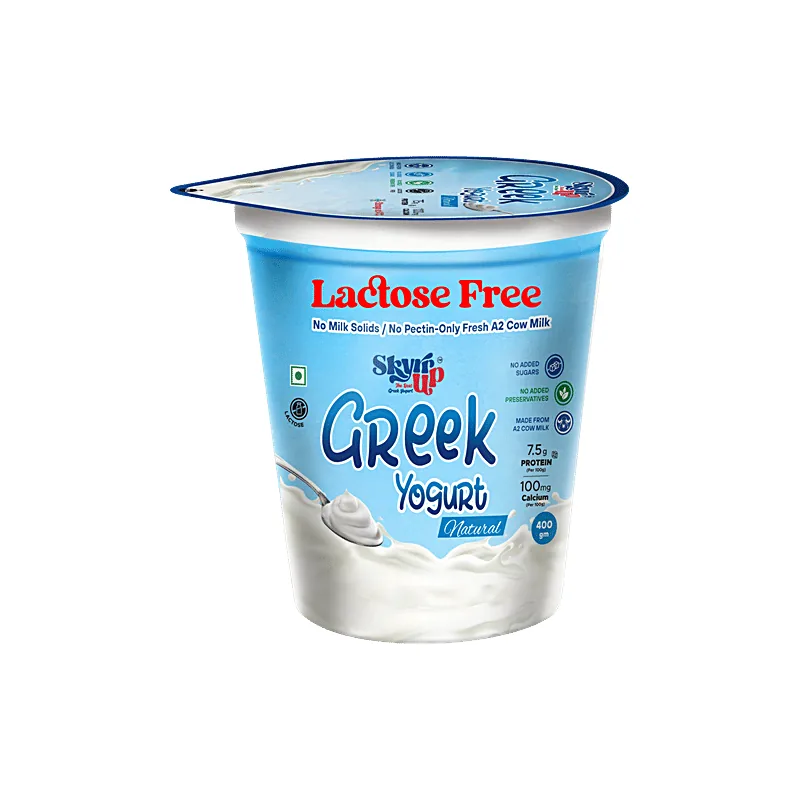
Skyrrup Natural Greek Yogurt
A newer brand whose tub makes three promises: lactose-free, made only from fresh A2 cow milk, and "no milk solids, no pectin". The panel backs up the no-shortcuts claim: 3.8 g of sugar against 7.5 g of protein is a strained-yogurt ratio. Protein is the lowest on our list and the price per gram is high, so it's for people who want a lactose-free tub without additives rather than maximum protein.
Watch for: the claims come from the pack; we couldn't find a published ingredient list. Limited availability. [12]
Didn't make the list: Yoghino Plain (about 5.3 g protein per 100 g, barely more than dahi), Nestlé a+ Grekyo and Hatsun Greek (flavoured only on the shelf we checked; see below). Not sold in India any more, despite appearing on other lists: Danone, which closed its Indian dairy business in 2018. [2] We couldn't find a Mother Dairy Greek yogurt in national listings in October 2026; its range is dahi and probiotic yoghurt.
How much protein is in Greek yogurt? Brand by brand.
Plain Greek yogurt in India runs from 7.5 g to 12 g of protein per 100 g, two to three times more than dahi. A typical 100 g cup gives 8–12 g. Research on muscle building suggests about 0.4 g of protein per kg of body weight per meal, or 25–30 g for a 70 kg adult [15], so one cup is a good snack, not a full meal's worth.
From each product's nutrition panel. None has added sugar; the sugar bar is milk sugar. Hatched rows are references.
Values per 100 g as protein · sugar. Sources: product labels on BigBasket and brand stores, October 2026 [3]–[12]; USDA [1]; Amul Masti Dahi [14].
Strained or thickened? The sugar tells you.
Indian labels don't say how a "Greek" yogurt was made, but the nutrition panel gives it away. When yogurt is strained, the whey that drains out carries lactose with it, so protein goes up and milk sugar goes down. When yogurt is thickened by adding milk solids or by concentrating milk, the lactose stays: protein and sugar rise together.
Both start as cultured milk. What happens next decides how much sugar is left for each gram of protein.
Whey drains out
- Water, lactose and some minerals leave with the whey
- Protein per 100 g roughly doubles
- Milk sugar goes down
Highland, Agapi, Epigamia, Skyrrup
Solids or thickener go in
- Milk powder, milk protein or pectin adds body
- Protein per 100 g goes up
- Lactose stays, so sugar goes up too
Milky Mist Greek, Amul, Milky Mist Skyr
This is a pattern, not proof: concentration methods vary, and lactase-treated yogurts (Country Delight) still show their split milk sugars. Neither way is unsafe. Strained yogurt simply gives you more protein for less sugar.
Lower is better. The shaded zone (up to 5 g) is where strained yogurt normally sits; USDA's strained Greek yogurt is 3.6 g. Plain dahi is 11.5 g.
Calculated as total sugar ÷ protein × 10, from each label. [1] [3]–[12] [14]
Greek yogurt price in India: what 10 g of protein costs.
Most plain Greek yogurt costs ₹35–75 per 100 g. That's an unhelpful number on its own, because the protein inside varies so much. Here's what you pay for every 10 g of protein, from the cheapest pack size to MRP.
Solid bar: lowest price we found (sale or best pack size). Striped extension: up to MRP or the dearer pack size.
Prices from BigBasket and brand stores on 8 October 2026; sale prices change weekly. [3]–[12] [14]
Greek yogurt is a convenient way to buy protein, not a cheap one. Plain dahi gives you 10 g of protein for under ₹2, and straining it yourself (below) gets you most of the way to Greek yogurt for the same money. If cost per gram of protein is your main concern, whey is cheaper still: see our budget whey picks. For a 30 g protein breakfast built on Greek yogurt, try our high protein overnight oats.
Why to skip flavoured Greek yogurt: it's dessert.
Fruit and sugar take up room in the cup, so flavoured Greek yogurts have less protein and a lot more sugar. These are real panels from the same shelf, per 100 g:
6 g protein, 22 g total sugar, 157 kcal. About four teaspoons of added sugar in a 100 g cup. [13]
4.8 g protein, 11.7 g total sugar, 109 kcal. Less protein than plain dahi with jam. [13]
8 g protein, 2.9 g milk sugar, 77 kcal. Add your own fruit and you still come out far ahead. [6]
If you want it sweet, add half a banana, a few berries or a teaspoon of honey to a plain cup. You control the amount, and you keep the protein. Several brands now sell "no added sugar" fruit versions too; check that the protein is still above 7 g.
How to make hung curd at home (Greek yogurt for less).
Hung curd is strained dahi, the same process as traditional Greek yogurt. Starting from 1 kg of ordinary dahi (about ₹77, with roughly 40 g of protein), you'll get about 450–550 g of thick hung curd with around 7–8 g of protein per 100 g. That's our estimate: some protein is lost in the whey, and the result depends on how long you strain.
Line a sieve
Set a sieve over a deep bowl and line it with a double layer of muslin or a clean cotton cloth.
Add 1 kg of dahi
Spoon in plain set dahi, gather the cloth and twist gently to close it.
Strain in the fridge
Leave it 6–8 hours, or overnight for a thicker, skyr-like result. Keeping it cold stops it turning sour.
Keep the whey, store the curd
Use the drained whey in atta dough, dal or smoothies. Keep the hung curd covered and eat it within 3–4 days.
Is Greek yogurt good for you? What the research says.
It's an easy protein upgrade. Swapping a bowl of dahi for the same amount of plain Greek yogurt roughly doubles the protein for a similar number of calories. India's reference protein requirement for adults is about 0.83 g per kg of body weight a day [16], and many vegetarian diets fall short, so a daily cup is a practical fix. See our notes on protein quality for why dairy protein counts in full.
Live cultures help with lactose. Europe's food safety authority accepts that live yogurt cultures improve lactose digestion in people who don't digest lactose well; 13 of 14 human studies it reviewed found a benefit. [17] Strained Greek yogurt also has less lactose to begin with. If even that is too much, choose a lactose-free pick (Country Delight or Skyrrup). Our lactose and whey explainer covers how much lactose most people can handle.
Yogurt is linked with lower type 2 diabetes risk. A large analysis of three US cohorts plus a meta-analysis found that one serving of yogurt a day was associated with about 18% lower risk of type 2 diabetes. [18] In 2024 the US FDA allowed a "qualified" claim that eating at least 2 cups of yogurt a week may reduce risk, while stressing the evidence is limited and observational. [19] Neither applies to sugar-loaded flavoured cups by default; plain is the safer bet.
"Probiotic" on the cup is mostly a marketing word. All yogurt contains live cultures unless it's heat-treated after fermentation, but Indian packs rarely name the strains or how many survive to the use-by date. For what probiotics can and can't do, see our probiotics research summary.
For weight loss, choose low-fat plain. Epigamia Turbo has 65 kcal per 100 g, mostly from protein; a full-fat strained yogurt like Highland Farms has 184 kcal. Both are filling. Pair either with a protein-first plan like Cut Without Crashing rather than treating yogurt as a fat-loss food on its own.
Check with a doctor first if you have a milk allergy (lactose-free yogurt still contains milk protein), kidney disease and have been told to limit protein, or you're on a medically supervised diet.
Frequently asked questions about Greek yogurt in India
Which is the best Greek yogurt in India?
What is the difference between Greek yogurt and curd (dahi)?
How much protein is in Greek yogurt?
What is the price of Greek yogurt in India?
Is Greek yogurt good for weight loss?
Is hung curd the same as Greek yogurt?
Which Greek yogurt in India is lactose-free?
Epigamia vs Milky Mist vs Amul Greek yogurt: which is better?
- US Department of Agriculture. FoodData Central: Yogurt, Greek, plain, lowfat (FDC 170903); Yogurt, Greek, plain, whole milk (FDC 171304); Yogurt, plain, whole milk (FDC 171284). fdc.nal.usda.gov
- FoodNavigator-Asia. Danone to shut down dairy unit in India to focus on nutrition portfolio, 15 January 2018. foodnavigator-asia.com
- Epigamia. Turbo 50 g Protein Yogurt, Natural: nutrition panel (retail listing), price ₹325 (brand store), ingredients via foodpharmer.health. bigbasket.com; epigamiastore.com
- Country Delight. 10g Protein Natural Greek Yoghurt 100 g: nutrition panel and price; ingredients via foodpharmer.health. bigbasket.com
- Milky Mist. Skyr High Protein Plain Yogurt (100 g and 225 g): nutrition panel and price; ingredients via foodpharmer.health. bigbasket.com
- Epigamia. Greek Yogurt Natural (400 g and 85 g): nutrition panels and prices. bigbasket.com; epigamiastore.com
- Agapi. Natural/Plain Greek Yoghurt 100 g: nutrition panel and price. bigbasket.com
- Highland Farms. A2 Greek Yogurt Classic 500 g: ingredients, nutrition, price and delivery area. highlandfarms.in
- Milky Mist. Natural Greek Yoghurt (100 g, 225 g, 700 g): nutrition panel and prices. bigbasket.com
- Amul. Plain Greek Yogurt 100 g: nutrition panel and price. bigbasket.com
- Akshayakalpa. Organic Greek Yoghurt, Plain: nutrition per 90 g, ingredients, price and cities served. bigbasket.com; akshayakalpa.org
- Skyrrup. Natural Greek Yogurt 400 g: nutrition panel, pack claims and price. bigbasket.com
- Flavoured Greek yogurt nutrition panels: Hatsun Greek Yoghurt Red Cherry; Nestlé a+ Grekyo Strawberry (bigbasket.com, October 2026).
- Amul. Masti Dahi 1 kg: nutrition panel (4.0 g protein, 4.6 g sugar per 100 g) and price ₹77. bigbasket.com
- Schoenfeld BJ, Aragon AA. How much protein can the body use in a single meal for muscle-building? Implications for daily protein distribution. J Int Soc Sports Nutr. 2018;15:10. PubMed 29497353
- ICMR–National Institute of Nutrition. Nutrient Requirements for Indians (2020). nin.res.in
- EFSA Panel on Dietetic Products, Nutrition and Allergies. Scientific Opinion on the substantiation of health claims related to live yoghurt cultures and improved lactose digestion. EFSA Journal. 2010;8(10):1763. efsa.europa.eu
- Chen M, Sun Q, Giovannucci E, et al. Dairy consumption and risk of type 2 diabetes: 3 cohorts of US adults and an updated meta-analysis. BMC Med. 2014;12:215. PubMed 25420418
- US Food and Drug Administration. FDA announces qualified health claim for yogurt and reduced risk of type 2 diabetes, 1 March 2024. fda.gov
Best High Protein Oats in India
Pair them with Greek yogurt for a 25 g protein breakfast. Seven pouches ranked on the label.
Casein: the slow protein
Greek yogurt's main protein: what it does overnight and what it doesn't.
Best Whey Protein in India
When you need more protein per rupee than any yogurt can give.