Best Ice Cream Brands
in India 2026
India sweats through 8+ months of heat, yet we average just 1.6 litres of ice cream per person a year. Not because we don't love it — but because navigating a market where "frozen desserts" quietly masquerade as real ice cream is surprisingly hard. This guide cuts through the confusion: 10 brands, honest verdicts, and the one thing every Indian buyer must check before purchasing.
The label trick 90% of Indian buyers miss: "Ice Cream" vs "Frozen Dessert"
Under FSSAI regulations, real ice cream must use milk fat (dairy). A "frozen dessert" uses cheaper vegetable fat — often palm oil or coconut oil — as a substitute. Many popular products you've been buying for years are legally frozen desserts, not ice cream. The law requires manufacturers to declare which it is on the label — but in print so small, most people never notice. Before buying anything, flip the pack and look for the words "Ice Cream" or "Frozen Dessert" on the front or ingredient panel. This one check changes everything.
Why India's ice cream market is booming
The India ice cream market was valued at approximately ₹27,000–30,000 crore in 2026 and is growing at 15% annually — one of the fastest growth rates globally. The drivers are structural: rising disposable incomes, quick commerce platforms (Blinkit, Swiggy Instamart, Zepto can deliver in minutes), better cold chain infrastructure penetrating Tier 2 and 3 cities, and a young population that has grown up with global food references. Record milk output — India produced 239.3 million tonnes in 2023-24, up 63% from a decade ago — has also ensured reliable supply chains for dairy-based products.
Despite the boom, India's per capita consumption remains modest at 1.6 litres/year versus New Zealand's 28.4 litres. That gap is exactly the opportunity brands are chasing. The top six players — Amul, Kwality Wall's, Vadilal, Mother Dairy, Hatsun Agro, and Havmor/Creambell — control roughly 68–70% of the organised market. The rest is a fragmented landscape of regional champions, artisanal parlours, and international luxury brands.
Brand breakdown
Ranked by overall consumer value
There is no brand in India that comes close to Amul for sheer reach and range. Over 1 million retail touchpoints. 150+ flavours. Products starting from ₹10 and scaling up to ₹500 for premium tubs. Amul's cooperative structure — sourcing milk from 3.6 million farmer families — gives it a unique cost advantage that no private competitor can replicate.
In January 2026, Amul expanded its Creme Rich super-premium line nationwide, targeting urban consumers who want rich chocolate, kesar-pista, and butterscotch at premium quality. This move directly challenges Haagen-Dazs and Baskin-Robbins on flavour quality, at roughly half the price. The Cassatta remains a childhood nostalgia icon, the Tricone cone is ubiquitous, and the camel milk ice cream is a genuinely unique health-forward innovation you won't find anywhere else.
The one caveat: Not all Amul products are real ice cream. Some in their range — particularly the lower-priced family packs — use vegetable fat and are legally "frozen desserts." Always check the label. The premium Creme Rich range and their original kulfis use real dairy fat.
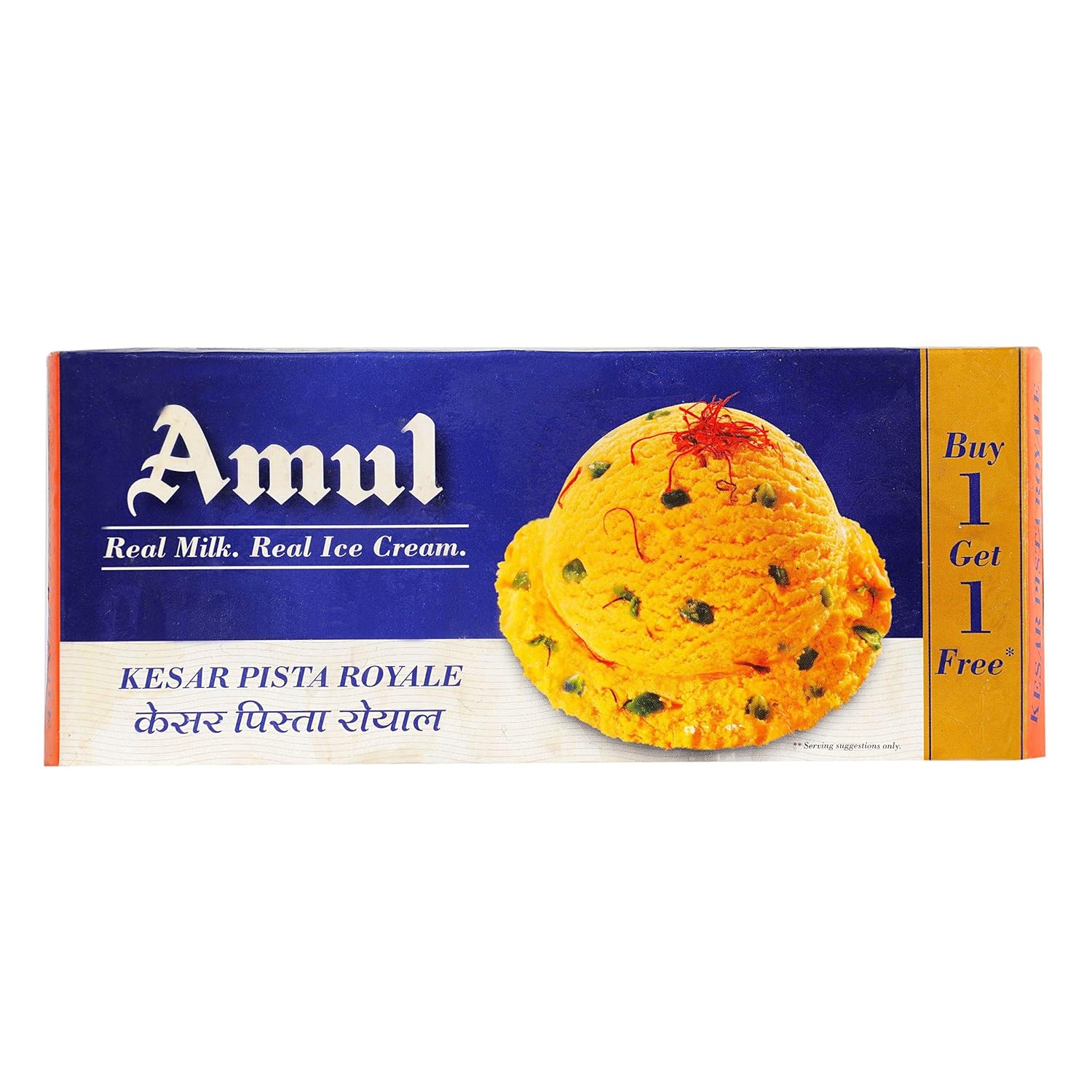 Kesar Pista
 Cassatta
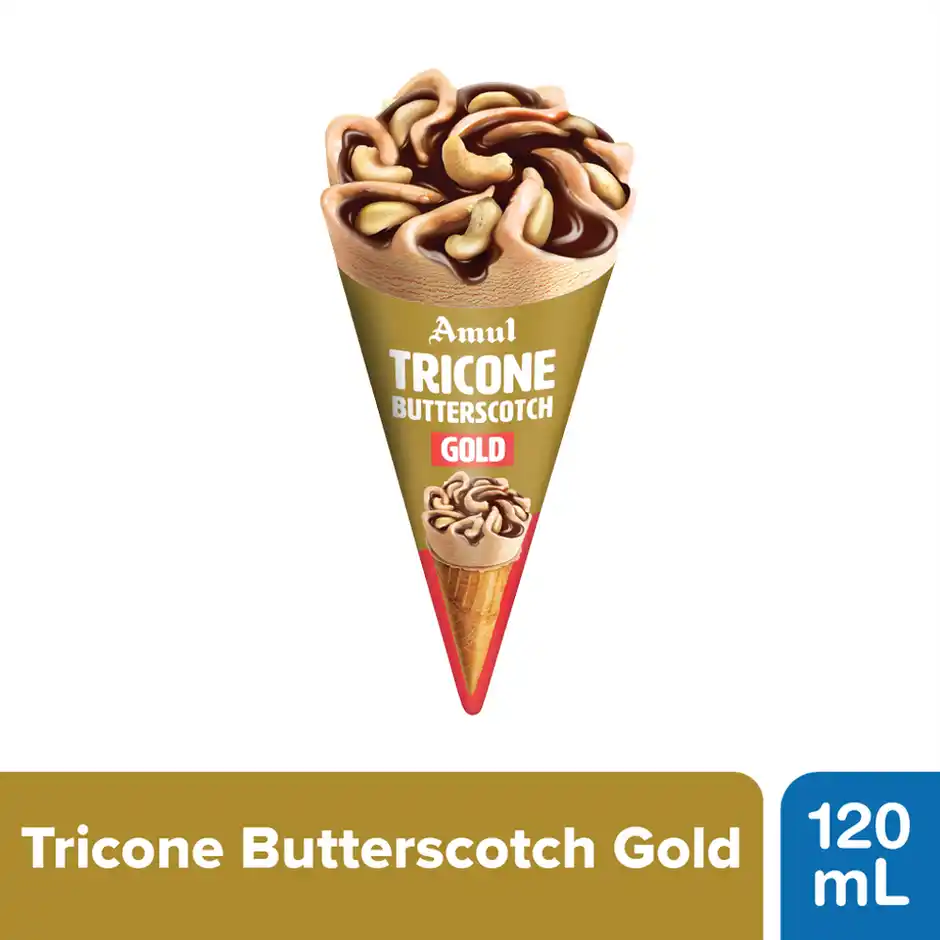 Tricone Cone
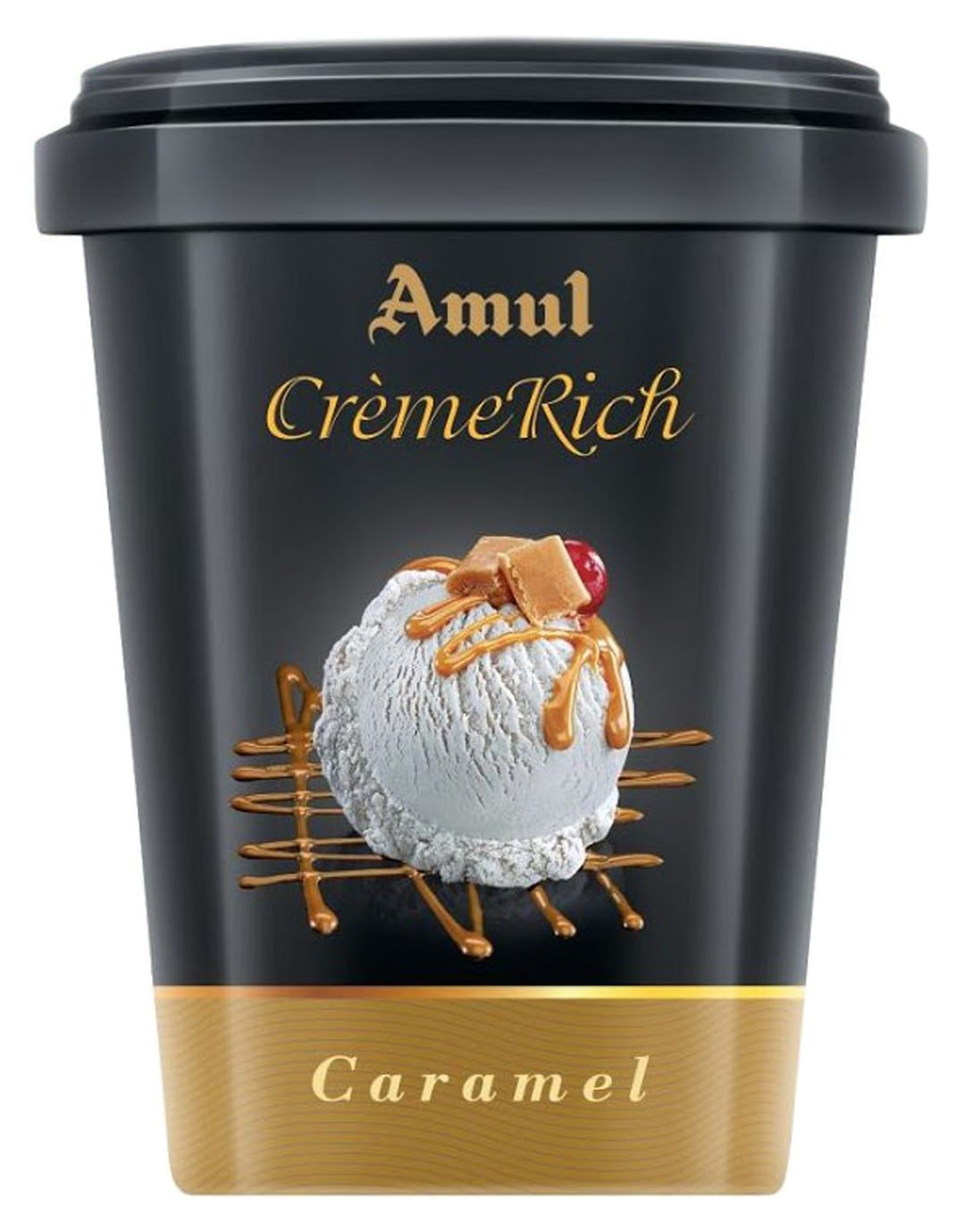 Creme Rich
Naturals is the rarest thing in Indian retail: a 40-year-old brand that has never compromised its founding promise. Raghunandan Kamath launched it in 1984 with a radical idea — ice cream made from fresh fruit pulp, whole milk, and natural sugar. Nothing artificial. No preservatives. No synthetic colours. Four decades later, that's still exactly what they do.
The results speak for themselves. Their tender coconut ice cream made it onto Taste Atlas's list of top 100 iconic ice creams globally. The Sitaphal (custard apple) flavour has a cult following — people visit stores specifically to check if it's in season. Revenue jumped from ₹93 crore in FY21 to ₹380 crore in FY24, and the company targets ₹500 crore by FY27. By December 2025, they expanded to 200+ stores across 15 states.
The limitation is structural: because Naturals uses real seasonal fruit with no preservatives, they can't scale distribution like Amul. You mostly find them at their own outlets, not in general retail. But when you do find them, the experience is genuinely different from everything else in this list.
Havmor occupies a unique position in Indian ice cream: genuinely premium, genuinely dairy. Founded in 1944 (pre-partition, originally from Karachi), the brand was acquired by South Korea's Lotte Confectionery in 2017 and has since benefited from significant investment in quality and distribution. In 2025, Lotte completed a merger between Havmor Ice Cream and Lotte India (confectionery), creating a unified foods operation under the "One India" strategy.
Havmor's MD Komal Anand has been refreshingly direct about the market: "Most of the brands people think of as ice cream are actually frozen dessert players." Havmor isn't one of them. Their products use 100% dairy fat — real milk, real cream. The Choco Blast, Sitaphal, and Chikoo variants have a depth of flavour that you simply can't achieve with vegetable fat substitutes.
The brand's Havmor Restaurants (their own outlet chain) also serve full meals alongside ice cream — an unusual but effective retail format that creates a stronger brand experience than standard freezer placement in kirana stores.
Vadilal started as a soda fountain in 1907, moved into ice cream in 1926, and has been innovating ever since. Today, they offer 250+ flavours — one of the widest ranges in the country — and export to over 50 countries, including a sizeable Indian diaspora market in the US and UK. Few Indian brands have built that kind of global footprint.
What makes Vadilal stand out is their blend of Indian-rooted flavours and international reach. The Rose Petals Kulfi, Alphonso Mango, and Rajbhog variants feel authentically Indian. Their sundae formats and international-style novelties feel more contemporary. The brand doesn't try to be just one thing, and that breadth serves a wide range of Indian consumers well.
One thing to note: like Amul, Vadilal's product range includes both real ice cream and frozen dessert products. Their premium variants tend to use dairy fat; the mass-market products may not. Check the label.
Kwality Wall's is the brand behind some of India's most iconic frozen products — the Cornetto cone, the Feast chocolate bar, and the premium Magnum range. A familiar red and white logo, a heart on the packaging, and decades of consumer familiarity. In 2025, Hindustan Unilever spun off its ice cream business globally; Kwality Wall's now sits under The Magnum Ice Cream Company, Unilever's standalone ice cream entity.
Here's the honest truth that Kwality Wall's is less upfront about: most of their products — including the mass-market Feast bars, Cornetto cones, and family packs — are frozen desserts, not ice cream. They use vegetable fat. This is why Amul has run public awareness campaigns on the distinction, and why there have been legal disputes. The notable exception is the Magnum range, which uses dairy cream and qualifies as real ice cream — premium pricing, premium ingredients. In April 2026, Magnum launched Caramel Pop in India, a new premium variant.
For everyday indulgence without premium pricing, Kwality Wall's delivers. Cornetto is genuinely good eating. But if you care about dairy authenticity, the Magnum range is the only part of this portfolio that delivers real ice cream.
If you grew up in Delhi, UP, or Haryana, Mother Dairy is simply part of your food memory. The blue booths. The thin milk tokens. The reliable morning supply. Ice cream has always been part of that trust equation — and Mother Dairy has earned it by keeping quality consistent and prices fair for decades.
Their Kesar Pista and Rajbhog flavours have become genuinely beloved in the North Indian market. The mango bars are a summer staple. The family packs are well-priced for what you get. What Mother Dairy lacks — and knows it — is reach beyond its primary markets. If you're in South India or outside the major northern metros, you'll struggle to find it.
Creambell is younger than most brands on this list — launched in 2003 by Devyani International (the franchisee behind KFC and Pizza Hut in India) — but it's built an aggressive, youth-focused presence in North and East India through smart product design and competitive pricing. Their novelty products, fun formats, and quick-commerce presence resonate strongly with the under-30 urban consumer.
The brand has leaned hard into quick commerce, with Blinkit and Swiggy Instamart distribution that often beats competitors on availability and delivery speed. For consumers who want interesting, affordable frozen treats delivered in 10 minutes, Creambell frequently wins on convenience. The trade-off: their quality is solid rather than exceptional, and their South India presence remains limited.
Baskin-Robbins has been in India since 1993, making it the longest-running international ice cream brand in the country. The "31 flavours" philosophy (one for every day of the month) has expanded to over 100 flavours in India, and their experience of tailoring global products to Indian palates — think Kesar Pista alongside Pralines & Cream — makes them genuinely appealing to both traditionalists and adventurous consumers.
What Baskin-Robbins does particularly well is the ice cream cake business. For birthdays, anniversaries, and celebrations, their custom ice cream cakes have become a go-to across urban India. With 650+ outlets, the brand has meaningful presence in most major cities. Pricing sits comfortably between mass-market brands and Haagen-Dazs — ₹150 for a single scoop puts it accessible to the aspirational middle class without feeling disposable.
Ask any Tamil Nadu native to name an ice cream brand and Arun comes before Amul. Founded in 1970 by R.G. Chandramogan in Chennai, Arun Ice Creams is part of Hatsun Agro Products — one of India's largest private dairy companies — and it dominates South India with the ferocity of a regional champion. Tamil Nadu, Karnataka, Andhra Pradesh, Telangana, Kerala: Arun is everywhere down South, at every price point.
The appeal is straightforward: fresh milk-based ice cream, simple and honest, at budget-friendly prices. Products start from ₹5, which means Arun is genuinely within reach for almost everyone. Their premium parlour sub-brand Ibaco offers a step-up experience with hand-scooped portions, custom sundaes, and a more curated flavour menu for urban consumers who want something more.
If you're visiting South India and don't try an Arun bar, you've genuinely missed something. If you're outside South India, you likely haven't heard of them — they don't have a meaningful North India presence yet, which is both a limitation and, frankly, an opportunity they're aware of.
Häagen-Dazs exists in a different category entirely. Where every other brand on this list competes on value, availability, or range, Häagen-Dazs competes purely on experience. A single scoop at ₹350–₹450. A pint at ₹1,200–₹1,500. You're not buying ice cream; you're buying a deliberate, indulgent moment.
And it delivers on that promise. The ingredients are exceptional — real cream, real eggs, no artificial flavours. The Belgian Chocolate is dense and serious. The Cookies & Cream actually uses recognisable cookie pieces rather than synthetic flavouring. For a birthday, an anniversary, or just a night when you want the best possible version of ice cream in India, Häagen-Dazs is the answer.
The limitation is distribution: you'll find it at premium mall food courts, select supermarkets (Nature's Basket, Godrej's premium outlets), and online. It's not an impulse buy from a kirana. But it's not meant to be.
All 10 brands compared
July 2026 prices| # | Brand | Price range | Real ice cream? | Best for | Availability |
|---|---|---|---|---|---|
| 1 | Amul GCMMF cooperative |
₹10 – ₹500+ | Varies — check label | Everyday, all budgets | Pan-India · 1M+ outlets |
| 2 | Naturals Founded 1984, Mumbai |
₹80 – ₹400+ | Always yes | Real fruit experience | 200+ own outlets |
| 3 | Havmor Lotte Confectionery |
₹30 – ₹500+ | Always yes (100% dairy) | Premium real dairy | Strong W. India, expanding |
| 4 | Vadilal Est. 1907 |
₹15 – ₹400+ | Varies by product | Wide variety, heritage | Pan-India, export |
| 5 | Kwality Wall's Magnum Ice Cream Co. |
₹20 – ₹250+ | Mostly No (frozen dessert) | Cornetto, Magnum fans | Pan-India · Very wide |
| 6 | Mother Dairy NDDB, Est. 1974 |
₹10 – ₹280+ | Varies by product | North India households | Delhi NCR + North India |
| 7 | Creambell Devyani Intl., Est. 2003 |
₹15 – ₹250+ | Varies by product | Youth, quick commerce | North & East India strong |
| 8 | Baskin-Robbins Graviss Foods India |
₹150 – ₹1,500+ | Yes | Celebrations, cakes | 650+ outlets |
| 9 | Arun / Hatsun Hatsun Agro, Est. 1970 |
₹5 – ₹300+ | Yes (milk-based) | South India staple | South India only |
| 10 | Häagen-Dazs General Mills, India 2009 |
₹350 – ₹1,500+ | Yes (premium quality) | Special occasions | Premium outlets only |
How to actually choose
1. Always check: Ice Cream vs Frozen Dessert
This is the single most important thing. Flip the pack and look for the declaration on the front or back. If it says "Frozen Dessert," it contains vegetable fat, not dairy fat. That's not automatically bad — it's still tasty — but it's not real ice cream, and you deserve to know what you're buying. Brands that use real dairy fat are legally required to say "Ice Cream."
2. Match your use case to the brand
- Everyday treat at home: Amul or Mother Dairy (North), Arun (South)
- Special occasion / gift: Haagen-Dazs or Baskin-Robbins
- Real fruit, artisanal: Naturals Ice Cream — only from their outlets
- Real dairy, premium daily: Havmor or Vadilal
- Quick delivery at midnight: Creambell or Kwality Wall's via Blinkit
3. Seasonal flavours reward patience
The best Indian ice cream is seasonal. Naturals' Sitaphal (October–December) and Alphonso Mango (April–June) are as good as ice cream gets in this country. Vadilal's Alphonso variants peak in peak mango season. Missing these because you defaulted to chocolate chip year-round is a real loss — plan around the season.
4. For kids, budget is only one factor
- Avoid very high-sugar novelty products with artificial colours for young children
- Amul's simpler variants (cassatta, kesar pista cups) are better choices than neon-coloured novelties
- Naturals' real fruit variants are the gold standard if you can access them
- Single-ingredient options (vanilla with real cream, strawberry with real fruit) are best
What changed in 2026
The big moves in the Indian ice cream market this year
January 2026 — Amul's Creme Rich goes national: Amul expanded its super-premium Creme Rich line across India, taking direct aim at the premium dessert segment. Rich chocolate, kesar-pista, and butterscotch variants now available nationwide — significant because Amul rarely plays in the ultra-premium space.
April 2026 — Magnum Caramel Pop launches in India: The first major Magnum launch under The Magnum Ice Cream Company (post-HUL spinoff), targeting India's rapidly growing super-premium segment. Caramel and chocolate coating over vanilla ice cream — a flavour profile that tests Indian consumers' shift toward global premium indulgence.
2025 — Lotte India + Havmor merger: Lotte completed its "One India" consolidation, merging Havmor Ice Cream with Lotte India's confectionery operations. This gives Havmor deeper distribution and marketing muscle going into 2026 and beyond.
2025 — Kwality Wall's spun off from HUL: Unilever's global ice cream separation reached India. Kwality Wall's now sits under The Magnum Ice Cream Company, Unilever's standalone ice cream arm. Operations continue normally for consumers.
Frequently asked
Which is the No. 1 ice cream brand in India?
What's the difference between ice cream and frozen dessert in India?
Is Kwality Wall's real ice cream or frozen dessert?
Which Indian ice cream brand uses no artificial flavours or preservatives?
Which is the best ice cream for South India?
Is there a good vegan or dairy-free ice cream in India?
The verdict
India's ice cream market is genuinely exciting right now — more innovation, better quality, and wider availability than at any point in history. Quick commerce has made late-night ice cream delivery a reality. Artisanal brands like Naturals are getting global recognition. Premium international brands are investing seriously in the Indian market.
But the frozen dessert issue remains the market's most frustrating quirk. Too many consumers are paying for "ice cream" and getting a vegetable-fat frozen dessert. That's not inherently wrong — frozen desserts taste good — but you deserve to make that choice knowingly. Read the label. Every time.
Beyond that: visit a Naturals outlet at least once this summer and order the Tender Coconut if it's in season. Try a Havmor scoop if you're in Gujarat or Maharashtra. Let Haagen-Dazs be your birthday splurge. And yes, keep that Amul Tricone in the freezer for Tuesday evenings when you just need something cold and good. All of these are valid choices — just make them with full information.
Related guides
OTC Medicines Every Indian Must Know
From paracetamol to antacids — what's in your medicine cabinet and how to use it correctly.
Best Supplements in India 2026
Creatine, omega-3, whey, ashwagandha — all brands scored on the same evidence-based rubric.
Protein Timing and the Anabolic Window
What the evidence actually says about post-workout protein — and how much timing really matters.