Top 10 Best Instant Coffee Brands in India 2026, Ranked on the Label
Ten jars you can buy in India, compared on what's actually inside them: how much is coffee and how much is chicory, whether it's freeze-dried, how much caffeine you get per spoon, and what each cup really costs.
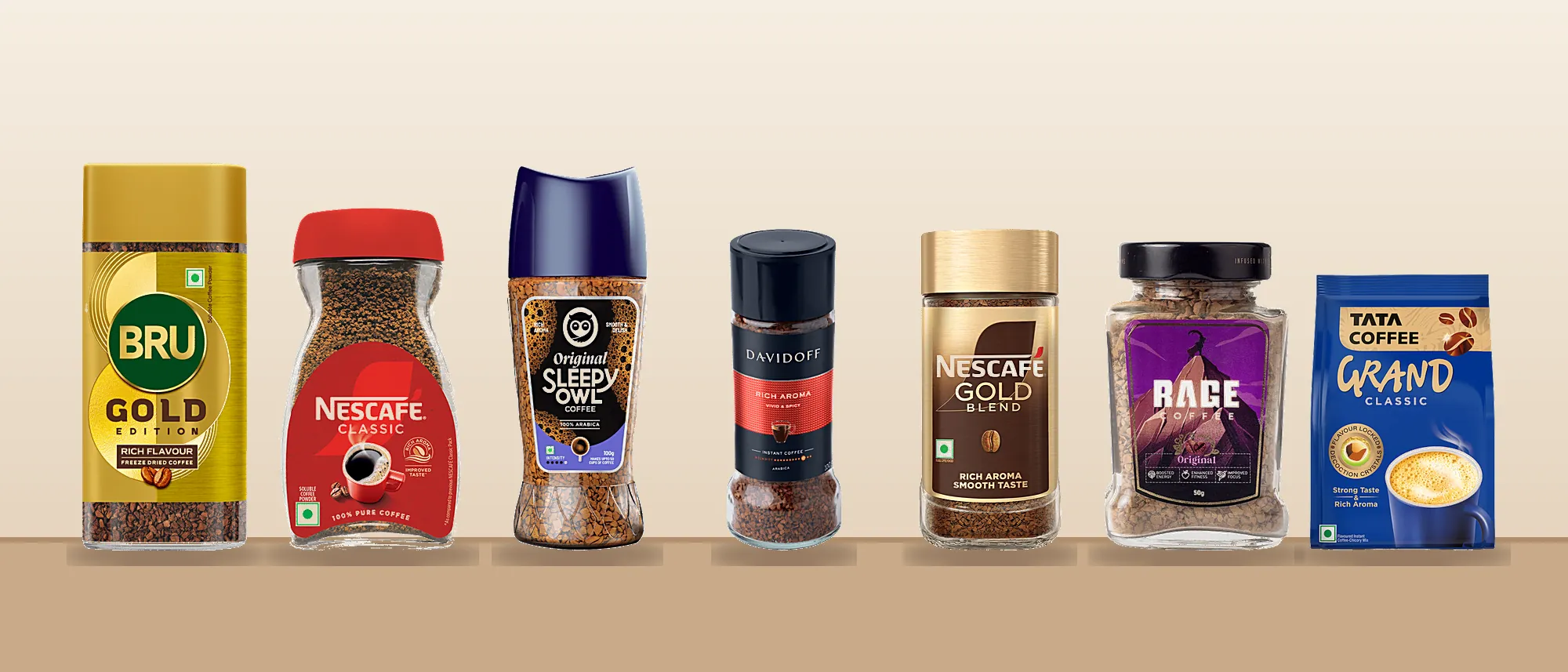
Seven of our ten picks. Pack images from retailer listings.
The best instant coffee in India for most people is Bru Gold: 100% coffee with no chicory, freeze-dried, made from South Indian beans, and about ₹7 a cup in the 200 g pack. Nescafé Classic is the best everyday powder if you like it bold, Sleepy Owl Original is the best premium Indian jar (and the best for cold coffee), and Davidoff Rich Aroma is the imported pick. Before you buy anything, turn the jar around: if it lists chicory, you're paying for a blend that has roughly a third less caffeine per spoon. That isn't a scam, just a different drink.
- Best overall
- Bru Gold (freeze-dried)
- Best everyday, boldest
- Nescafé Classic
- Best premium Indian
- Sleepy Owl Original
- Best imported
- Davidoff Rich Aroma
- Smoothest mainstream
- Nescafé Gold Blend
- Best filter-coffee taste
- Tata Coffee Grand
- Cheapest cup
- Bru Instant
- Best budget pure coffee
- Continental Speciale
- Best value arabica
- Bevzilla Gold Brew
- Most hyped "functional"
- Rage Coffee
Researched by the Naked Compound Research Team · Last updated · Ranked on published labels, brand and retailer listings and Indian prices. Not lab-tested, and no brand paid for a place.
On this page
Top 10 instant coffee brands in India 2026: at a glance.
| Instant coffee | What's in the jar | Process | Beans | Caffeine / 2 g* | Price / cup** |
|---|---|---|---|---|---|
| Bru Gold | 100% coffee | Freeze-dried | Arabica + robusta | ~63 mg (est.) | ₹7–10 |
| Nescafé Classic | 100% coffee | Powder | Robusta | ~63 mg+ (est.) | ~₹8 |
| Sleepy Owl Original | 100% coffee | Freeze-dried + 5% micro-ground | Arabica | 72 mg (label) | ₹12–15 |
| Davidoff Rich Aroma | 100% coffee | Freeze-dried | Arabica | ~63 mg (est.) | ₹14–19 |
| Nescafé Gold Blend | 100% coffee | Granules | Arabica + robusta | ~63 mg (est.) | ₹9–10 |
| Tata Coffee Grand | ~71.5% coffee + chicory, flavouring | Powder + decoction crystals | Not stated | ~45 mg (est.) | ₹3–4 |
| Bru Instant | 70% coffee, 30% chicory | Powder | Not stated | ~44 mg (est.) | ₹3–4 |
| Continental Speciale | 100% coffee | Powder | Not stated | ~63 mg (est.) | ~₹5 |
| Bevzilla Gold Brew | 100% coffee | Freeze-dried | Arabica | ~63 mg (est.) | ₹10–12 |
| Rage Coffee Original | Coffee + herbal and amino acid blend | Freeze-dried (brand claim) | Arabica | 90–120 mg (brand claim) | ~₹12 |
*Our estimate for a 2 g teaspoon, from USDA data for 100% instant coffee (about 31 mg per gram) scaled down by the chicory share, unless the brand declares a figure. Robusta-based coffees likely sit above the estimate and pure arabica below it. **Price for 2 g, from BigBasket sale price and MRP and brand stores, checked 8 October 2026. Prices change weekly and bigger packs are cheaper per cup.
Most "best instant coffee" lists in India are written by a coffee brand ranking itself first, or are a directory of company names with a founding year next to each. Neither tells you the two things that change what's in your cup: how much of the jar is actually coffee, and how it was dried.
India is unusual here. Many of our best-selling instant coffees are coffee-chicory mixtures, a habit carried over from South Indian filter coffee. Chicory is a roasted root. It adds body and bitterness and costs less than coffee, but it has no caffeine. FSSAI lets a coffee-chicory mixture contain as little as 51% coffee, as long as the label declares both percentages and doesn't call the product "pure". [1] So two jars side by side on a shelf can be very different products.
For this guide we picked the ten instant coffees that come up most in Indian searches, quick-commerce bestseller lists and marketplace rankings, then read every label for four things: what's in the jar, how it's made, how much caffeine you'll get and what one cup costs. We haven't lab-tested these products and none of the brands has published an independent caffeine test that we could find.
"Read the back of the jar before the front. 'Coffee 70%, Chicory 30%' and '100% pure coffee' are different drinks, with different caffeine, at different prices."— Naked Compound Research Team
Four checks, no sponsored slots.
What's in the jar
100% coffee ranks above a coffee-chicory mixture, and plain coffee above one with added flavouring or sweetener. A blend isn't marked down for being a blend; it's marked down if the front of the pack hides it.
How it was dried
Freeze-dried coffee keeps more aroma than spray-dried powder, so it scores higher on taste. We also note the beans: robusta is bolder and has more caffeine; arabica is smoother.
What you get per spoon
Declared caffeine per serving where the brand gives it; otherwise our estimate from USDA data and the coffee share on the label. Chicory has no caffeine.
Cost per cup, not per jar
Jar sizes range from 45 g to 200 g, so we compare the price of a 2 g cup. And it has to be easy to buy on BigBasket, Blinkit, Zepto or Amazon, or at a kirana.
How is instant coffee made, and why does freeze-dried cost more?
Every jar on this list starts as ordinary brewed coffee. The factory brews a very strong extract from roasted, ground beans, concentrates it, and then removes the water. How it removes the water is the difference you're paying for.
The first three steps are the same for every brand. The drying step splits instant coffee into two types.
Roast & grind
Green beans are roasted (robusta, arabica or both) and ground, just as for filter coffee.
Brew an extract
Hot water is pushed through the grounds under pressure to make a very strong coffee liquid.
Concentrate
Some water is evaporated off so there's less to remove in the last step. Then it's dried one of two ways.
↓ Step 04 · Drying splits the road ↓
Spray-dried
The extract is sprayed as a fine mist into a tower of hot air. The droplets dry in seconds into a light powder, often clumped into granules afterwards. Fast and cheap, but heat drives off some aroma.
Typical of budget powders and granulesFreeze-dried
The extract is frozen solid, broken into pieces, and the ice is removed under a vacuum without melting. This keeps more of the aroma and leaves the glassy crystals you see in premium jars. It takes longer and costs more.
Labelled on: Bru Gold · Davidoff · Sleepy Owl · BevzillaCaffeine survives both methods almost unchanged, so freeze-dried coffee isn't stronger. It usually tastes better. Freeze-dried jars say so on the pack because it's a selling point; most mass-market powders don't state their drying method at all.
The 10 best instant coffee brands in India, reviewed.
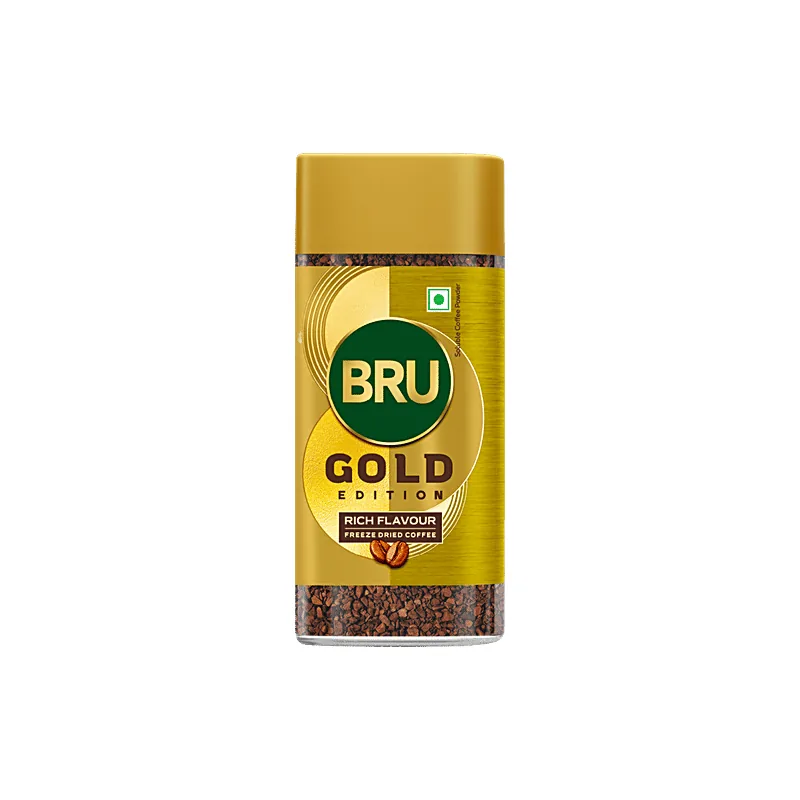
Bru Gold Freeze Dried Coffee
The best balance on this list of what's in the jar, how it's made and what it costs. Bru Gold is 100% coffee with no chicory, freeze-dried from arabica and robusta beans grown in South India, so you get the crystal-jar quality of an imported coffee at a domestic price. Bought as the 200 g refill pouch, a cup costs about ₹7, which is less than Nescafé Classic's powder. It's smoother and less bitter than Nescafé Classic, with enough robusta to stand up to milk and sugar. If you grew up on regular Bru, note that this tastes quite different: no chicory means less body and more coffee aroma.
On the label: soluble coffee powder (100% coffee), freeze-dried. Watch for: the green "Bru Instant" pouch on the same shelf is a 70:30 coffee-chicory blend; make sure the pack says Gold. Flavoured Bru Gold variants (caramel, vanilla) add flavouring. [6]
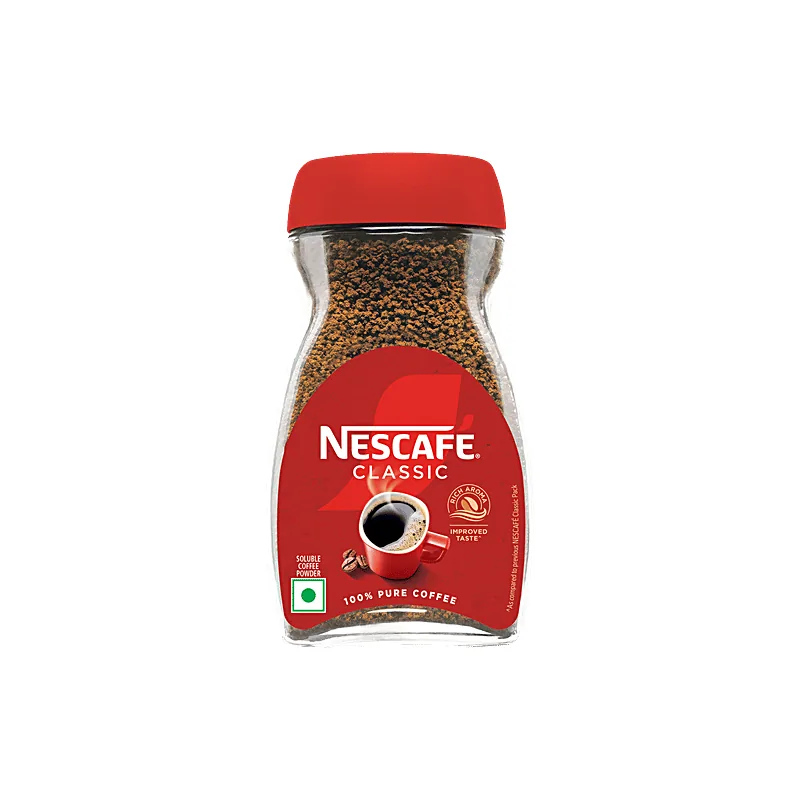
Nescafé Classic
India's default instant coffee, and still a good one. Nestlé says Classic is made from medium-dark roasted robusta beans from South Indian farms, with nothing added. [4] Robusta is why it tastes bold and slightly bitter, and it's also why it's probably one of the higher-caffeine jars here: robusta beans carry roughly twice the caffeine of arabica. [5] It dissolves instantly, whips easily for beaten coffee, and you can buy it anywhere from a highway dhaba to Blinkit. It ranks below Bru Gold only because the powder loses some aroma and costs a little more per cup.
On the label: 100% pure coffee. Watch for: Nescafé Sunrise is a different product, a coffee-chicory blend (70:30, or 60:40 for Sunrise Extra). Nestlé's site suggests about 1 g per 120 ml, half a normal teaspoon, so a "cup" by their maths has about half the caffeine of ours. [4]
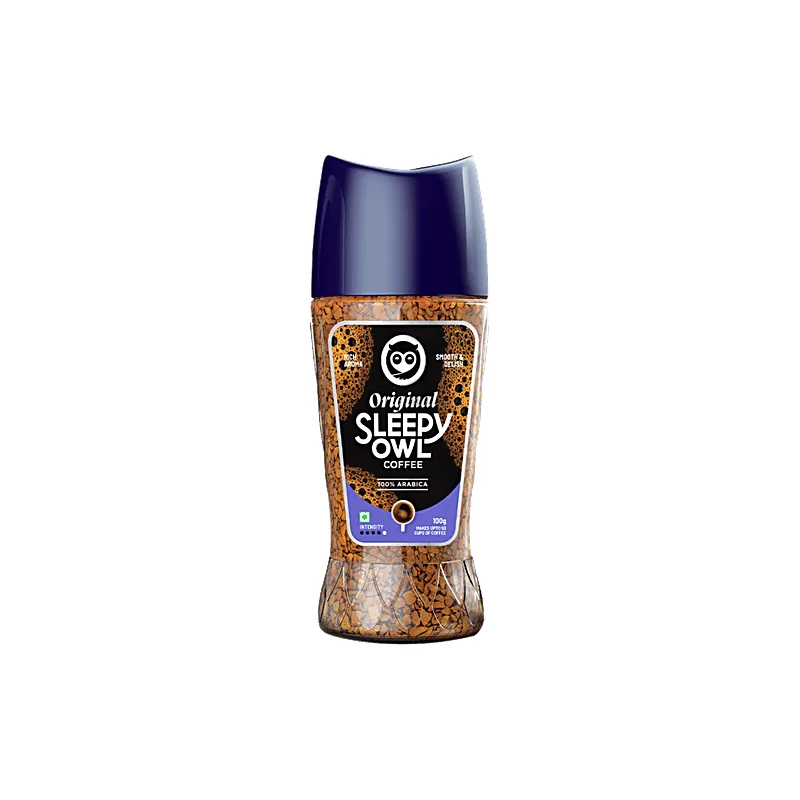
Sleepy Owl Original Premium Instant Coffee
The most transparent label on this list. Sleepy Owl uses 100% arabica from Chikmagalur: 95% freeze-dried soluble crystals plus 5% finely ground roasted coffee, which gives it more body and a chocolatey taste than most instants. It's the only mainstream jar here that declares its caffeine, 36 mg per gram or about 72 mg per 2 g cup, and the brand says it dissolves in cold water and cold milk, which makes it the easiest choice for iced coffee without a blender. [7] The trade-off is price: roughly double Bru Gold per cup.
On the label: instant coffee, roasted and ground coffee; no sugar or preservatives. Watch for: the micro-ground part leaves a fine sediment at the bottom of the cup, which is normal. Hazelnut and French Vanilla versions add flavouring. A decaf is sold in sachets.
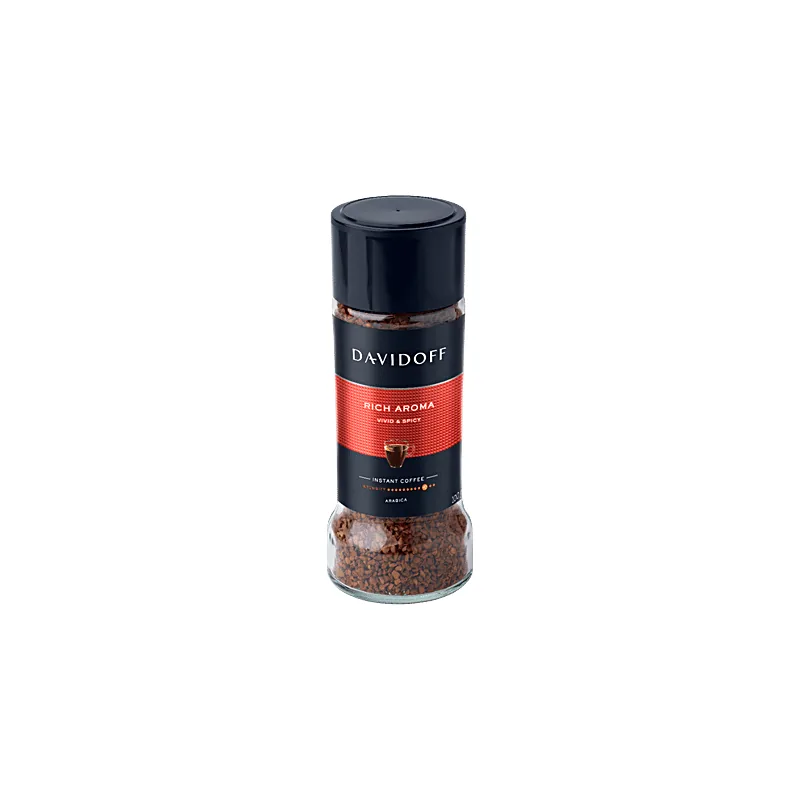
Davidoff Café Rich Aroma
The jar people buy as a gift, and the most expensive cup here. Rich Aroma is a freeze-dried, 100% arabica instant with a fuller body than its milder sibling, Fine Aroma. It's at its best black or with a splash of milk; heavy milk and sugar hide most of what you're paying for. It isn't stronger than Nescafé, and arabica usually has less caffeine than robusta. You're paying for smoothness and the import. [8]
On the label: 100% arabica instant coffee. Watch for: the MRP is high and sale prices swing by ₹250 or more, so it's worth waiting for a discount. Check the "Sold by" field on marketplaces for imported products.
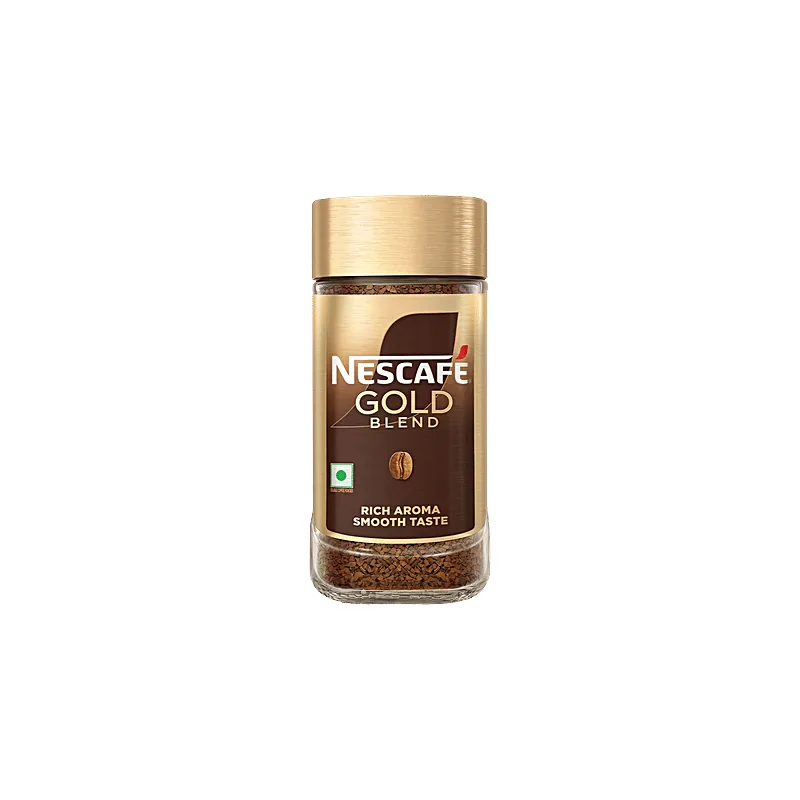
Nescafé Gold Blend
If Nescafé Classic is too harsh for you, this is the easy step up: an arabica and robusta blend in larger granules, noticeably smoother and less bitter. [9] It sits between Classic and Davidoff on taste and price, and it's stocked almost as widely as Classic. On a straight comparison, Bru Gold gives you freeze-dried coffee for less per cup, which is why Gold Blend sits at #5.
On the label: 100% coffee. Watch for: Nestlé's Indian listings don't state the drying method, so we haven't counted it as freeze-dried. An imported Gold Blend Decaf is sold if you want the taste without the caffeine.
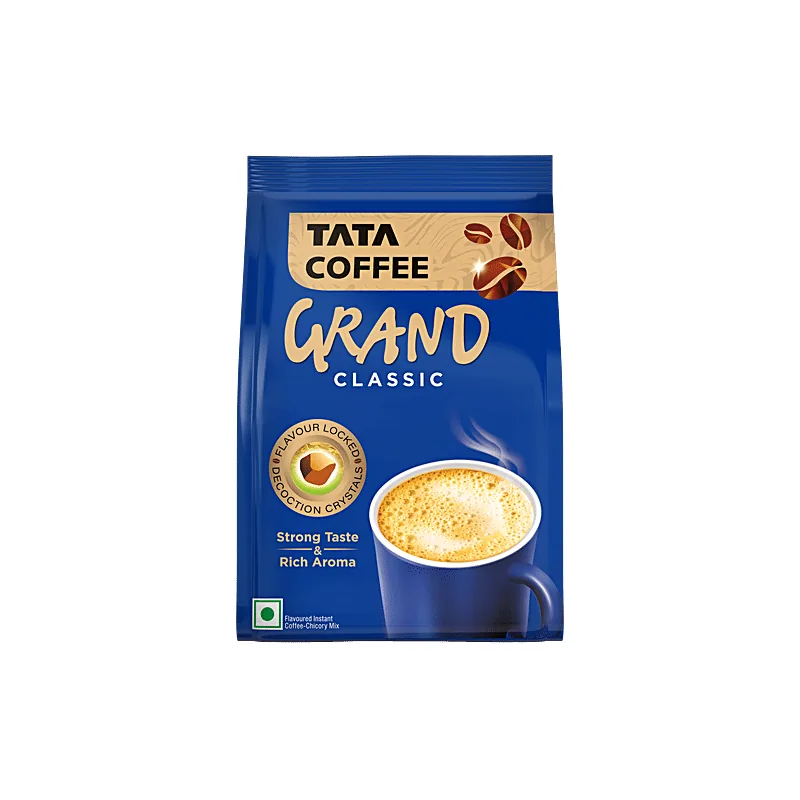
Tata Coffee Grand Classic
The closest an instant gets to a tumbler of South Indian filter coffee. Tata mixes instant coffee with chicory and "flavour-locked decoction crystals", and the result is thick, strong and made for hot milk. Retail listings give about 71.5% coffee, the rest chicory, and the ingredient list also includes nature-identical flavouring. [10] That flavouring is why it ranks below the pure coffees: some of that "fresh decoction" aroma comes from additives rather than beans. For milky kaapi at ₹3–4 a cup, it's very good.
On the label: coffee, chicory, nature-identical flavouring substances. Watch for: about 30% less caffeine per spoon than a pure coffee. Tata Coffee Grand Premium is a separate, 100% coffee product.
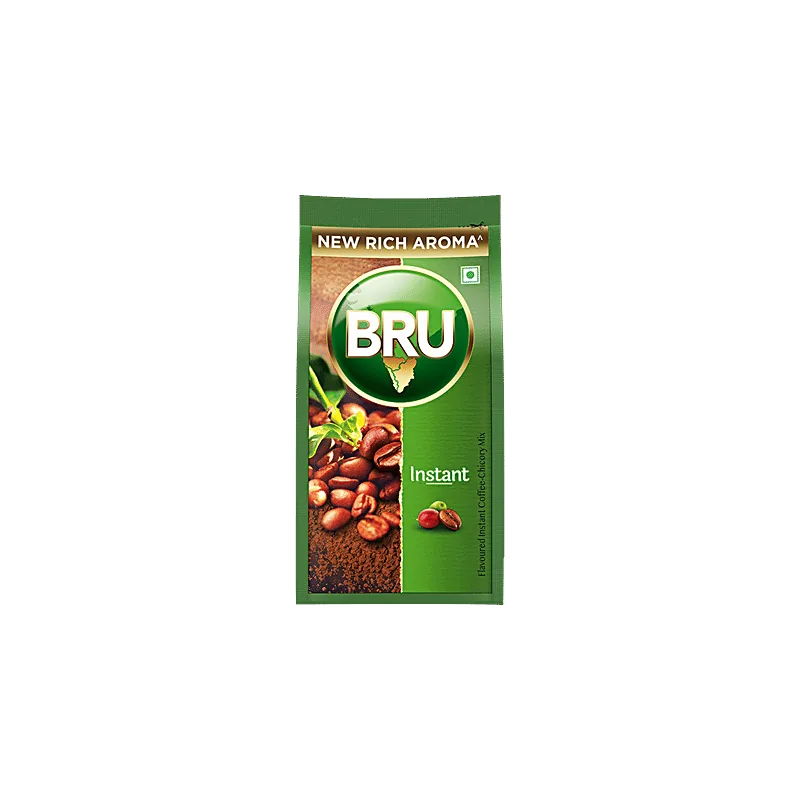
Bru Instant
The original Indian coffee-chicory instant and the cheapest cup on our list. The 70:30 blend gives the familiar thick, slightly caramel Bru taste with milk, and the chicory makes it taste stronger than its caffeine suggests. [11] It's an honest product with an honest label. Just know what you're buying: about 44 mg of caffeine per 2 g spoon versus about 63 mg in a pure coffee, and less coffee aroma when you drink it black.
On the label: coffee 70%, chicory 30%. Watch for: people often call it "strong" coffee, but it's strong in taste rather than caffeine. If you want more caffeine for the same money, Continental Speciale (#8) is pure coffee at about ₹5 a cup.
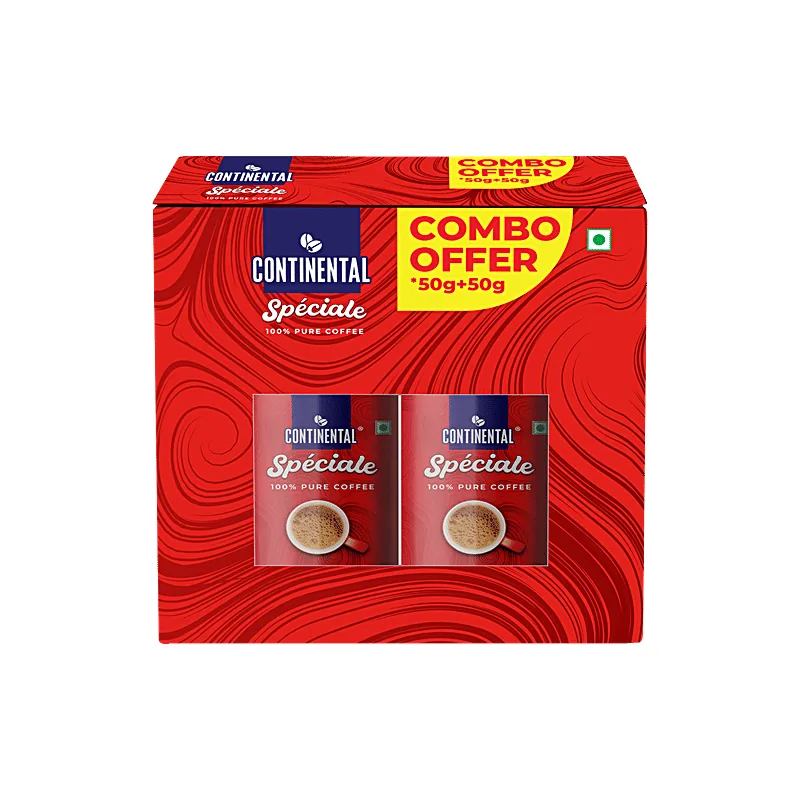
Continental Speciale
The cheapest way to drink 100% instant coffee on this list. Continental is the retail brand of CCL Products, one of India's biggest instant coffee manufacturers, which also makes instant coffee for other brands. Speciale is labelled 100% pure coffee and costs roughly ₹5 a cup, between Bru Instant and Nescafé Classic. [12] It's a dependable powder for daily milky coffee; it won't match freeze-dried jars when drunk black.
On the label: 100% pure coffee. Watch for: Continental Xtra is a coffee-chicory blend (70:30 on the South Blend jar), so check which variant you're picking up. [15] Harder to find in some cities than Nescafé or Bru.
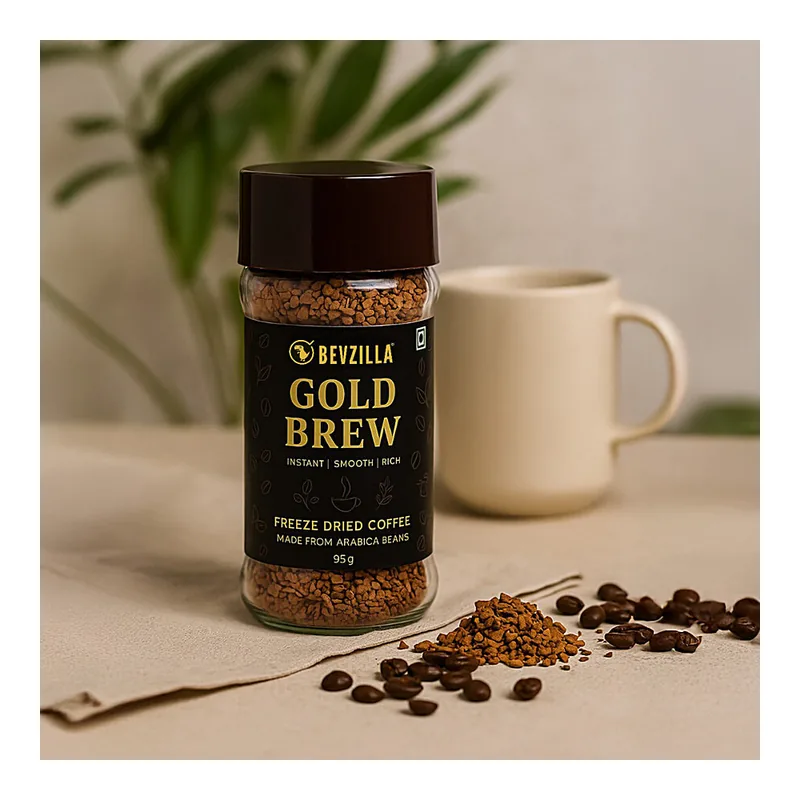
Bevzilla Gold Brew Freeze Dried Coffee
A direct-to-consumer brand that undercuts Sleepy Owl and Davidoff on freeze-dried arabica. Gold Brew is 100% arabica crystals at around ₹10–12 a cup on sale, which makes it the cheapest freeze-dried arabica we found. [13] Bevzilla is better known for its flavoured coffee cubes, and those are a different product: they're sweetened with date palm jaggery and flavoured, so treat them as a treat, not a daily cup.
On the label: freeze-dried coffee from arabica beans. Watch for: no caffeine figure or origin is declared, and listed prices change often; Bevzilla runs deep discounts on its own store and marketplaces.
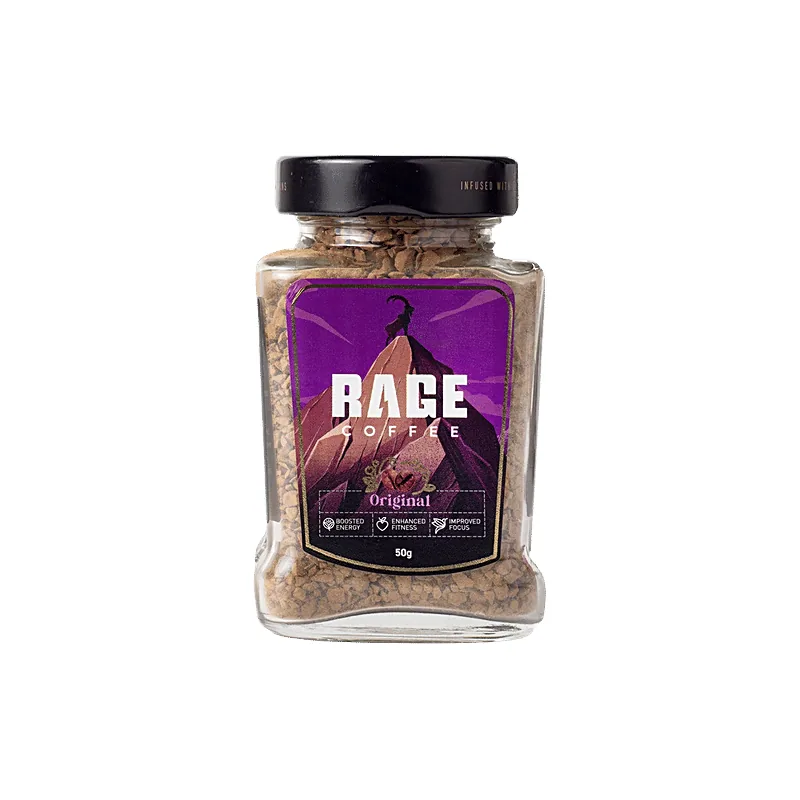
Rage Coffee Original
Rage sells itself as coffee with "plant-based vitamins": the jar adds L-theanine, L-glutamine, ginkgo, bacopa, panax ginseng and rhodiola to 100% arabica coffee. [14] As a supplement-research site, this is the pick we're most sceptical about. None of those amounts is disclosed, and in a 2 g scoop of coffee they can't be anywhere near the doses used in trials: bacopa is studied at around 300 mg a day of extract, taken for weeks, and rhodiola and panax ginseng at a few hundred mg. L-theanine is the one with decent evidence alongside caffeine, but at roughly 100–200 mg. Treat Rage as a well-made arabica instant with a high caffeine claim (90–120 mg per serving, per the brand) and an expensive label story.
On the label: arabica coffee, L-theanine, L-glutamine, ginkgo biloba, bacopa monnieri, panax ginseng, rhodiola rosea; flavoured versions add nature-identical flavours. Watch for: undisclosed doses; check with a doctor if you take medicines, as ginkgo and ginseng can interact with some drugs.
Didn't make the list: Levista Premium (an 80:20 coffee-chicory mix at about ₹5–6 a cup, with a little more coffee than Bru Instant but harder to find outside South India), Nescafé Sunrise (70:30, or 60:40 for Sunrise Extra; Nescafé Classic is the better buy) [15], and Blue Tokai, whose "Easy Pour" packs are drip bags of ground coffee rather than instant coffee. Ready-to-drink cans and 3-in-1 premixes are a separate category with added sugar and milk solids.
Which instant coffee has chicory? The label tells you.
Chicory is the roasted, ground root of the chicory plant. South Indian filter coffee has used it for generations because it adds body, colour and bitterness, and it's cheaper than coffee. There's nothing unsafe about it. But it changes the drink, and the share of chicory varies far more than most buyers realise.
Share of coffee and chicory by weight, from the label or retail listing. The dashed line is FSSAI's 51% minimum coffee for a coffee-chicory mixture.
Sources: product labels and retail listings, October 2026. [10] [11] [15] Ratios can change with reformulation; the percentages on the pack in your hand are what count.
How to read the jar in ten seconds. FSSAI requires every coffee-chicory mixture to print both percentages, and reserves the word "pure" for single-ingredient foods. [1] In 2021 the regulator wrote to the industry after finding that only 13 of 42 centrally licensed coffee-chicory makers it examined were following these rules, so the rule is real, but enforcement has been uneven.
- No chicory, full caffeine: about 63 mg per 2 g
- Tastes like the beans; better black
- e.g. Bru Gold, Nescafé Classic, Continental Speciale
- Less caffeine: about 44 mg per 2 g at 70:30
- Thicker, more bitter, made for milk
- e.g. Bru Instant, Tata Coffee Grand, Nescafé Sunrise
How much caffeine is in instant coffee?
Almost no Indian instant coffee prints its caffeine content, so we estimated it. USDA lab data puts regular instant coffee powder at 3,142 mg of caffeine per 100 g, which is about 63 mg in a 2 g teaspoon or sachet. [2] That matches ICMR's figure of 50–65 mg for a cup of instant coffee. [3] Chicory contains no caffeine, so a blend gives you less in proportion to its chicory share.
Solid bars are figures printed by the brand; striped bars are our estimates. The grey band is ICMR's 50–65 mg range for a cup of instant coffee.
Estimates: 31.4 mg per gram (USDA) × 2 g × the coffee share on the label. [2] Real values vary with the beans: robusta has roughly twice the caffeine of arabica [5], so robusta-heavy jars like Nescafé Classic probably sit above 63 mg. Rage's claim comes from the brand and its serving size isn't stated in the source we found. [14]
What that means per day. ICMR advises keeping caffeine under 300 mg a day. [3] That's roughly four to five 2 g cups of a pure instant coffee, or six to seven of a 70:30 blend, before counting tea, cola or energy drinks. Europe's food safety authority puts the safe ceiling for healthy adults at 400 mg a day and 200 mg in one sitting, and 200 mg a day in pregnancy. [16] Our caffeine deep-dive covers dose, tolerance and timing in detail, and if you take a pre-workout, count its caffeine too: many contain 200 mg or more per scoop.
Nescafé or Bru: which is better?
It's the wrong question, because both brands sell both kinds of coffee. Compare like with like:
| Matchup | Nescafé | Bru | Our pick |
|---|---|---|---|
| Pure coffee | Classic: 100% robusta powder, bold, ~₹8 a cup | Gold: 100% coffee, freeze-dried, ~₹7–10 a cup | Bru Gold, for freeze-dried at a lower price per cup in the 200 g pack |
| Coffee-chicory | Sunrise: 70:30 (Extra 60:40) | Instant: 70:30 | Bru Instant, for the same ratio, cheaper, and the classic taste |
| Premium | Gold Blend: arabica + robusta, smooth | Gold flavoured editions | Nescafé Gold Blend if you want smooth without flavouring |
If you like your coffee black or with little milk, choose a pure coffee (Bru Gold or Nescafé Classic). If you drink it with lots of hot milk and sugar, a chicory blend is cheaper and gives the thick, filter-style cup many Indians grew up with.
Best instant coffee for black, cold and filter-style coffee.
Freeze-dried, 100% coffee
Davidoff Rich Aroma or Sleepy Owl if you want the best taste; Bru Gold for value. Chicory blends taste harsh black.
Something that dissolves cold
Sleepy Owl Original dissolves in cold milk. For whipped beaten coffee, fine powders like Nescafé Classic froth fastest.
A coffee-chicory blend
Tata Coffee Grand is closest to a decoction; Bru Instant is cheaper and very similar.
100% robusta coffee
Nescafé Classic. Strong-tasting chicory blends have less caffeine per spoon, not more.
Cost per cup
Bru Instant or Tata Grand at ₹3–4 a cup; Continental Speciale at about ₹5 if you want no chicory.
Decaf or a blend
Sleepy Owl, Davidoff and Nescafé Gold all sell decaf instants. A 60:40 blend like Sunrise Extra has about 40% less caffeine than pure coffee.
Is instant coffee good or bad for you?
For most adults, no. The largest umbrella review of coffee and health, covering more than 200 meta-analyses, found that drinking about three to four cups a day was associated with a lower risk of death and of several diseases compared with drinking none, with the main exceptions being pregnancy and, possibly, women at risk of fractures. [17] These are observational studies, so they show association rather than proof, but they don't support the idea that coffee is harmful at normal intakes. Instant coffee wasn't analysed separately in most of them.
Acrylamide is higher in instant, but small per cup. Acrylamide forms when coffee beans (and chicory roots) are roasted. EU rules set a benchmark of 850 µg/kg for instant coffee against 400 µg/kg for roast coffee, and 4,000 µg/kg for coffee substitutes made only from chicory. [18] These are targets for manufacturers to reduce levels, not safety limits, and you only use about 2 g of powder per cup. India doesn't publish routine acrylamide testing of instant coffee, so we can't compare brands.
Time it away from meals if you're low on iron. ICMR advises avoiding tea and coffee for an hour before and after meals, because they reduce iron absorption. [3] That matters in a country where anaemia is common, especially in women: see our guide to iron deficiency in Indian women and the iron evidence page.
Stop by mid-afternoon if you sleep badly. In a controlled study, a large dose of caffeine taken even six hours before bed cut total sleep by more than an hour. [19] A 2 g cup has far less caffeine than that test dose, but caffeine's effects add up across cups. If sleep is the problem, our wind-down protocol starts with caffeine timing, before any supplement.
Pairing caffeine with L-theanine is the one "functional coffee" combination with reasonable trial support for smoother focus. You can do it yourself with a measured dose rather than paying for an undisclosed amount in a jar: see L-theanine and the caffeine synergy.
Check with a doctor first if you're pregnant or breastfeeding, have heart rhythm problems, uncontrolled high blood pressure, acid reflux or anxiety, or take medicines that interact with caffeine. Children and teenagers should keep caffeine low.
How to make instant coffee taste better.
2 g per 150 ml
A level teaspoon is about 2 g. Most bitterness complaints come from heaped spoons in small cups. Go stronger for milk, weaker for black.
A splash of water first
Stir the coffee into a spoonful of water before topping up. It dissolves evenly and won't clump, especially with freeze-dried crystals.
Let the kettle rest
Water just off the boil, after about 30 seconds, tastes less harsh, particularly with arabica jars like Davidoff or Sleepy Owl.
Moisture ruins it
Instant coffee absorbs humidity and goes hard. Close the lid at once, use a dry spoon, and move refill pouches into an airtight jar.
Frequently asked questions about instant coffee in India
Which is the best instant coffee in India?
Which is better, Nescafé or Bru?
Which instant coffee in India has no chicory?
How much caffeine is in a cup of instant coffee?
Is instant coffee bad for health?
Is freeze-dried instant coffee better than regular instant coffee?
Which is the strongest instant coffee in India?
Which instant coffee is best for cold coffee?
- Food Safety and Standards Authority of India. Compliance with respect to Coffee-Chicory mixtures, letter dated 18 November 2021 (51% minimum coffee; declaration of coffee and chicory percentages; use of "pure"). fssai.gov.in
- US Department of Agriculture. FoodData Central: Beverages, coffee, instant, regular, powder (FDC ID 171893): caffeine 3,142 mg per 100 g; one packet = 2 g. fdc.nal.usda.gov
- ICMR–National Institute of Nutrition. Dietary Guidelines for Indians (2024): caffeine content of tea and coffee, 300 mg/day advice, and avoiding tea and coffee around meals. nin.res.in
- Nestlé India. NESCAFÉ Classic: product page (robusta beans from South India, preparation). nescafe.com/in
- Ky CL, Louarn J, Dussert S, et al. Caffeine, trigonelline, chlorogenic acids and sucrose diversity in wild Coffea arabica L. and C. canephora P. accessions. Food Chemistry. 2001;75(2):223–230. agritrop.cirad.fr
- Hindustan Unilever. Bru Gold Freeze Dried Coffee: retail listing and pack. bigbasket.com; brand: hul.co.in
- Sleepy Owl. Original Instant Coffee: product page (composition, origin, 36 mg caffeine per gram, price). sleepyowl.co
- Davidoff. Café Rich Aroma Instant Coffee 100 g: retail listing and price. bigbasket.com
- Nestlé India. NESCAFÉ Gold Blend Rich & Smooth 100 g: retail listing and price. bigbasket.com
- Tata Consumer Products. Tata Coffee Grand Classic Instant Coffee: retail listings (coffee and chicory share, flavouring, price). bigbasket.com; storeking.in
- Hindustan Unilever. Bru Instant Coffee 200 g: retail listing and price. bigbasket.com
- CCL Products. Continental Speciale 100% Pure Instant Coffee 100 g: retail listing and price. bigbasket.com
- Bevzilla. Gold Brew Freeze Dried Coffee 95 g: retail listing and price. bigbasket.com
- NutraIngredients-Asia. Rage against the coffee machine: India's Rage Coffee banks on vitamin-infused brews (2021), ingredients and caffeine claim; retail listing: bigbasket.com. nutraingredients.com
- Retail listings showing coffee and chicory percentages: Levista Premium 80:20; Continental Xtra South Blend 70:30; Nescafé Sunrise and Sunrise Extra 60:40.
- EFSA Panel on Dietetic Products, Nutrition and Allergies. Scientific Opinion on the safety of caffeine. EFSA Journal. 2015;13(5):4102. efsa.europa.eu
- Poole R, Kennedy OJ, Roderick P, et al. Coffee consumption and health: umbrella review of meta-analyses of multiple health outcomes. BMJ. 2017;359:j5024. PubMed 29167102
- European Commission. Commission Regulation (EU) 2017/2158 establishing mitigation measures and benchmark levels for the reduction of the presence of acrylamide in food, Annex IV. eur-lex.europa.eu
- Drake C, Roehrs T, Shambroom J, Roth T. Caffeine effects on sleep taken 0, 3, or 6 hours before going to bed. J Clin Sleep Med. 2013;9(11):1195–1200. PubMed 24235903
Caffeine: the deep-dive
Dose, tolerance, timing and who should cut back, with the trials behind each.
Energy drinks in India
Caffeine and sugar per can, compared with your morning cup.
Nootropics that actually work
Before you pay for "functional" coffee: which focus ingredients have real evidence.