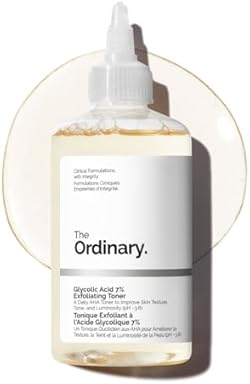
The Ordinary Glycolic Acid 7% Toner review: a real exfoliant, used sparingly.
One of the few mass-market toners that states both its acid strength and its pH, and both land in the range where glycolic acid actually works. It can smooth dull, rough skin over a few weeks. It is also a leave-on acid, so it can sting, raise your sunburn risk and, on Indian skin, leave dark marks if you overdo it.
The Ordinary Glycolic Acid 7% Exfoliating Toner is a well-formulated, fairly priced leave-on exfoliant for dull, rough or uneven skin. It states 7% glycolic acid at a pH of about 3.6, which sits inside the safety limits cosmetic regulators accept (up to 10%, pH 3.5 or above) and is acidic enough to exfoliate. Low-strength glycolic acid has modest clinical evidence for smoother texture and mild sun damage; expect gradual change over 6–12 weeks, not a peel. It isn't for sensitive, broken or freshly treated skin, and it makes you more prone to sunburn, so daily sunscreen is not optional. In India the 240 ml bottle has an MRP of ₹1,275 and sells for about ₹1,147–1,150 from authorised retailers.
- Product
- The Ordinary Glycolic Acid 7% Exfoliating Toner, 240 ml (formerly "Toning Solution")
- Best for
- Dull skin, rough texture, uneven tone, normal to oily skin
- Not ideal for
- Sensitive, eczema-prone, peeling or broken skin; first-time acid users who skip sunscreen
- Key active
- Glycolic acid 7% (AHA), pH about 3.6
- Type
- Leave-on toner: apply with a cotton pad, don't rinse
- Free from
- Added fragrance (parfum), drying alcohol
- Price
- ~₹1,147–1,275 (about ₹4.8–5.3 per ml)
- Verdict
- A good first AHA, if you start slowly and wear SPF every day
Reviewed by the Naked Compound Research Team · Last updated · Not lab-tested: based on the published ingredient list, the brand's directions and the sources below.
Glycolic acid is the smallest and most studied of the alpha hydroxy acids (AHAs), and The Ordinary's 7% toner is how a lot of Indian shoppers first try it. The bottle makes two specific promises: 7% glycolic acid, and a pH of about 3.6. Most exfoliating toners in India disclose neither.
We read it the way we read any label: what's stated, what's implied and what's missing. We haven't lab-tested this product, so we can't confirm the 7% or the pH ourselves. Everything below comes from the published ingredient list, the brand's directions and the clinical and regulatory evidence on glycolic acid, and we've flagged where the marketing runs ahead of that evidence.
"The percentage on the front only tells you half the story. It's the pH that decides how much of that acid actually works — and this one tells you both."— Naked Compound Research Team
What's actually in the bottle.
The ingredients that matter, in label order. Ingredients are listed from most to least; the full list has 42 entries, most of them in very small amounts. [1][2]
| # | Ingredient | What it does here |
|---|---|---|
| 01 | Aqua (water) | The base. |
| 02 | Glycolic acid | The active: an alpha hydroxy acid that loosens the bonds between dead skin cells on the surface so they shed faster. Stated at 7%. |
| 03 | Rosa damascena flower water, centaurea cyanus (cornflower) flower water, aloe barbadensis leaf water | Plant waters that replace some of the plain water. They make up the watery base and give the faint rose scent; there's no added fragrance (parfum). |
| 04 | Propanediol, glycerin | Humectants that draw water into the skin and soften the drying effect of the acid. |
| 05 | Triethanolamine, aminomethyl propanol | Alkaline buffers that raise the pH from very harsh to about 3.6. This is what makes 7% tolerable for daily use. |
| 06 | Panax ginseng root extract | A plant extract marketed for radiance. It's there in a small amount, and there's no good evidence it adds to the glycolic acid. |
| 07 | Tasmannia lanceolata (Tasmanian pepperberry) fruit/leaf extract | The brand says it helps reduce the irritation that comes with acids. Independent evidence for this is limited. |
| 08 | Amino acids (aspartic acid, alanine, glycine, serine and others), PCA, sodium PCA, sodium lactate, urea, sugars | A mix that imitates the skin's own natural moisturising factor. Helps keep the skin hydrated while you exfoliate. |
| 09 | Hexyl nicotinate | A niacin (vitamin B3) ester that briefly widens surface blood vessels. In tiny amounts it can give a warm, flushed feeling on application. |
| 10 | Citric acid, polysorbate 20, gellan gum, sodium chloride | pH adjustment, solubilising and texture. |
| 11 | Potassium sorbate, sodium benzoate, 1,2-hexanediol, caprylyl glycol, hexylene glycol | Preservatives and preservative boosters. |
Grouped for readability; the full list also includes valine, isoleucine, proline, threonine, histidine, phenylalanine, glutamic acid, arginine, fructose, glucose, sucrose, dextrin and trisodium ethylenediamine disuccinate (a chelator). This product was previously sold as "Glycolic Acid 7% Toning Solution", and many Indian listings still use that name. Check the ingredient list on the bottle you receive.
Both the % and the pH
Glycolic acid's strength depends on pH as much as percentage: the same 7% at pH 5.5 barely exfoliates. The Ordinary discloses both, and pH 3.6 sits just above the 3.5 floor regulators set for leave-on AHAs. We haven't independently tested either number.
"Brightening"
Here it means removing dull surface cells so skin reflects light more evenly. Glycolic acid can help mild uneven tone over time, but it isn't a treatment for melasma or deep pigmentation, and irritation can make dark marks worse on brown skin.
"Toner"
This isn't a gentle rebalancing toner to use after every wash. It's a leave-on acid exfoliant in liquid form, and it belongs in the same step as other exfoliating actives.
Ginseng & pepperberry
Both sound like extra benefits. They're present in small amounts, and the evidence that they boost the results or reduce irritation in this formula is thin. The glycolic acid does the work.
What we can actually say.
Glycolic acid is a well-understood exfoliant. AHAs weaken the bonds that hold dead cells together at the skin's surface, which makes the skin feel smoother and look more even. Over longer use, low-strength AHAs have also been linked to modest increases in skin thickness and collagen. [3]
Low-strength, leave-on glycolic acid has modest clinical support. In a 22-week, double-blind, vehicle-controlled trial of 74 women with sun-damaged facial skin, an 8% glycolic acid cream produced small but measurable improvements in roughness, mottled pigmentation and overall sun damage, and was well tolerated. [4] That's close to this product's 7%, but it was a cream, not this toner, and the changes were modest.
The strength and pH sit inside the accepted safety range. The US Cosmetic Ingredient Review panel concluded glycolic acid is safe in leave-on cosmetics at up to 10% and a pH of 3.5 or above, provided the product is formulated to avoid sun sensitivity or the directions include daily sun protection. [5] At 7% and about pH 3.6, this toner is inside that range, near the stronger end.
Sun sensitivity is real. The US FDA says AHA products can increase the skin's sensitivity to UV and the risk of sunburn, during use and for up to a week after stopping, and recommends a "Sunburn Alert" on labels. [6] In Indian sunlight, daily broad-spectrum sunscreen is part of using this product, not an extra.
Brown skin needs extra care. Irritation from over-exfoliation can leave post-inflammatory hyperpigmentation (dark marks) on medium and darker skin tones, the opposite of what most people buy this for. Start slowly and stop if you see stinging, redness or peeling.
How to use it without irritation.
Cotton pad, evening, no rinse
After cleansing, soak a cotton pad and sweep it over dry face and neck, avoiding the eyes, lips and any broken skin. Don't rinse. Follow with moisturiser. [2]
Start 2–3 nights a week
The brand allows once daily in the evening, but begin with two or three nights a week for the first two to three weeks. Increase only if your skin isn't stinging, red, tight or flaking. Patch-test on the jaw first.
Sunscreen every morning
Use broad-spectrum SPF 30 or higher every day while using this, and for a week after you stop. See our guide to why SPF 50 often isn't SPF 50.
One exfoliant per night
Don't use it the same night as a retinoid, benzoyl peroxide, a salicylic acid product, a scrub or another acid. Alternate nights instead. Skip it before and after waxing, threading, facials or peels.
Who should buy it, and who shouldn't.
You want an honest, affordable first AHA
- Your skin looks dull, feels rough or has uneven texture, and isn't sensitive.
- You want a leave-on exfoliant that discloses both its acid strength and its pH.
- You already wear sunscreen every day, or you're ready to start.
- You want a big bottle that lasts: 240 ml goes a long way at a few swipes a week.
Your skin needs calm more than exfoliation
- Your skin is sensitive, eczema-prone, rosacea-prone, peeling or broken.
- You're already on a prescription retinoid or another strong acid and your skin is reactive.
- You won't wear sunscreen daily: the sunburn and dark-mark risk isn't worth it.
- You want to treat melasma, deep pigmentation or active cystic acne: see a dermatologist.
Pros
- Glycolic acid strength (7%) and pH (~3.6) both disclosed
- Inside the accepted 10% / pH 3.5 safety range
- No added fragrance or drying alcohol
- Hydrating base of humectants and amino acids
- Large 240 ml bottle at about ₹4.8 per ml
Cons
- Increases sun sensitivity: needs daily SPF
- Can sting and irritate, especially on sensitive skin
- Irritation can cause dark marks on brown skin
- Ginseng and pepperberry add marketing appeal more than proven benefit
- Grey-market and suspiciously cheap listings are common in India
Our read: an honestly labelled, well-buffered glycolic acid toner at a fair price. For normal to oily skin that looks dull or feels rough, it's a sensible first AHA, as long as you start with a few nights a week, never skip sunscreen and expect gradual smoothing rather than a transformation. If your skin is sensitive or already irritated, skip it or talk to a dermatologist first.
*Price range from Indian retailer listings in September 2026 (MRP ₹1,275 for 240 ml; about ₹1,147–1,150 at Nykaa and Myntra). Listings far above MRP or well below it (we saw ₹800 and ₹2,499) usually mean grey-market or unverified stock. Reconfirm the live price, and check the "Sold by" field: buying from the brand or an authorised seller lowers the risk of old or counterfeit stock.
Frequently asked questions about The Ordinary Glycolic Acid 7% Exfoliating Toner
Does The Ordinary Glycolic Acid 7% Toner actually work?
Can I use The Ordinary Glycolic Acid toner every day?
Is The Ordinary Glycolic Acid 7% Toner good for acne or dark spots?
Can I use glycolic acid toner with niacinamide, vitamin C or retinol?
Is The Ordinary Glycolic Acid Toner safe for sensitive skin or in pregnancy?
Can I use The Ordinary Glycolic Acid toner on my underarms or body?
What is the price of The Ordinary Glycolic Acid 7% Toner in India?
- The Ordinary. Glycolic Acid 7% Exfoliating Toner — full ingredient list, published on retail listings. ulta.com
- The Ordinary. Glycolic Acid 7% Exfoliating Toner — product page, pH and directions. theordinary.com
- Tang SC, Yang JH. Dual Effects of Alpha-Hydroxy Acids on the Skin. Molecules. 2018;23(4):863. PubMed 29642579
- Stiller MJ, et al. Topical 8% glycolic acid and 8% L-lactic acid creams for the treatment of photodamaged skin: a double-blind vehicle-controlled clinical trial. Arch Dermatol. 1996;132(6):631–636. PubMed 8651713
- Andersen FA (Cosmetic Ingredient Review). Final report on the safety assessment of glycolic acid … and lactic acid. Int J Toxicol. 1998;17(Suppl 1). cir-safety.org
- US Food and Drug Administration. Alpha Hydroxy Acids — sun sensitivity and the "Sunburn Alert" labelling guidance. fda.gov
- Indian retailer listings for the 240 ml bottle, September 2026 (MRP ₹1,275; selling price about ₹1,147–1,150). nykaa.com
Derma Co 2% Salicylic Acid Face Wash
The BHA option: a rinse-off salicylic acid wash for oily, blackhead-prone skin.
Billy Jealousy LiquidSand
A physical scrub with an AHA on the label — and why the acid is the last ingredient.
Why SPF 50 Often Isn't SPF 50
You need sunscreen with any AHA. Here's how to check the one you use.
Skin Care, Decoded
Why the active-ingredient percentage matters, and how to read any skin care label.