Best Creatine for Women in India 2027: What the Trials Show, and What to Buy
The best creatine for women is the same plain creatine monohydrate that works for everyone else: 3 to 5 g a day, nothing added. Our pick in India is AS-IT-IS ONE Creatine Monohydrate, at ₹5.5 for a 3 g scoop. You don't need a pink tub or a "for her" label. We read every trial we could find that was run only in women, and we'll tell you where creatine clearly helps, where the evidence is thin, and what it does (and doesn't do) to your weight, hair and periods.
Buy plain, unflavoured creatine monohydrate and take 3–5 g every day. AS-IT-IS ONE is the best value we've scored (₹920 for 500 g, about ₹166 a month at 3 g a day). Want a familiar name: Optimum Nutrition Micronized, ₹10.8 a scoop. Just trying it: Nutrabay Pure's 100 g tub costs ₹299. Skip "creatine for women" blends unless you actually need what's been added: the one we checked costs the same as the brand's plain creatine and adds iron at an amount the listing doesn't state.
Six creatine supplements sold in India compared on creatine per serving, what else is in the tub, price per 3 g serving, cost of a month at 3 g a day, and our review score
Prices, pack sizes and serving sizes as shown on each Amazon.in listing, checked 12 November 2026; prices change often. ₹ / 3 g = price ÷ (grams ÷ 3), or price ÷ servings for the 134 g "for women" tub. A month = 30 servings of 3 g. "Our score" is the 0–10 rubric score from our full review of that product; we haven't reviewed the "for women" version. [1]
The 5 best creatines for women, reviewed
01
Best creatine for women overall
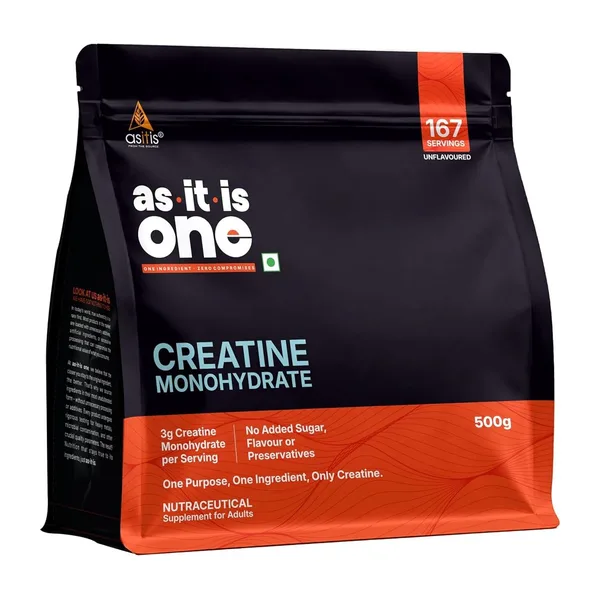
AS-IT-IS ONE Creatine Monohydrate
AS-IT-IS Nutrition · 500 g · ₹920
Creatine
3 g / scoop
Added
Nothing
₹ / 3 g
₹5.5
₹ / month
₹166
Our score
8.4 / 10
One ingredient, no flavour, no sweetener, and the lowest cost per gram of anything we'd recommend. It stirs into water, curd, dal or your morning chai without changing the taste much. At ₹166 a month, it costs less than most women spend on a single "women's" tub.
Lowest ₹ per serving here
Nothing added
Labdoor and Trustified listed
Not Creapure
No batch report on the product page
Watch for: the scoop is 3 g. If you want 5 g, use a level scoop and two-thirds of a second, or just weigh it once on a kitchen scale. Full details in our AS-IT-IS ONE creatine review.
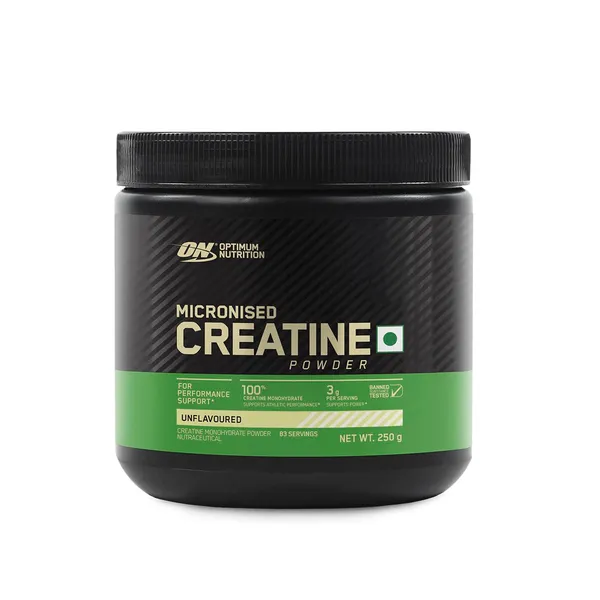
If you'd rather buy a brand your gym trainer has heard of, this is the one. ON's creatine has years of independent purity results in the US (Labdoor), and the unflavoured 250 g tub now comes with a 3 g scoop. You pay about ₹133 a month more than AS-IT-IS for the name and the track record, not for better creatine.
Plain creatine, 3 g a scoop
Long record of purity testing
Sold almost everywhere
About 70% dearer than AS-IT-IS
US test data, not India batches
Watch for: ON also sells flavoured 250 g packs with fewer servings (65 instead of 83). Check you're buying the unflavoured one. More in our ON Micronized Creatine review.
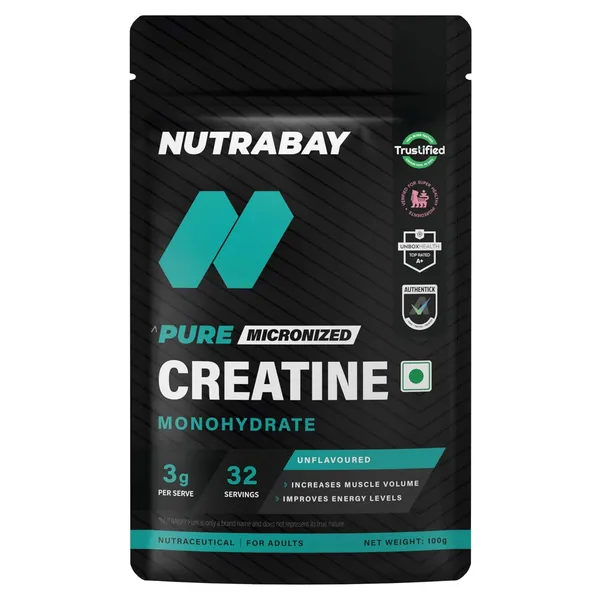
Not sure creatine is for you? ₹299 buys a month's supply with a little left over. Nutrabay publishes a batch certificate of analysis on its website every quarter, which most budget brands don't, and the listing says the product is Trustified certified. Creatine takes about four weeks at 3 g a day to fill your muscles, so a 100 g tub is just enough to find out.
Cheapest way to start
Quarterly batch report published
Nothing added
Dearer per gram than a 250 g pouch
Watch for: once you know you'll keep taking it, a 250 g pack of any plain creatine works out cheaper. See our Nutrabay Pure Creatine review.
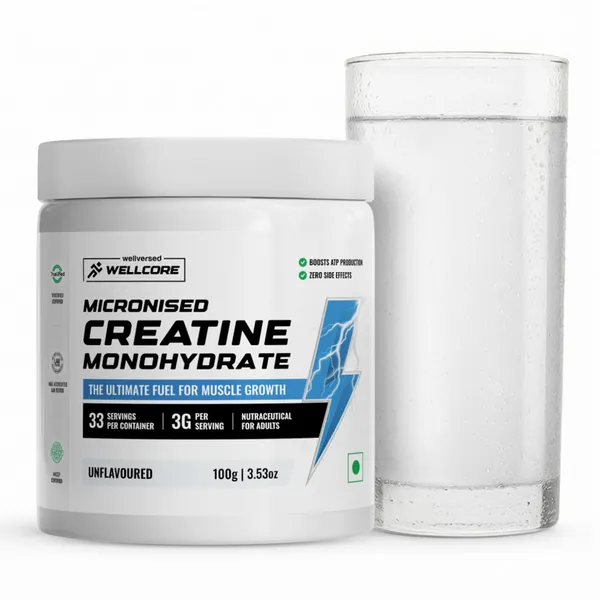
Of the creatines here, this is the one whose lab report we've gone through line by line. The Trustified pages Wellversed supplied show 99.65 g of creatine monohydrate per 100 g, with melamine, heavy metals, aflatoxins and pesticides below detection limits. Pankaj Singh bought the unflavoured jar himself in August 2026 and used it for two to four weeks: it dissolved without grit, and he noticed no side effects.
Clean lab report, 99.65% assay
Nothing added
About 2.6× the price of AS-IT-IS
Report shows no batch number or lab name
Watch for: it scores lower than its purity deserves because of the price. Our Wellcore creatine review lists what the report leaves out.
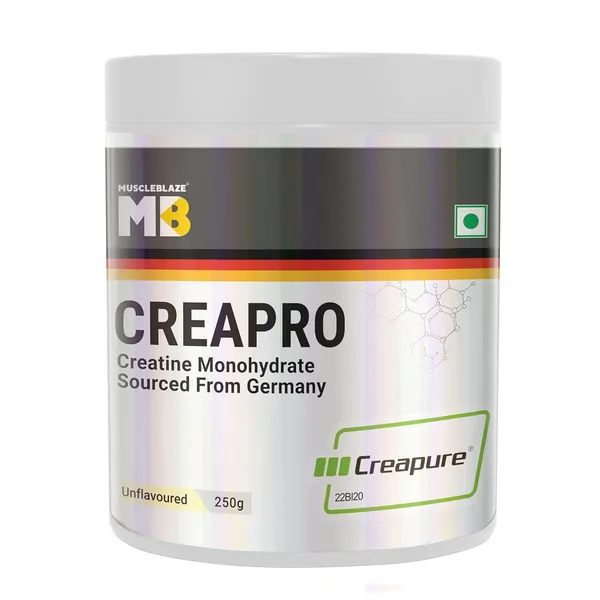
Creapure is creatine made by AlzChem in Germany, and it's the raw material used in many of the trials on this page. Some people want exactly that. CreaPRO uses it, but at the listed ₹2,499 for 250 g you pay almost five times what AS-IT-IS costs. It's worth a look only when it's on a deep discount.
Creapure raw material
Nothing added (unflavoured)
₹900 a month at listed price
Creapure covers the raw powder, not the finished tub
Watch for: MuscleBlaze sells several creatines; only CreaPRO is Creapure. Read our MuscleBlaze CreaPRO review.
No. Creatine monohydrate is one molecule, and it's the same molecule whether the tub is black or pink. Every women-only trial on this page used plain creatine monohydrate.
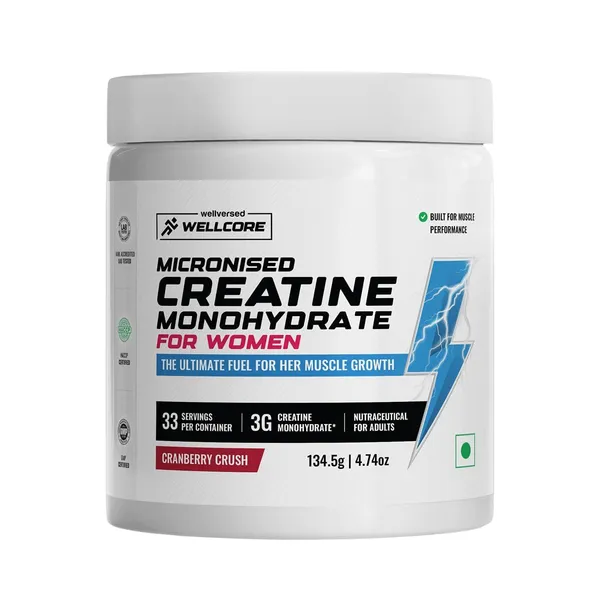
What we found on one "for women" labelWellcore Creatine Monohydrate For Women · ₹549 · 134 g, 33 servings
Each serving gives the same 3 g of creatine as Wellcore's plain jar, at the same ₹549 price. The extra weight is flavour plus added iron, vitamin B12, folate (B9) and vitamin C. The listing doesn't say how much iron is in a scoop. That matters: iron is worth taking if you're low in it, which many Indian women are, but not blindly on top of an iron tablet your doctor has already given you.
If you think you're low in iron, get a blood test and treat it on its own terms; our iron supplements for Indian women guide explains how. Then buy creatine as creatine.
Creatine for women: what the trials actually show
Most creatine research was done in young men, and reviews written by women's-health researchers say so plainly. [2] It's easy to count: a 2024 meta-analysis of strength trials found 23 studies, and only 49 of their roughly 500 participants were women. [3] So here is the honest scorecard, women's data only where we could find it.
Supported
Strength after menopause
Ten trials in older women (211 participants) found creatine plus weight training raised upper-body strength more than training alone. In trials lasting 24 weeks or longer, lower-body strength rose too. [5]
Promising
Mood, alongside treatment
In a Korean trial, 52 women with major depression took an antidepressant plus 5 g of creatine or a placebo. The creatine group improved faster, from week 2 onwards, and stayed ahead at week 8. This was an add-on to treatment, not a replacement for it. [7]
Mixed
Bone after menopause
In a two-year trial of 237 postmenopausal women who lifted weights and walked, creatine did not change bone density. It did keep the narrow part of the thigh-bone neck stronger in shape (its section modulus) and the women walked a little faster. [6]
Weaker than in men
Strength and muscle in younger women
Across 35 trials, creatine added 1.46 kg of lean mass in men during training but only 0.29 kg in women, a gap that wasn't statistically significant for women. [4] The strength meta-analysis above found the same pattern. With so few women studied, "smaller effect" and "not enough data" are both possible readings.
Too early
Sprints and recovery across the cycle
39 active women loaded creatine for five days. Sprint performance dipped in the high-hormone (luteal) phase in both groups, with a non-significant hint that creatine softened the drop. [9]
One more thing worth knowing: many of the scientists who run creatine trials, including authors of most papers cited here, advise AlzChem, the company that makes Creapure. They declare it in each paper. It doesn't make the results wrong, but it's a reason to read "creatine for everything" headlines with care. We don't sell creatine, and no brand paid to appear on this page.
Why it matters more on an Indian vegetarian plate
Your body uses up about 1–2 g of creatine a day. In people who eat meat and fish, roughly half of it comes back from food; the liver and kidneys make the rest. [13] Dal, paneer, curd and milk carry almost none, so a vegetarian has to make all of it herself.
In a Canadian trial, vegetarians started with less creatine in their muscles than meat eaters (117 against 130 mmol/kg), and gained more muscle creatine, lean tissue and work capacity when they took creatine during eight weeks of weight training. [14] That trial included both men and women. If you're a vegetarian woman who lifts, you are the person most likely to notice a difference.
Does creatine make women gain weight or look bloated?
This is the worry we hear most, and the women-specific data is reassuring. In a trial of 30 women, creatine loading (20 g a day for five days) raised the water inside and around the muscles during the luteal phase (total body water went up by about 0.8 litres, while it fell slightly on placebo), but body weight did not change compared with placebo. [8]
Creatine doesn't add fat. [12] If the scale moves a little in the first weeks, it's water held inside muscle, not puffiness under the skin. If you'd rather avoid even that, skip the loading phase and take 3 g a day from the start; you get to the same place in about four weeks.
Does creatine cause hair loss in women?
The whole fear comes from one 2009 study of 20 male rugby players in South Africa. After a week of high-dose loading, their blood DHT (the hormone linked to pattern hair loss) rose 56%, and stayed 40% above baseline after two more weeks. Nobody looked at their hair. [10]
The first trial that did look was published in 2025: 38 young men took 5 g of creatine or a placebo for 12 weeks. There was no difference in DHT, in the DHT-to-testosterone ratio, or in hair density, follicle count or thickness. [11] No trial has measured hair in women. On the evidence we have, creatine is an unlikely cause; if you're already losing hair, see a dermatologist rather than blame the scoop.
Creatine, periods and PCOS
Periods. The women-only trials above timed their tests to the menstrual cycle, and none reported creatine changing it, though none was designed to measure cycle length or bleeding. You can take creatine every day of the month; there's no reason to stop during your period. If you feel heavier before a period, that's your normal luteal-phase water shift, and creatine doesn't add to your weight on the scale. [8]
PCOS. We searched PubMed on 12 November 2026 and found no trial testing creatine in women with PCOS. Anyone claiming creatine treats PCOS is guessing. What we do know: exercise, strength training included, is part of standard PCOS care, and creatine can help you train harder. If you have PCOS and your doctor is happy for you to lift weights, plain creatine at 3–5 g is a reasonable addition, not a treatment.
Creatine during and after menopause
This is where the case for women is strongest. Muscle and bone both fall faster after menopause, and the best trials of creatine in women were run in exactly this group. Creatine plus weight training raised strength more than training alone, especially over six months or more [5], and a two-year trial found it kept the hip's bone structure stronger though not denser. [6] Creatine on its own, without training, did little for lean mass in trials. [4] The lifting is what does the work; creatine helps you get more out of it.
How much creatine should a woman take, and when?
3–5 g
Creatine monohydrate a day, every day, including rest days. 3 g fills your muscles in about four weeks; 5 g is the dose used in the depression and hair trials. [12]
No loading
Loading (20 g a day for five days) gets you there faster, but it's optional, and it's when stomach upset and water shifts are most likely.
Any time
Timing barely matters. Take it with a meal or after training, whenever you'll remember. Stir it into water, milk, lassi or a smoothie.
Is creatine safe for women? Side effects and who should be careful
Healthy kidneys: at 3–5 g a day, creatine hasn't harmed kidney function in healthy people in trials. It can raise the creatinine number on a blood test without any kidney damage, so tell your doctor you take it before a kidney test. [12]
Kidney disease or a single kidney: ask your doctor first.
Stomach upset: uncommon at 3–5 g. If it happens, take it with food or split the dose, and skip loading.
Pregnancy and breastfeeding: creatine looks interesting in early research, but there are no trials in pregnant women. Don't start it unless your obstetrician advises it.
Teenagers: a qualified sports nutritionist or doctor should decide.
What we did
Checked the listing, serving size and price of six creatines on Amazon.in on 12 November 2026
Worked out ₹ per 3 g and ₹ per month for each, in code
Ranked them using the scores from our own full reviews of each product
Read the abstract of every study cited here on PubMed, and searched PubMed for creatine trials in PCOS
Had the page reviewed by Sumita Bhatti, Clinical Nutritionist, on 12 November 2026
What we didn't do
Send any product to a lab
Test these creatines on women for this guide; the only hands-on notes are Pankaj Singh's on Wellcore
Take payment or free products from any brand; no brand saw this page before publishing
FAQ
Creatine for women: your questions
What is the best creatine for women in India?
Plain, unflavoured creatine monohydrate. Our pick is AS-IT-IS ONE Creatine Monohydrate: 3 g a scoop with nothing added, ₹920 for 500 g on 13 November 2026, which is ₹5.5 a serving or about ₹166 a month. Optimum Nutrition Micronized is the best-known alternative at ₹10.8 a serving.
Is creatine safe for women?
Yes, for healthy women at 3–5 g a day. An expert review of the research found no harm to kidney function in healthy people at these doses, and creatine doesn't add fat. Women with kidney disease should ask their doctor first, and creatine isn't advised in pregnancy or breastfeeding because it hasn't been tested there.
Does creatine make women gain weight?
Not fat. In a trial of 30 women, five days of creatine loading raised body water by about 0.8 litres in the luteal phase, but body weight didn't change compared with placebo. Any small rise on the scale is water held inside muscle, and skipping the loading phase keeps it smaller.
Does creatine cause hair loss in women?
There's no evidence it does. The idea comes from a 2009 study of 20 male rugby players whose DHT rose after loading; their hair wasn't checked. A 2025 trial in 38 men found no change in DHT or hair after 12 weeks of 5 g a day. No study has measured hair in women.
Can I take creatine during my period?
Yes. Creatine works by keeping your muscle stores topped up, so take it every day of the month. Trials in women timed to the menstrual cycle didn't report any effect on periods, though none was designed to measure cycle length or bleeding.
Is creatine good for women with PCOS?
Nobody knows yet: we found no trial of creatine in PCOS on PubMed as of 12 November 2026. Exercise is part of standard PCOS care and creatine can help you train, so 3–5 g a day is a reasonable add-on if your doctor agrees. It is not a PCOS treatment.
Should women over 40 or after menopause take creatine?
This is the group with the best evidence. In ten trials of older women, creatine plus weight training raised upper-body strength more than training alone, and both upper- and lower-body strength in trials of 24 weeks or more. A two-year trial found no change in bone density but a stronger hip-bone shape.
How much creatine should a woman take a day?
3–5 g of creatine monohydrate a day, every day. At 3 g your muscles fill up in about four weeks. A loading phase of 20 g a day for five days is optional; most women don't need it.
Is "creatine for women" better than normal creatine?
No. The creatine is the same molecule. The one "for women" product we checked gave the same 3 g of creatine as the brand's plain jar at the same ₹549 price, plus flavour and added iron and vitamins in amounts the listing doesn't state.
Does creatine work for vegetarian women?
Probably better than for meat eaters. Vegetarians get almost no creatine from food, start with lower muscle creatine, and in one eight-week trial gained more muscle creatine and lean tissue than meat eaters when they took it during weight training.
Smith-Ryan AE, Cabre HE, Eckerson JM, Candow DG. Creatine supplementation in women's health: a lifespan perspective. Nutrients. 2021;13(3):877. doi:10.3390/nu13030877
Wang Z, Qiu B, Li R, et al. Effects of creatine supplementation and resistance training on muscle strength gains in adults <50 years of age: a systematic review and meta-analysis. Nutrients. 2024;16(21):3665. doi:10.3390/nu16213665
Delpino FM, Figueiredo LM, Forbes SC, Candow DG, Santos HO. Influence of age, sex, and type of exercise on the efficacy of creatine supplementation on lean body mass: a systematic review and meta-analysis of randomized clinical trials. Nutrition. 2022;103–104:111791. doi:10.1016/j.nut.2022.111791
Dos Santos EEP, de Araújo RC, Candow DG, et al. Efficacy of creatine supplementation combined with resistance training on muscle strength and muscle mass in older females: a systematic review and meta-analysis. Nutrients. 2021;13(11):3757. doi:10.3390/nu13113757
Chilibeck PD, Candow DG, Gordon JJ, et al. A 2-yr randomized controlled trial on creatine supplementation during exercise for postmenopausal bone health. Med Sci Sports Exerc. 2023;55(10):1750–1760. doi:10.1249/MSS.0000000000003202
Lyoo IK, Yoon S, Kim TS, et al. A randomized, double-blind placebo-controlled trial of oral creatine monohydrate augmentation for enhanced response to a selective serotonin reuptake inhibitor in women with major depressive disorder. Am J Psychiatry. 2012;169(9):937–945. doi:10.1176/appi.ajp.2012.12010009
Moore SR, Gordon AN, Cabre HE, Hackney AC, Smith-Ryan AE. A randomized controlled trial of changes in fluid distribution across menstrual phases with creatine supplementation. Nutrients. 2023;15(2):429. doi:10.3390/nu15020429
Gordon AN, Moore SR, Patterson ND, et al. The effects of creatine monohydrate loading on exercise recovery in active women throughout the menstrual cycle. Nutrients. 2023;15(16):3567. doi:10.3390/nu15163567
van der Merwe J, Brooks NE, Myburgh KH. Three weeks of creatine monohydrate supplementation affects dihydrotestosterone to testosterone ratio in college-aged rugby players. Clin J Sport Med. 2009;19(5):399–404. doi:10.1097/JSM.0b013e3181b8b52f
Lak M, Forbes SC, Ashtary-Larky D, et al. Does creatine cause hair loss? A 12-week randomized controlled trial. J Int Soc Sports Nutr. 2025;22(sup1):2495229. doi:10.1080/15502783.2025.2495229
Antonio J, Candow DG, Forbes SC, et al. Common questions and misconceptions about creatine supplementation: what does the scientific evidence really show? J Int Soc Sports Nutr. 2021;18:13. doi:10.1186/s12970-021-00412-w
Kreider RB, Kalman DS, Antonio J, et al. International Society of Sports Nutrition position stand: safety and efficacy of creatine supplementation in exercise, sport, and medicine. J Int Soc Sports Nutr. 2017;14:18. doi:10.1186/s12970-017-0173-z
Burke DG, Chilibeck PD, Parise G, et al. Effect of creatine and weight training on muscle creatine and performance in vegetarians. Med Sci Sports Exerc. 2003;35(11):1946–1955. doi:10.1249/01.MSS.0000093614.17517.79
Written and researched independently by Naked Compound. We haven't lab-tested these products; the lab report discussed is the Trustified report Wellversed supplied for Wellcore creatine. Shop links are nofollow; HealthKart and MuscleBlaze links may earn us a commission, which never decides a ranking. Conflicts policy.

 01