The bottom line
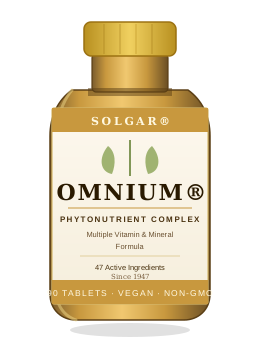
But there are two claims baked into its name — "Phytonutrient Complex" and "47 Active Ingredients" — that don't survive contact with the dosing data. CoQ10 at 10mg, quercetin at 10mg, alpha-lipoic acid at 10mg, phosphatidylserine at 10mg: these are each 1/10th to 1/100th of what any published trial used to establish efficacy. They are present on the label, not in your bloodstream at clinically relevant concentrations. Calling them "active" is a stretch most formulators know they're taking.
Then there is the vitamin D problem, which is the clearest avoidable weakness in the formula: Omnium uses ergocalciferol (D2), a form that meta-analyses now consistently show raises serum 25(OH)D levels roughly 40% less effectively than cholecalciferol (D3) at the same IU dose. In 2026, lichen-sourced vegan D3 has been commercially available for more than a decade. There is no reason — scientific, logistical, or ethical — to still be using D2 in a premium vegan multivitamin. Solgar hasn't explained why they haven't updated the formula, and the silence is conspicuous.
For an Indian buyer specifically, this matters even more: India has among the world's highest rates of vitamin D deficiency, and 300 IU of the less-effective form barely moves the needle.
What Solgar genuinely gets right
The core vitamins and minerals are well-chosen in their forms: Vitamin C as Ester-C (calcium, magnesium and zinc ascorbates) shows better urinary retention than plain ascorbic acid. Vitamin E as d-alpha tocopherol succinate is the natural stereoisomer with approximately 1.3-fold higher bioavailability than synthetic dl-alpha. Minerals throughout use glycinate amino acid chelates — more absorbable than oxide, sulfate or carbonate salts. The B-complex is at supraphysiological but safe doses. The label is completely transparent with no proprietary blends anywhere. And the product is genuinely vegan with clean excipients: microcrystalline cellulose, vegetable stearic acid, silica, mannitol, vegetable glycerin, carnauba wax.
What Solgar set out to make — and why "phytonutrient complex" is a significant marketing claim
The standard multivitamin — think Centrum, Supradyn, Wellman — delivers a matrix of vitamins and minerals designed to cover the bases: fill deficiency gaps, prevent insufficiency in populations with imperfect diets, and provide a nutritional insurance policy at low cost per day. The formula is simple, the evidence for benefit in genuinely deficient populations is solid, and the cost per day is low.
Solgar Omnium is trying to be something more: a "phytonutrient-enriched" multivitamin that doesn't just plug nutritional gaps but delivers therapeutic-grade plant compounds that might extend those benefits toward the clinical territory of heart health, cognitive protection, and cellular antioxidant defence. That is an ambitious claim, and Solgar backs it with genuinely impressive marketing — 47 ingredients, an amber glass bottle with 75 years of brand heritage, and a list of named compounds (CoQ10, quercetin, alpha-lipoic acid, green tea polyphenols) that each have their own legitimate bodies of evidence.
The question this review asks is not whether CoQ10 or quercetin have clinical evidence. They do. The question is whether Omnium's doses put those compounds anywhere near the evidence-supported range, and whether the price premium over a standard multivitamin is justified by the clinical contribution of those additions. On both counts, the answer is no. But that doesn't automatically make this a bad product — it makes it a good multivitamin wearing clothing it hasn't quite earned.
A note on "active ingredients"
Regulatory definitions of "active ingredient" vary. In Solgar's context, it means any ingredient in the formula with a named biological function — which technically includes everything from vitamin B12 to a 2mg dose of D-limonene. Forty-seven "active" ingredients tells you the label is interesting. It doesn't tell you anything about whether those ingredients are present in amounts large enough to do what their names suggest. That's the analysis this review does.
What's in each 2-tablet serving — ingredient by ingredient
Omnium's full panel is worth working through systematically. Most reviews skip this. We don't, because the specifics reveal a formula that has genuinely excellent judgment in some places and puzzling choices in others.
Vitamins — the detailed read
| Nutrient | Form | Amount | NC Assessment |
|---|---|---|---|
| Vitamin A | Natural beta-carotene | 15,000 IU | Smart choice — provitamin A converts to retinol only as needed; no toxicity risk unlike preformed retinol |
| Vitamin C | Ester-C (calcium, magnesium, zinc ascorbates) | 300 mg | Good — buffered form, better urinary retention than plain ascorbic acid; 300mg is the plateau for oral plasma saturation |
| Vitamin D | Ergocalciferol (D2) | 300 IU | Key weakness — D2 is ~40% less effective at raising 25(OH)D than D3; 300 IU is inadequate for any adult with D insufficiency; D2 when vegan D3 (from lichen) is widely available |
| Vitamin E | d-alpha tocopherol succinate | 300 IU | Good — natural d-alpha vs synthetic dl-alpha; succinate ester is stable; slightly better bioavailability than dl- |
| Vitamin K | Phytonadione (K1) | 20 mcg | Low — adequate for basic coagulation; MK-7 (K2) would be preferable for cardiovascular and bone benefits but adds cost; 20mcg K1 is a minimal token |
| Thiamin | Thiamin mononitrate | 30 mg | Supraphysiological — RDA is 1.1-1.2mg; excess water-soluble; safe but unnecessary for most healthy adults |
| Riboflavin | Riboflavin | 35 mg | Supraphysiological — RDA is 1.1-1.3mg; safe; may cause yellow discolouration of urine (harmless); some evidence for migraine prophylaxis at 400mg but not 35mg |
| Niacin | Niacinamide + niacin | 60 mg | Acceptable — mixed form covers both; niacinamide reduces flush risk; 60mg is well below the UL of 35mg for niacin specifically; niacinamide UL is higher |
| Vitamin B6 | Pyridoxine HCl | 50 mg | High dose — RDA is 1.3-1.7mg; 50mg is well below the 100mg/day where neuropathy risk begins but well above any nutritional need; common in premium multis for marketing reasons |
| Folate | Folic acid | 400 mcg | Good — standard RDA dose for adults; meets the RDA; 5-MTHF (methylfolate) would be better for MTHFR polymorphism carriers but costs more |
| Vitamin B12 | Cyanocobalamin | 100 mcg | Adequate for maintenance — 100mcg cyanocobalamin is above the absorption threshold and effective for maintenance; methylcobalamin would be preferable for some; insufficient for treating established deficiency |
| Biotin | D-biotin | 100 mcg | Good form — D-biotin is the active stereoisomer; 100mcg is above the Adequate Intake (30mcg) but far below the hair/skin megadoses (5000-10000mcg) marketed elsewhere |
| Pantothenic acid | D-calcium pantothenate | 80 mg | Supraphysiological — RDA is 5mg; excess excreted; safe |
Minerals — the reality check
| Mineral | Form | Amount | % of RDA | NC Assessment |
|---|---|---|---|---|
| Calcium | Glycinate amino acid chelate + ascorbate | 37 mg | ~3% | Token dose — this is not a calcium supplement; Solgar correctly avoids cramming calcium into a tablet already dense with other nutrients |
| Magnesium | Glycinate amino acid chelate + ascorbate + oxide | 37 mg | ~9% | Token dose — same story as calcium; glycinate is the right form but 37mg is nutritionally incomplete |
| Zinc | Glycinate amino acid chelate + ascorbate | 15 mg | 100% | Well-dosed — meets the full RDA in the most bioavailable form |
| Selenium | L-selenomethionine | 70 mcg | 100% | Well-dosed — selenomethionine is the preferred organic form; 70mcg meets ICMR RDA |
| Iodine | Potassium iodide | ~150 mcg | ~100% | Adequately dosed — standard RDA for adults in India (ICMR: 150 mcg/day) |
| Chromium | Chromium picolinate | 100 mcg | ~100% | Picolinate is well-absorbed; amount is at the AI; evidence for glucose metabolism is RCT-supported though effect sizes are modest |
| Copper, Manganese, Molybdenum | Glycinate chelates | 1.5mg / 2mg / 50mcg | ~100% | Well-formed — all at or near RDA in amino acid chelate form |
Phytonutrient blend — the specialty additions
| Ingredient | Amount in Omnium | Clinical dose range | NC Assessment |
|---|---|---|---|
| Polyphenols (green tea leaf, grape seed, pine bark) | 20 mg | 200–1000 mg | Sub-threshold — green tea catechins alone are studied at 400-800mg for antioxidant and metabolic effects; 20mg is 2-4% of any studied dose |
| Citrus bioflavonoids | 13 mg | 250–1000 mg | Sub-threshold — may enhance vitamin C activity marginally at these doses; clinical bioflavonoid studies use 250mg and above |
| Alpha-lipoic acid (ALA) | 10 mg | 100–600 mg | Sub-threshold — diabetic neuropathy and antioxidant trials use 300-600mg; 10mg is 2-3% of the minimum studied therapeutic dose |
| Coenzyme Q10 (CoQ10) | 10 mg | 100–300 mg | Sub-threshold — cardiovascular and mitochondrial evidence uses 100-300mg; statin-induced CoQ10 depletion correction requires 100-200mg; 10mg is not meaningful |
| Quercetin | 10 mg | 250–1000 mg | Sub-threshold — inflammation and senolytic RCTs use 250-1000mg; 10mg is a trace |
| Phosphatidylserine | 10 mg | 100–300 mg | Sub-threshold — cognitive benefit RCTs (elderly, Alzheimer's) use 100-300mg/day; 10mg is 3-10% of the minimum studied dose |
| N-Acetyl-L-Cysteine (NAC) | Undisclosed mg | 600–1800 mg | Amount not listed — likely trace; therapeutic NAC starts at 600mg; key glutathione precursor; absence of dose disclosure is the one transparency gap |
| Broccoli extract, turmeric extract, D-limonene | Trace / undisclosed | Varies | Likely present in microgram quantities; primarily label interest rather than clinical contribution |
The D2 problem — why Omnium's vitamin D choice is hard to defend in 2026
Vitamin D exists in two supplemental forms that are not interchangeable: ergocalciferol (D2) and cholecalciferol (D3). D2 is derived from irradiating ergosterol in yeast or ergot fungus — a vegan source. D3 has traditionally been derived from lanolin in sheep's wool — not vegan. For many years, this made D2 the default for any supplement trying to serve a vegan audience, including Solgar's entire range.
That situation changed with the commercial availability of lichen-sourced cholecalciferol. Several lichen species (notably Cladonia and Usnea) naturally produce D3. Extracting it produces a vegan D3 that is biologically identical to the animal-derived form — not D2 with its structural differences and inferior pharmacokinetics. Lichen D3 has been commercially available for at least a decade and now appears in dozens of well-regarded vegan supplements. There is no vegan-compatibility barrier to D3 in 2026.
The clinical evidence is clear and consistent: D3 outperforms D2. A 2012 meta-analysis by Tripkovic et al. pooled 25 RCTs and found D3 to be approximately 87% more potent than D2 at raising serum 25-hydroxyvitamin D. A 2014 meta-analysis by Bjelakovic et al. suggested all-cause mortality benefits appeared primarily with D3, not D2. The difference matters most when vitamin D status is low and you need to raise it — precisely the situation of the majority of Indian adults.2
300 IU of D2 in an Indian context
India has one of the world's most severe vitamin D problems. Despite abundant sunlight, studies consistently find 65-80% of Indian adults to be vitamin D insufficient or deficient (<30 nmol/L serum 25(OH)D). Factors include melanin (high melanin requires longer sun exposure for the same D production), clothing practices, increasing indoor lifestyles in urban populations, and low dietary D intake in a predominantly vegetarian diet with no oily fish.7 Therapeutic correction typically requires 1000-4000 IU D3 daily. Omnium provides 300 IU of D2 — a dose so low, in a form so inferior, that it is unlikely to move the needle at all for a vitamin D-deficient Indian adult.
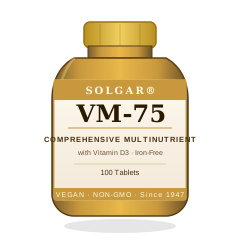
This is not an obscure scientific point. It has been mainstream knowledge in the vitamin D research community since the early 2010s. Solgar has updated other products to use D3. Their VM-75, for example, uses cholecalciferol. The fact that Omnium still ships with D2 in 2026 — at a premium price point — suggests the formula simply hasn't been updated since an era when D2 was the only vegan option. It is the clearest evidence that this is an ageing formulation sold at a contemporary premium.
Why the phytonutrient blend is largely ceremonial — and what "ceremonial" means for your money
Let's be precise about what we mean by "sub-therapeutic." Each of the phytonutrients in Omnium — CoQ10, alpha-lipoic acid, quercetin, polyphenols, phosphatidylserine — has a body of legitimate RCT evidence. That evidence was developed at specific doses. When we say Omnium's doses are sub-therapeutic, we mean they are below the range where any measured clinical effect has been observed in controlled trials. This is not a matter of opinion. The numbers are on the label; the trial doses are in the published literature.
CoQ10 has the most developed human evidence base among the specialty additions. The landmark Q-SYMBIO trial (2014) used 300mg/day in chronic heart failure and found reduced mortality. Cardiovascular meta-analyses use 100-300mg. Solgar delivers 10mg — a dose that produces no detectable increase in CoQ10 plasma levels in healthy adults.5
Alpha-lipoic acid has RCT support for antioxidant effects and neuropathy improvement at 300-600mg/day. The plasma half-life of ALA is roughly 30 minutes after oral dosing; it is taken up rapidly by tissues. At 10mg, any uptake effect is analytically invisible.6
Quercetin has growing evidence for anti-inflammatory and senolytic effects at 250-1000mg. The form in Omnium isn't specified beyond "quercetin" — it may not even be the more bioavailable quercetin phytosome used in modern trials. At 10mg, whatever form it is, it is not doing what the quercetin literature suggests quercetin can do.
Why brands do this — and whether it's dishonest
Including small doses of high-profile compounds is an industry-standard marketing move, and Solgar is not uniquely guilty of it. It works because consumers read ingredient lists, see "CoQ10" and "quercetin," and assume those compounds are doing something. The label is not dishonest — Solgar fully discloses every ingredient and every amount, which is more than most brands do. But the advertising copy is. Calling sub-10mg doses "active" implies clinical activity that isn't happening. The distinction between label honesty (which Omnium earns high marks for) and marketing honesty (which it doesn't) is real and worth holding onto.
To be fair to the formula, there is a plausible case that some interactions between vitamins, minerals, and phytonutrients could provide additive or synergistic effects at sub-therapeutic individual doses — a kind of whole-formula benefit greater than the sum of its parts. This is an attractive idea, but it hasn't been tested in controlled trials, and it is used more often to rationalise underdosing than to describe a measured phenomenon. Until there are RCTs of phytonutrient-enriched multivitamin formulas showing outcomes beyond standard MVMs, this remains a hope, not an evidence-based claim.
Where Omnium genuinely earns its price — ingredient forms that matter
Focus on the weaknesses and you risk missing what the formula gets right. The core vitamin and mineral selection shows real formulation intelligence — the kind that costs money and that cheaper multivitamins routinely cut.
Ester-C vs. plain ascorbic acid
Standard vitamin C in cheap multis is ascorbic acid — fine for basic adequacy, somewhat acidic, and cleared from blood relatively quickly. Ester-C is a trade-marked calcium-ascorbate-based complex with a less acidic pH. The published comparison by Moyad et al. found Ester-C produced significantly higher vitamin C levels in leukocytes and lymphocytes compared to plain ascorbic acid at the same dose, and showed longer retention in plasma. At 300mg, Omnium's vitamin C is at the plateau of oral bioavailability (absorption decreases steeply above ~400mg), and it's in the right form to stay in circulation longer.
d-alpha tocopherol vs. dl-alpha tocopherol
Vitamin E exists as eight stereoisomers. The natural form, d-alpha tocopherol (RRR-alpha-tocopherol), has approximately 1.3-fold higher bioavailability than the synthetic "all-rac" dl-alpha mixture that cheaper supplements use. The d- vs dl- distinction sounds technical but the difference in biological activity is real — the body preferentially incorporates RRR-alpha-tocopherol into lipoproteins and tissues. At 300 IU, Omnium's E is at a meaningful dose in the right form.
Chelated minerals throughout
The chemistry of mineral absorption is where multivitamin formulations diverge most sharply from generic pharmacy products. Inorganic salts — oxide, carbonate, sulfate — are poorly absorbed compared to organic forms. Zinc oxide (common in cheap multis) has roughly 50% the bioavailability of zinc glycinate. Magnesium oxide is notoriously poor — gastric irritation and ~4% absorption. Omnium uses glycinate amino acid chelates throughout, which are among the most bioavailable mineral forms across the board. The amounts are token (see the mineral table), but what is present is in a form that actually gets absorbed.
Phosphatidylserine from soy — the detail that matters
At 10mg, phosphatidylserine cannot replicate what the 100-300mg/day RCTs found for cognitive support. But it's worth noting the source: Omnium's phosphatidylserine is soy-derived, not derived from bovine cortex (the original source before BSE risk ended that practice). This isn't a quality advantage — it's the standard now — but it's worth knowing, especially since the product contains soy and this should be flagged for those with soy sensitivity.
Fully disclosed label — no proprietary blends
This is perhaps the hardest thing to quantify but one of the most practically important. Omnium discloses every single ingredient and its exact amount. There is no "antioxidant proprietary blend 500mg" hiding the individual contributions of CoQ10 and ALA. Every number is on the label. In an industry that uses proprietary blends routinely to make underdosing invisible, Omnium's transparency stands out — even when, as with the phytonutrients, transparency reveals sub-therapeutic doses rather than impressive ones.
What does the clinical evidence actually say about multivitamins?
Multivitamins occupy an unusual place in the evidence hierarchy. The ingredient-level evidence — vitamin D prevents rickets, B12 supports nerve function, zinc supports immune function — is unambiguous at therapeutic doses. The product-level evidence — does taking a multivitamin daily for years improve health outcomes in a generally nourished population — is considerably more equivocal.
The landmark Physicians' Health Study II (2012) followed 14,641 male physicians over 11 years and found long-term multivitamin use was associated with an 8% reduction in total cancer incidence. Not a large effect, but real and statistically significant in a large, well-controlled trial.1 More recent data from the Cocoa Supplement and Multivitamin Outcomes Study (COSMOS) showed similar trends, with possible cardiovascular benefits in some subgroups, particularly older adults.
Against this, the US Preventive Services Task Force (USPSTF) 2022 updated guidelines found insufficient evidence to recommend multivitamins for the prevention of cardiovascular disease or cancer in the general adult population — and specifically recommended against beta-carotene supplementation for cancer prevention in smokers. The difference between the USPSTF position and the PHS-II finding is not necessarily a contradiction: multivitamins may benefit subgroups with suboptimal intake while producing no measurable benefit in the generally well-nourished population that USPSTF studies primarily address.3
Where multivitamins clearly work — and why this matters for India
The evidence for multivitamins is strongest — often much stronger — in populations with actual nutritional deficiencies. This is where India enters the picture. Indian adults face documented, widespread insufficiency in vitamin D (65-80% deficient), vitamin B12 (40-80% of vegetarians deficient), zinc (widespread), and iron (women especially). A multivitamin won't correct severe deficiency — that requires targeted therapeutic dosing — but it can meaningfully reduce the gap and prevent worsening. For an Indian adult who doesn't regularly consume oily fish, dairy, or fortified foods, a good multivitamin is not redundant. The ICMR/NIN National Nutrition Surveys consistently show dietary gaps that supplementation can practically address.7
For phytonutrient-enriched formulas specifically, the evidence picture is bleaker. No large, prospective RCT has compared a phytonutrient-enriched multivitamin against a standard MVM in a general adult population and found a meaningful incremental outcome benefit. The phytonutrient additions in products like Omnium are hypothesis-generating rather than evidence-validated at the product level — the ingredients have their own evidence bases, but the product combining them in these specific amounts does not.
Strong (RCT) for D3-form vitamin D, zinc, selenium, B12, folate at adequate doses. for multivitamin use and cancer prevention over long-term in deficient populations. Weak / theoretical for phytonutrient blend at doses used in Omnium.Price, availability, and what ₹85 per day actually buys in India's multivitamin market
Solgar Omnium reaches India almost exclusively through import channels: iHerb India (₹3,847 for 90 tablets as of July 2026), Flipkart (imported seller, variable pricing), and occasional grey-market pharmacy listings. It is not sold through GNC India, HealthKart, or any major domestic supplement retailer as a stocked product. This matters practically: iHerb shipping from the US adds 1-2 weeks lead time, there are import duty considerations above certain order thresholds, and you cannot inspect a batch in a store before buying.
| Brand / Product | India price | Cost/day | Vitamin D form | D per day | NC score |
|---|---|---|---|---|---|
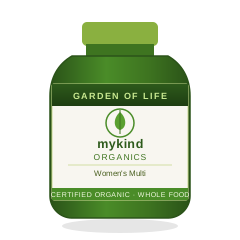
| Garden of Life mykind Organics | ~₹4,500 / 60t | ~₹150 | D3 (lichen) | 1000 IU | 8.2 |
| Solgar VM-75 | ~₹4,200 / 100t | ~₹84 | D3 (cholecalciferol) | 400 IU | 8.0 |
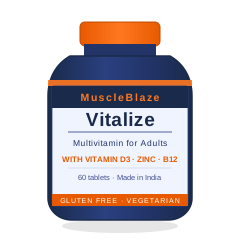
| MuscleBlaze Vitalize | ~₹1,100 / 60t | ~₹37 | D3 | 600 IU | 7.4 |
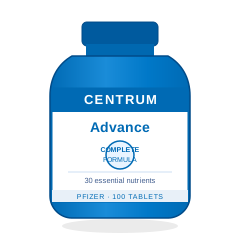
| Centrum Advance | ~₹700 / 100t | ~₹14 | D3 | 800 IU | 6.8 |
| Solgar Omnium (this review) | ~₹3,847 / 90t | ~₹85 | D2 | 300 IU D2 | 6.8 |
The value arithmetic is uncomfortable for Omnium. MuscleBlaze Vitalize costs ₹37/day, uses D3 at 600 IU, is manufactured in India with FSSAI compliance, and scores 7.4/10. Centrum Advance costs ₹14/day, uses D3 at 800 IU, and scores 6.8/10 — the same as Omnium at 1/6th the daily cost. Solgar VM-75 costs roughly the same per day as Omnium but uses D3 and scores 8.0/10. The only scenario where Omnium's ₹85/day price is clearly justified: you specifically want the Ester-C form, chelated minerals, and a full phytonutrient-enriched panel from a brand with 75 years of manufacturing history, and you understand that the specialty additions are at sub-clinical doses.
That is a niche but legitimate use case. It is not "the best multivitamin" in any objective sense.
How Omnium stacks up against the field
Full category: Best multivitamins India 2026 → | Solgar VM-75 — 8.0/10 → | Vitamin D ingredient deep-dive →
Buy / consider an alternative
Buy Omnium if
- You specifically value Ester-C vitamin C and d-alpha tocopherol E in a multivitamin, and have compared these forms with available alternatives and still prefer Omnium's overall package
- You want the most transparent multivitamin label available — every ingredient, every amount, fully disclosed — and are willing to pay a premium for that integrity
- You are already taking a separate, correctly-dosed, D3-form vitamin D supplement (e.g., 1000-2000 IU D3), so Omnium's D2 weakness is neutralised
- You have used Omnium for years, know how your body responds, and find value in Solgar's consistency and brand track record at the manufacturing level
- You want to avoid animal-derived ingredients and the rest of the Indian vegan multivitamin market doesn't meet your standards — accepting that the D2 issue is a real trade-off
Consider an alternative if
- Vitamin D is your primary concern — 300 IU D2 won't meaningfully correct insufficiency; a dedicated 1000-2000 IU D3 supplement from Thorne, Pure Encapsulations, or any FSSAI-compliant source at ₹5-10/day is far more effective
- You're purchasing a multivitamin primarily as nutritional insurance and cost matters — Centrum Advance at ₹14/day delivers D3 at 800 IU, 30 nutrients, and the same NC score at 1/6th the price
- You want the best Solgar multivitamin — buy VM-75 instead; it uses D3, scores 8.0/10, and costs roughly the same per day
- You have confirmed vitamin D or B12 deficiency — no multivitamin corrects established deficiency at multi-doses; get a standalone, correctly-dosed single supplement first
- The phytonutrient blend is the reason you want Omnium — if CoQ10, ALA, or quercetin are your specific interest, buy them as standalone supplements at therapeutic doses (100-300mg CoQ10, 300-600mg ALA) for less money
The smarter combination if you want to replicate what Omnium is trying to do
Solgar VM-75 (D3 form) + 1000 IU D3 supplement + a dietary CoQ10 source. The VM-75 gives you Solgar's quality multivitamin foundation with the correct vitamin D form. A separate D3 brings your daily vitamin D up to a meaningful dose for an Indian adult. If you specifically want CoQ10 or ALA effects, buy them as standalone supplements at 100-200mg. Total cost: similar to or less than Omnium. Nutritional outcome: considerably better. The phytonutrient additions at clinical doses cost more — but you're not getting clinical doses in Omnium anyway.
Three changes that would make Omnium genuinely deserving of its premium
Switch vitamin D to lichen-sourced D3 — this should already have happened
This is not a reformulation project. Lichen-sourced cholecalciferol is a single raw material swap with the same regulatory classification, compatible with the existing vegan certification, and demonstrably more effective at the same IU dose. It has been available from multiple suppliers (including Solgar's parent company Nestlé Health Science's own nutrition science partners) for over a decade. Every day Omnium continues to ship with D2 is a day it delivers inferior vitamin D to customers who paid a premium assuming "premium" means "best available." This change alone would raise Omnium's NC score to 7.5+, at minimal additional cost.
Either raise phytonutrient doses to clinical thresholds or drop the "Phytonutrient Complex" positioning
A genuine phytonutrient complex would have at least one phytonutrient at or near its published therapeutic dose: CoQ10 at 100mg minimum, quercetin at 250mg, ALA at 100mg. This would require a larger tablet, a 3-tablet serving, or a reformulation of the overall formula — all are commercially viable. Alternatively, stop leading with "Phytonutrient Complex" as the product's primary claim and position Omnium honestly as what it is: a premium multivitamin with chelated minerals, Ester-C, and trace phytonutrient additions. That's a genuinely good product. It just isn't the thing the name promises.
Disclose NAC and other undisclosed phytonutrient amounts
Solgar is close to perfect on label transparency — listing 47 ingredients individually is genuinely unusual and commendable. The exception is NAC (N-acetyl-L-cysteine) and some of the botanical extracts (broccoli, turmeric, D-limonene), whose amounts do not appear to be individually stated on currently available labels. This is a small but addressable gap in the transparency story. NAC at meaningful doses (600mg+) can interact with certain medications and affect certain lab tests — buyers need to know the dose, and they currently can't determine it from the label.
References & citations
- Gaziano JM, Sesso HD, Christen WG, et al. (2012). Multivitamins in the prevention of cancer in men: the Physicians' Health Study II randomized controlled trial. JAMA, 308(18):1871–1880. RCT
- Tripkovic L, Lambert H, Hart K, et al. (2012). Comparison of vitamin D2 and vitamin D3 supplementation in raising serum 25-hydroxyvitamin D status: a systematic review and meta-analysis. Am J Clin Nutr, 95(6):1357–1364.
- US Preventive Services Task Force. (2022). Vitamin, Mineral, and Multivitamin Supplementation to Prevent Cardiovascular Disease and Cancer: Recommendation Statement. JAMA, 327(23):2326–2333.
- Bjelakovic G, Nikolova D, Gluud C. (2014). Vitamin D supplementation for prevention of cancer in adults. Cochrane Database Syst Rev, (6):CD007469.
- Mortensen SA, Rosenfeldt F, Kumar A, et al. (2014). The effect of coenzyme Q10 on morbidity and mortality in chronic heart failure (Q-SYMBIO). JACC Heart Fail, 2(6):641–649. RCT
- Ziegler D, Ametov A, Barinov A, et al. (2006). Oral treatment with alpha-lipoic acid improves symptomatic diabetic polyneuropathy (SYDNEY 2 trial). Diabetes Care, 29(11):2365–2370. RCT
- Ritu G, Gupta A. (2014). Vitamin D deficiency in India: prevalence, causalities and interventions. Nutrients, 6(2):729–775.
- Yajnik CS, Deshpande SS, Jackson AA, et al. (2008). Vitamin B12 and folate concentrations during pregnancy and insulin resistance in the offspring. Diabetologia, 51(1):29–38. RCT
- Moyad MA, Combs MA, Vrablic AS, Velasquez J, Turner B, Bernal S. (2008). Vitamin C metabolites, independent of smoking status, significantly enhance leukocyte, but not plasma ascorbate concentrations. Anticancer Res, 28(2B):895–900. RCT
- Kececi T, Keskin I. (2002). Alpha-lipoic acid supplementation: antioxidant effects and interaction with vitamin E. Vet Med, 47(12):325–330. In vitro / Animal
- Crowe-White KM, Phillips TA, Ellis AC. (2019). Lycopene and cognitive function. J Nutr Sci, 8:e20.
- ICMR-NIN Expert Group on Nutrient Requirements for Indians. (2020). Nutrient Requirements for Indians — Recommended Dietary Allowances and Estimated Average Requirements. National Institute of Nutrition, Hyderabad.
Not medical advice. Vitamin D supplementation above 2000 IU/day should be discussed with a physician, particularly for people with granulomatous diseases, hypercalcemia, or kidney conditions. Vitamin D toxicity is rare but real — it occurs with chronic supplementation above 4000 IU/day in most adults. If you believe you have vitamin D or B12 deficiency, get a blood test (25-OH Vitamin D, serum B12, MMA) and discuss therapeutic dosing with a doctor rather than relying on any multivitamin.