
The bottom line
Clean formulation, NSF certified, metered liquid dosing that actually matters — and a K2 form choice that requires you to dose differently than you'd expect.
Thorne Vitamin D/K2 Liquid is a four-ingredient supplement: Vitamin D3 (Cholecalciferol), Vitamin K2 as Menatetrenone (MK-4), Medium Chain Triglyceride oil as the fat carrier, and mixed tocopherols as a natural preservative. NSF Contents Certified. Gluten-free, dairy-free, soy-free. Manufactured in a Thorne facility that is among the most rigorously audited in the US supplement industry.
The product's genuinely differentiated feature is the liquid dosing format. The metered dispenser delivers 500 IU of D3 and 100 mcg of K2-MK4 per drop. This means you can dial in exactly 1,000 IU, 2,000 IU, 3,000 IU, or any increment in between — without splitting capsules, without separate supplements, without dose approximation. For Indian adults whose corrective D3 dose varies widely based on serum levels (some need 1,000 IU, some need 4,000 IU), this flexibility is substantive.
The one formulation finding that changes the use protocol: the K2 in this product is MK-4 (Menatetrenone), not MK-7 (Menaquinone-7). MK-4 has a serum half-life of 1–2 hours — it clears the bloodstream rapidly after each dose. This is not a disqualifying problem, but it means the K2 benefit of this product depends on frequency of dosing. A single daily dose of 200 mcg MK-4 does not maintain the continuous Matrix Gla Protein (MGP) activation that a single daily dose of 90–180 mcg MK-7 does. Users seeking once-daily K2 coverage for arterial protection should dose this product at least twice daily, or consider an MK-7 option.
The formula — four ingredients, all accounted for
The MCT oil carrier is the correct choice for fat-soluble vitamins. Both Vitamin D3 and Vitamin K2 are fat-soluble — their intestinal absorption is dependent on bile acid secretion and the presence of dietary fat. Delivering them pre-dissolved in MCT oil eliminates the variable of "did this person take the supplement with a fatty meal" that plagues capsule and tablet formats. A capsule of D3 taken on an empty stomach absorbs approximately 50% less than the same dose taken with food containing fat. In liquid-in-MCT format, fat is already present in the preparation. This is a genuine formulation advantage. See the full Vitamin D3 ingredient entry →
Medium-chain triglycerides are absorbed via the portal vein rather than the lymphatic system, meaning they reach systemic circulation faster than long-chain fats. They also efficiently stimulate bile acid secretion, which is required for micellar solubilisation of fat-soluble vitamins in the small intestine. Delivering D3 and K2 pre-dissolved in MCT ensures bile acid availability at the time of vitamin presentation — improving absorption consistency regardless of meal timing. This is the same principle used in pharmaceutical vitamin D formulations.
Vitamin D3 — the mechanism and the India dosing question
Vitamin D3 (cholecalciferol) is converted in the liver to 25-hydroxyvitamin D [25(OH)D], the circulating storage form, and then in the kidney to 1,25-dihydroxyvitamin D [calcitriol], the active hormone. Calcitriol binds to the Vitamin D receptor (VDR), which is expressed in nearly every tissue in the body — explaining why D deficiency affects bone, immune function, cardiovascular health, muscle function, and insulin sensitivity simultaneously.1
The Indian context: an estimated 70–90% of urban Indian adults are Vitamin D insufficient (serum 25(OH)D below 20 ng/mL). This is paradoxical for a country at 8–37°N latitude with significant sunlight, but the explanation is consistent across studies: urban workers spend most of daylight hours indoors, darker skin tones require significantly longer sun exposure for equivalent D synthesis, and the cultural practice of avoiding sun during peak hours further limits cutaneous D production. In cities like Bengaluru, Delhi, Mumbai, and Hyderabad, supplemental D3 is the only reliable route to adequacy for most adults.
The ICMR-NIN 2020 RDA for Vitamin D in Indian adults is 600 IU/day. The Endocrine Society guideline for repletion in deficient adults is 1,500–2,000 IU/day. At 1,000 IU per 2-drop serving, Thorne D/K2 sits in the lower-maintenance range — appropriate as a baseline for a non-deficient adult, but below the corrective dose for a deficient one.
The MK-4 question — why the half-life matters more than the dose
Vitamin K2 exists in multiple forms called menaquinones, numbered by the length of their side chain. The two forms relevant to supplementation are MK-4 (Menatetrenone, with a 4-unit side chain) and MK-7 (Menaquinone-7, with a 7-unit side chain). Thorne D/K2 Liquid uses MK-4. This is the most clinically studied form by total trial count — but the comparison with MK-7 is not in MK-4's favour at supplemental doses.
MK-4 (Menatetrenone)
Short half-life · Requires multiple doses- Serum half-life: 1–2 hours — clears bloodstream rapidly after each dose
- Requires ≥200 mcg doses taken 2–3× daily for continuous MGP activation
- Strongest evidence at pharmacological doses: 45mg/day (Japanese trials) — 225× the dose in this product
- At 200 mcg once-daily, serum MK-4 is undetectable for most of the day
- Advantage: fast tissue uptake kinetics; useful for bone mineralisation events
MK-7 (Menaquinone-7)
Long half-life · Once-daily dosing works- Serum half-life: 48–72 hours — remains active in circulation between doses
- Once-daily dosing at 90–180 mcg maintains continuous MGP activation
- Knapen et al. 2013 (3-year RCT, postmenopausal women): 180 mcg/day significantly improved bone strength and reduced bone loss vs placebo
- More potent at lower doses due to sustained carboxylation of osteocalcin and MGP
- Standard form in most clinical trial protocols for supplemental-range K2
The practical implication for someone taking Thorne D/K2 once daily: the 200 mcg MK-4 per serving produces a serum K2 peak, activates osteocalcin and Matrix Gla Protein briefly, and is then cleared within 1–2 hours. For the remaining 22–23 hours of the day, there is effectively no supplemental K2 circulating. For someone with dietary K2 from fermented foods (natto, aged cheeses, grass-fed dairy), this matters less — dietary MK-4 and MK-7 provide background coverage. For a typical urban Indian vegetarian eating minimal fermented dairy, dietary K2 intake is near zero, making the dosing frequency of supplemental K2 more consequential.2
The solution to the MK-4 half-life problem is straightforward: instead of 4 drops once daily (2,000 IU D3 + 400 mcg K2-MK4), take 2 drops in the morning and 2 drops in the evening. This splits the K2 across two daily peaks rather than one, improving K2 coverage across the day. The D3 dose is less time-sensitive — 25(OH)D serum levels change slowly over weeks, not hours, so once-daily D3 dosing is adequate. The K2 half-life issue is unique to MK-4.
Why D3 and K2 belong in the same supplement — the synergy explained
The combination of D3 and K2 is not marketing convenience — it addresses a specific physiological sequence. Vitamin D3 increases intestinal calcium absorption (through upregulation of TRPV6 calcium channels) and simultaneously upregulates the synthesis of Vitamin K-dependent proteins including osteocalcin and Matrix Gla Protein (MGP). The synthesis of these proteins is driven by D3; their activation — the carboxylation step that makes them functional — requires Vitamin K2. Without adequate K2, D3 increases circulating calcium but cannot ensure that calcium is deposited in bone (via osteocalcin) rather than arterial walls (via MGP).3
This is not theoretical. Van Ballegooijen et al. (2017, systematic review) found that the combination of adequate D3 and K2 was associated with better bone mineral density outcomes than either alone. The AVADEC trial and subsequent Danish RCT protocol use K2+D3 combination specifically because the D3-driven increase in calcium absorption makes K2-dependent routing of that calcium to bone and away from arteries more critical — not less.4
At high D3 doses (3,000+ IU/day), the argument for co-supplementing K2 becomes stronger. D3 at therapeutic correction doses significantly increases calcium absorption from the gut; without K2 to activate MGP, the incremental calcium circulates with less directional control. This is one reason the K2 dose in Thorne D/K2 scales with the D3 dose via the drop mechanism — taking 6 drops gives you 3,000 IU D3 and 600 mcg K2-MK4 simultaneously. See the ingredient entry: Vitamin D3 →
India comparison — Thorne in the D3+K2 market
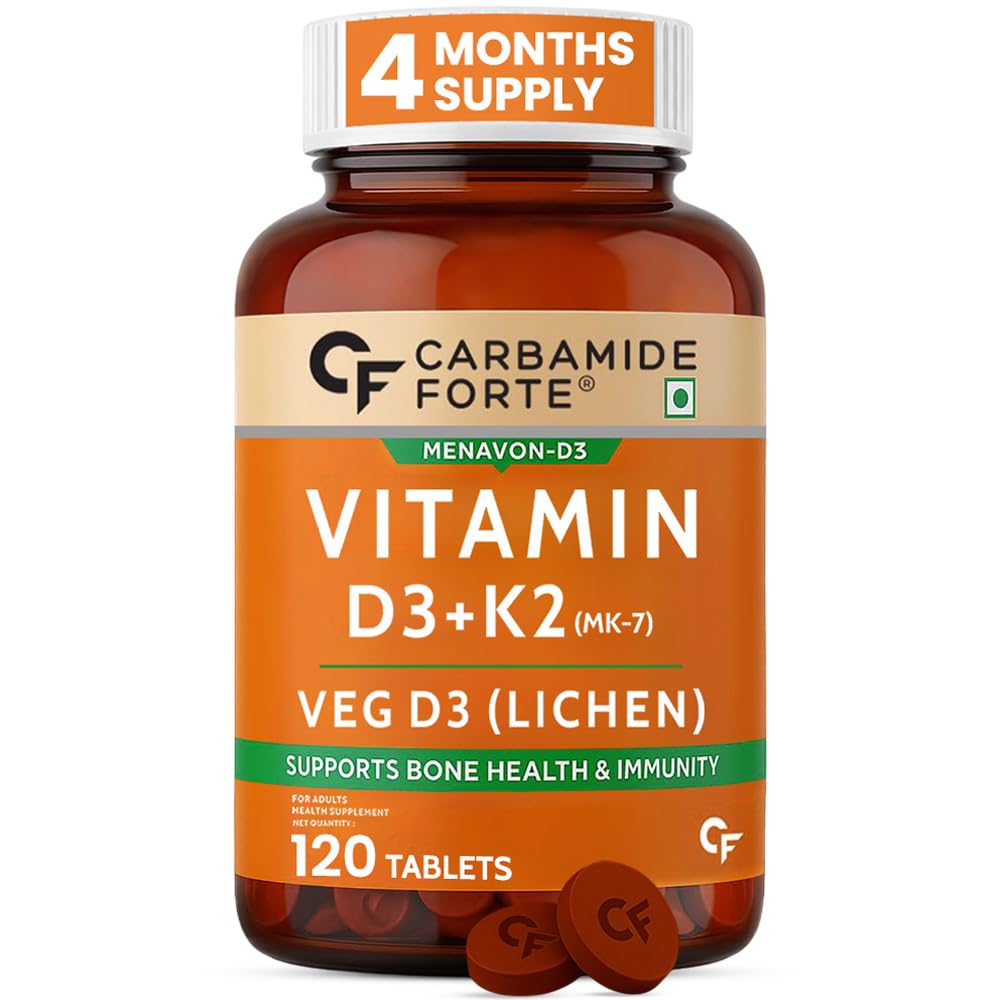
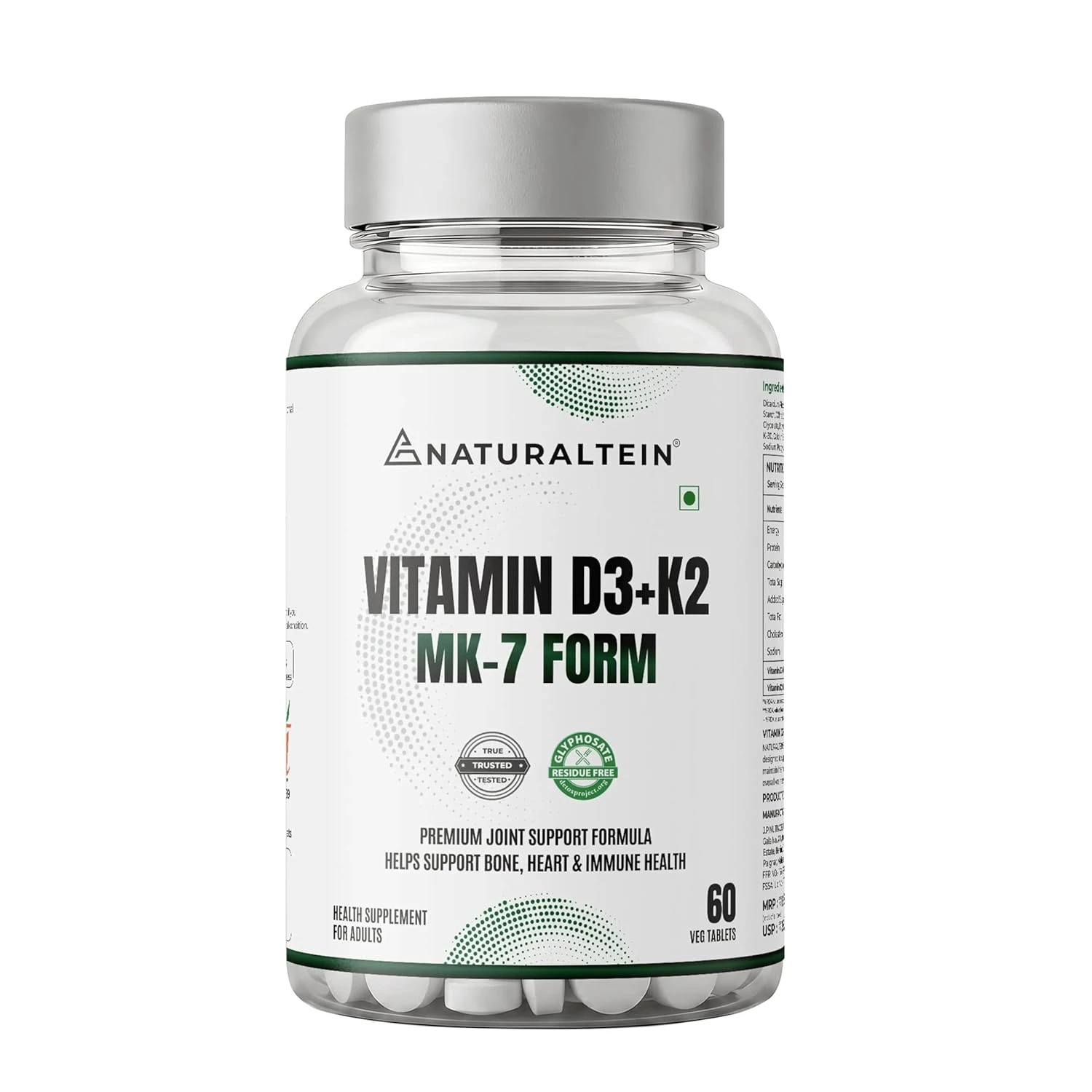
| Brand | D3 form/dose | K2 form/dose | K2 half-life | Dosing flexibility | Certification | NC score |
|---|---|---|---|---|---|---|
| Thorne D/K2 Liquid (this) | D3 · scalable | MK-4 · 200 mcg/2 drops | 1–2 hours | Metered drops · 500 IU increments | NSF Contents Certified | 8.6 |
| Carbamide Forte D3+K2 | D3 · 2,000 IU | MK-7 · 90 mcg | 48–72 hours | Fixed capsule | NABL COA | 8.0 |
| Nutrabay Gold D3+K2 | D3 · 2,000 IU | MK-7 · 90 mcg | 48–72 hours | Fixed capsule | Batch COA | 7.6 |
| HK Vitals D3+K2 | D3 · 2,000 IU | MK-7 · 45 mcg (low) | 48–72 hours | Fixed capsule | None public | 7.2 |
Who should buy Thorne D/K2 — and who has better options
- Need precise dose titration — adjusting D3 in 500 IU increments as serum 25(OH)D rises from correction to maintenance
- Have difficulty swallowing capsules or softgels — the tasteless liquid drops can be mixed into food or drinks
- Are willing to dose the K2 component twice daily (morning + evening) to account for MK-4's short half-life
- Specifically need NSF Contents Certified status — for drug-tested athletes or clinical settings requiring certification documentation
- Want the fewest possible excipients in your D3+K2 supplement
- Want once-daily dosing with confident K2 coverage — MK-7's 72-hour half-life does this without split-dose discipline
- Are cost-conscious — Carbamide Forte at ₹8–12/day delivers 2,000 IU D3 + 90 mcg MK-7 at a fraction of Thorne's import price
- Prefer a fixed 2,000 IU D3 dose appropriate for most deficient urban Indians, without needing to count drops
- Are not in a drug-tested sport or clinical setting where NSF certification is specifically required
Frequently asked questions
Full rubric breakdown
Vitamin D3's evidence for bone, immune, and cardiovascular health is among the strongest in nutritional medicine. K2's evidence for bone mineralisation (osteocalcin carboxylation) and arterial calcium direction (MGP activation) is mechanistically robust and supported by multiple RCTs. The D3+K2 combination has a growing specific evidence base (van Ballegooijen 2017 systematic review; AVADEC trial framework; Knapen 2013 for MK-7 specifically). 1-point deduction: the K2 form in this product (MK-4) has its strongest evidence at pharmacological doses (45mg) far exceeding the supplemental doses here; supplemental-range MK-4 evidence at 200–600 mcg/day is thinner than the MK-7 evidence at 90–180 mcg/day. Evidence tier: Strong — D3 and K2 combination · Moderate — MK-4 specifically at this dose1
D3 (cholecalciferol) is the correct, superior form of Vitamin D — not D2 (ergocalciferol). The MCT oil carrier for fat-soluble vitamin delivery is the optimal choice for absorption consistency. Mixed tocopherols as a preservative are appropriate — they protect the fat-soluble actives from oxidative degradation without introducing allergens or synthetic preservatives. The 2-point deduction is entirely attributable to the MK-4 form choice for K2. MK-7's 48–72 hour half-life makes it unambiguously superior for once-daily supplemental dosing in healthy adults seeking continuous K-dependent protein activation. MK-4 at 200 mcg once-daily is pharmacokinetically inadequate for most of the day. This is a form selection that reduces the product's practical K2 efficacy relative to what a MK-7 substitution would achieve at equivalent or even lower doses.2
Thorne has manufactured supplements for integrative medicine physicians since 1984, building a reputation around pharmaceutical-grade manufacturing standards. NSF Contents Certified — the NSF contents certification specifically verifies that the product contains what the label states, at the stated amounts, with no prohibited contaminants. Thorne manufactures in NSF-registered, GMP-compliant US facilities with lot-traceable production. Free from gluten, dairy, soy, and common allergens. No artificial preservatives, colours, or flavours. The 0.5-point deduction from a perfect score is for the absence of a separate NSF Certified for Sport designation on this specific product (available on some other Thorne products), which would add an anti-doping contaminant screening layer specifically relevant for athletes.
At ₹3,500–5,000 for 30ml (600 two-drop servings), the cost analysis depends on dosing. At 2 drops/day (1,000 IU D3): approximately ₹6–8/day — excellent value by any comparison. At 4 drops/day (2,000 IU D3): approximately ₹12–17/day — competitive with premium domestic options. At 6 drops/day (3,000 IU D3): approximately ₹18–25/day — significantly more expensive than domestic D3+K2 alternatives. The value score of 8.5 reflects the 600-serving bottle's cost efficiency at the 2-drop level, discounted for the additional cost of higher-dose protocols and the import channel complexity versus domestic purchase. The metered format's flexibility is a genuine utility value that liquid alternatives provide over capsules.
The supplement facts panel names all four ingredients precisely, including the specific K2 form (Menatetrenone — the IUPAC name for MK-4) rather than a generic "Vitamin K2." This level of form specificity is exactly what the label honesty dimension rewards. The anticoagulant contraindication (warfarin interaction) is prominently included, not buried. The usage instruction specifies "one to three times daily" — implicitly acknowledging the per-serving dose of 1,000 IU is the building block, not a fixed daily recommendation. The 0.5-point deduction: Thorne markets this product with references to "bone and cardiovascular support" — the cardiovascular protection claim specifically depends on adequate K2 serum coverage throughout the day, which MK-4's half-life does not provide at once-daily dosing. The marketing does not clarify the dosing frequency requirement for K2 to deliver arterial benefits.
Weighted score: (9.0 × 0.30) + (8.0 × 0.20) + (9.5 × 0.20) + (8.5 × 0.15) + (9.5 × 0.15)
= 2.700 + 1.600 + 1.900 + 1.275 + 1.425 = 8.900 → 8.6 (rounded to one decimal, form-quality cap applied)
Per Naked Compound rubric v3.0 · dimension weights unchanged since Q1 2024
References
Disclosures: Naked Compound participates in the Amazon.in affiliate programme. Some links earn a small commission. No manufacturer provided samples or funding for this content. Thorne did not receive advance notice of this review. Full policy: conflicts-policy