What are the best high-protein vegetarian foods for beginners?
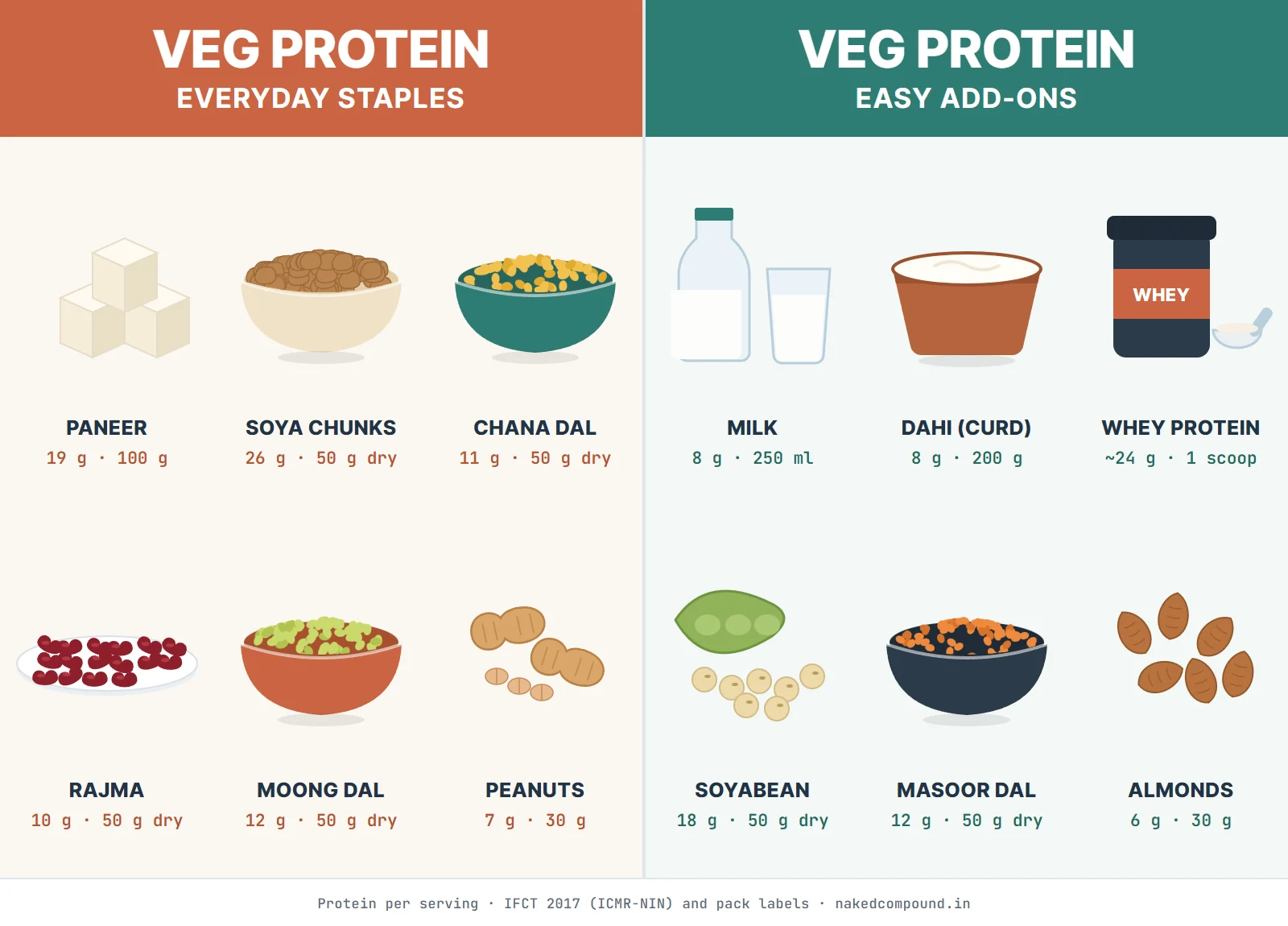
Soya chunks, paneer, dals, rajma, milk and dahi, eaten at every meal. Per normal serving:
- Soya chunks about 26 g per 50 g dry, and paneer about 19 g per 100 g, are the two big hitters.71
- A katori of moong, masoor, toor or chana dal (50 g dry) gives about 11–12 g; milk and dahi about 8 g a glass or bowl.16
- If you lift weights, aim for about 1.4–2.0 g of protein per kg of body weight a day: roughly 90–130 g at 65 kg.3
On this page
Protein in common vegetarian foods
Values are for the food as you buy it: dry dals and beans, raw paneer. Cooking adds water, not protein, so a katori of cooked dal made from 50 g of dry dal has the same protein as the 50 g.
| Food | Serving | Protein per serving | Per 100 g | Notes |
|---|---|---|---|---|
| Soya chunks | 50 g dry (about 1 cup cooked) | 26 g | 52 g | Highest protein per rupee in most kitchens. Soak, squeeze, then cook like paneer. 7 |
| Paneer | 100 g | 18.9 g | 18.9 g | Complete protein, but about 15 g fat per 100 g. Low-fat paneer has more protein per calorie. 1 |
| Soyabean (whole) | 50 g dry | 17.8 g | 35.6 g | Soak overnight; works in curries and chaat. 1 |
| Masoor dal | 50 g dry (1 katori cooked) | 12.2 g | 24.4 g | Cooks fastest of the dals. 1 |
| Moong dal | 50 g dry (1 katori cooked) | 12 g | 23.9 g | Also good as sprouts or chilla. 1 |
| Urad dal | 50 g dry | 11.6 g | 23.1 g | Idli, dosa and dal makhani count. 1 |
| Toor dal | 50 g dry (1 katori cooked) | 10.9 g | 21.7 g | The everyday sambar dal. 1 |
| Chana dal | 50 g dry (1 katori cooked) | 10.8 g | 21.6 g | Besan (chana flour) gives similar protein in chilla. 1 |
| Rajma | 50 g dry | 10 g | 19.9 g | Pair with rice for a fuller amino-acid mix. 1 |
| Peanuts | 30 g (a small handful) | 7.1 g | 23.6 g | About 170 kcal per 30 g, so watch portions if cutting. 1 |
| Almonds | 30 g (about 20 almonds) | 5.5 g | 18.4 g | More useful for fats and fibre than protein. 1 |
| Milk (whole) | 250 ml (1 glass) | 8.3 g | 3.3 g | Toned milk has slightly more protein per calorie. 1 |
| Dahi (curd) | 200 g (1 bowl) | 8 g | 4 g | Hung curd or Greek-style yogurt roughly doubles the protein. 6 |
| Whey protein | 1 scoop (about 30 g) | ~24 g | — | About 24 g protein per scoop on most labels. Optional, not required. 8 |
Per-100 g values are from IFCT 2017 unless the source number says otherwise. Brands and batches vary; check your pack.
How much protein does a beginner need?
ICMR-NIN sets the protein allowance for healthy Indian adults at 0.83 g per kg of body weight a day.2 That's a minimum to stay healthy, not a target for building muscle. For people doing resistance training, the International Society of Sports Nutrition recommends 1.4–2.0 g per kg,3 and a large meta-analysis found muscle gains levelled off at around 1.6 g per kg.4
Start at the low end. Most beginners eat far less protein than they think, and going from 50 g to 100 g a day makes a bigger difference than chasing the top of the range. Spread it over 3–4 meals rather than one big one.
A 100 g vegetarian protein day
An example using only everyday foods from the table, for a beginner around 60–70 kg:
| Meal | What | Protein |
|---|---|---|
| Breakfast | 1 glass milk (250 ml) + 30 g peanuts or a peanut chikki | ~15 g |
| Lunch | 1 katori moong or masoor dal (50 g dry) + 1 bowl dahi (200 g) + 2 rotis | ~26 g |
| Evening | Soya chunk bhurji or pulao with 50 g dry soya chunks | ~26 g |
| Dinner | 100 g paneer sabzi + 1 katori rajma (50 g dry) + a plate of rice (50 g raw) | ~33 g |
| Total | ~100 g |
Two rotis add about 6 g and a plate of rice (50 g raw) about 4 g. Swap in any dal or bean from the table; they're all within a gram or two of each other.
Is vegetarian protein good enough for muscle?
Yes, with two habits. First, eat enough of it, because most plant foods carry less protein per calorie than dairy or soya. Second, mix sources through the day. Dals are rich in the amino acid lysine but low in methionine; rice and wheat are the reverse. Dal-chawal and rajma-roti aren't just tradition, they give a fuller amino-acid mix. Dairy (milk, dahi, paneer, whey) and soya are complete proteins on their own. Our explainer on plant vs animal protein goes deeper.
Do you need whey protein?
No. Whey is a concentrated, convenient dairy protein, about 24 g a scoop,8 and it helps if you struggle to reach your target from food. It isn't magic, and ICMR-NIN's 2024 dietary guidelines advise most people to meet protein needs from food rather than supplements.9 If you do buy one, see our whey protein comparison for lab-tested picks, and our pure-veg stack for a full vegetarian plan.
Common beginner mistakes
- Counting cooked weight as raw. 100 g of cooked dal is mostly water and has about a third of the protein of 100 g dry dal.
- Relying on one bowl of dal. One katori is 11–12 g. You need a protein food at every meal, not just lunch.
- Treating peanuts and almonds as protein foods. They're mainly fat: 30 g of peanuts is about 7 g of protein and 170 kcal.
- Buying “high-protein” snacks. Many bars and cookies have 5–10 g of protein with a lot of sugar. A bowl of dahi or soya chunks is cheaper and better.
High-protein vegetarian foods: FAQ
How much protein does a vegetarian gym beginner need?
If you lift weights, aim for about 1.4–2.0 g of protein per kg of body weight a day, the range sports-nutrition researchers recommend for building muscle. For a 65 kg beginner that is roughly 90–130 g a day. ICMR-NIN's 0.83 g/kg is the minimum for healthy, inactive adults, not a target for muscle gain.
Which vegetarian food has the most protein in India?
Per 100 g, soya chunks lead at about 52 g (dry, on Nutrela's label), followed by whole soyabean at 35.6 g and dals such as masoor (24.4 g) and moong (23.9 g), all per IFCT 2017. Per normal serving, soya chunks and paneer give the most: about 26 g in 50 g of dry chunks and 19 g in 100 g of paneer.
Is paneer or soya chunks better for muscle?
Both work. Soya chunks give more protein for fewer calories and less money; paneer is a complete dairy protein but carries about 15 g of fat per 100 g. Most vegetarian lifters do best using both through the week.
How much protein is in one katori of dal?
A katori of cooked dal made from about 50 g of dry dal has roughly 11–12 g of protein for moong, masoor, toor or chana. Watery restaurant dal can have half that, because there is less dal per bowl.
Can vegetarians build muscle without whey protein?
Yes. Whey is just a convenient, concentrated dairy protein. If dal, paneer, soya, milk and curd get you to your daily target, you don't need it. ICMR-NIN's 2024 guidelines advise meeting protein needs from food rather than supplements for most people.
Does soya affect testosterone in men?
Not at normal food intakes. A meta-analysis of clinical studies found no effect of soy protein or soy isoflavones on testosterone or other reproductive hormones in men. Eating soya chunks a few times a week is fine.
Are eggs vegetarian protein?
Not for most Indian vegetarians, so we left them out. If you eat eggs, one large egg adds about 6–7 g of protein (IFCT 2017 lists 13.3 g per 100 g).
References
Not medical advice. This guide is general nutrition information for healthy adults. If you have kidney disease, are pregnant, or have a medical condition, ask your doctor or a registered dietitian before raising your protein intake.