
The bottom line
Two things hold this product back from a higher score. First: the molecular form is ethyl ester, not re-esterified triglyceride. Solgar's own marketing page uses the phrase "natural triglyceride form" in the same breath as "Natural Ethyl Esters" — a genuinely confusing juxtaposition that many consumers will misread as confirmation they are getting the superior form. They are not. Second: there is no publicly posted per-batch Certificate of Analysis. At ₹7,000 for 100 softgels in India, these are real gaps — not nitpicks.
What Solgar gets right
Highest per-softgel EPA+DHA concentration in the standard domestic India import tier. Small pelagic fish source (anchovy, sardine, mackerel, herring) — lowest marine heavy-metal risk class. Molecular distillation confirmed. Amber glass bottle prevents photo-oxidation. Natural mixed tocopherols as antioxidant — no TBHQ, no BHT. GOED-compliant quality programme. No artificial flavours, sweeteners, synthetic preservatives, gluten, or dairy. FAO-approved fishing zones for sustainable sourcing.
What EPA and DHA actually do inside the body — and why the source molecule matters
EPA (eicosapentaenoic acid, 20:5n-3) and DHA (docosahexaenoic acid, 22:6n-3) are long-chain omega-3 polyunsaturated fatty acids. They are not interchangeable with each other, and they are not interchangeable with ALA — their short-chain plant-sourced precursor. Their mechanisms operate through distinct pathways.
EPA — the anti-inflammatory axis
EPA competes with arachidonic acid (AA, an omega-6 fatty acid) for cyclooxygenase (COX-1, COX-2) and lipoxygenase (LOX-5, LOX-12) enzymes. AA-derived eicosanoids — prostaglandin E2, leukotriene B4, thromboxane A2 — are potent pro-inflammatory and pro-thrombotic mediators. EPA-derived equivalents (prostaglandin E3, leukotriene B5) are biologically much weaker. By displacing AA in the membrane phospholipid pool, EPA blunts rather than blocks this signalling cascade — a physiologically nuanced effect that differs mechanistically from NSAID therapy, which suppresses COX enzymes entirely. RCT
EPA is also the precursor for E-series resolvins and some protectins — bioactive lipid mediators that actively resolve inflammation. This "pro-resolution" mechanism is qualitatively different from anti-inflammatory suppression. It matters most in chronic, low-grade inflammatory states: metabolic syndrome, atherosclerosis, inflammatory bowel conditions, and the systemic inflammation underlying most cardiovascular risk. In vitro / mechanistic
DHA — membrane structure and neurological function
DHA is a structural component of cell membranes, concentrated most heavily in brain synaptic terminals (approximately 97% of brain omega-3 content) and the retina (93% of retinal omega-3). Its six double bonds confer exceptional membrane fluidity — a physical property that governs ion channel gating speed, receptor conformational dynamics, and the kinetics of G-protein-coupled receptor activation. This is not a subtle effect: photoreceptor function, dopamine receptor sensitivity, and synaptic transmission speed are all directly influenced by membrane DHA composition. Observational / mechanistic
DHA is also the precursor for D-series resolvins and neuroprotectin D1 — lipid mediators that modulate microglial activation and neuroinflammation. DHA deficiency during early brain development produces permanent structural deficits; in adults, lower plasma DHA is consistently associated with faster cognitive decline, though causal directionality in supplementation trials is weaker. Observational
The molecular form question — and why Solgar's label is misleading here
All concentrated fish oils begin as triglycerides (TG) — EPA and DHA bonded to a glycerol backbone, which is how they exist in fish tissue. To achieve high concentrations, manufacturers use molecular distillation: a process that strips the glycerol, liberates free fatty acids, and bonds them to an ethanol molecule, creating ethyl esters (EE). This process is efficient and achieves 50–80% EPA+DHA concentration vs. ~30% in natural fish oil. The resulting product can be sold as-is (EE form) or re-esterified back onto a glycerol backbone to restore the triglyceride structure (rTG form).
Bioavailability across omega-3 molecular forms — Dyerberg et al., 2010 (RCT, crossover design)
Solgar Triple Strength Omega-3 is in ethyl ester form. The Solgar product page describes this as "Natural Ethyl Esters – natural triglyceride form of omega-3 fatty acids enhanced with EPA/DHA." This sentence is internally contradictory. Natural ethyl esters and natural triglyceride form are two different things. Ethyl esters, by the definition of organic chemistry, contain an ethanol molecule in place of glycerol — they are not triglycerides. The absorption difference is real and measurable: approximately 27% lower bioavailability compared to rTG form at identical label doses. RCT
The "natural ethyl ester" framing — what it actually means
Solgar's use of "natural ethyl ester" refers to the fact that the raw fish oil came from a natural (non-synthetic) source before processing. The word "natural" modifies the origin of the oil, not the molecular structure of the final ester. The distinction matters because "ethyl ester" by itself sounds synthetic to most consumers — adding "natural" is a marketing framing choice, not a chemical clarification. The relevant clinical fact is: this is EE form, not rTG, and it absorbs less efficiently.
To be clear: ethyl ester form fish oil works. The long-term cardiovascular evidence for EPA and DHA — including the landmark JELIS, REDUCE-IT, and ORIGIN trials — was built almost entirely on ethyl ester concentrates, not rTG. The body does hydrolyse EE-form omega-3s and incorporate the fatty acids into phospholipid membranes over time. The difference is that rTG-form supplements require fewer capsules to achieve the same tissue incorporation. At Solgar's dose of 950mg EPA+DHA per softgel, even at 73% relative absorption, you are still delivering a meaningful omega-3 load.
What's in each softgel — mapped to clinical evidence thresholds
| Component | Per 1 softgel | Per 2 softgels (recommended daily) | Clinical reference dose | Assessment |
|---|---|---|---|---|
| EPA (eicosapentaenoic acid) | 504 mg | 1,008 mg | 360–1,800 mg/day for cardiovascular endpoints RCT | Strong — within studied cardiovascular range at 2 softgels/day |
| DHA (docosahexaenoic acid) | 378 mg | 756 mg | 250–500 mg/day general cognition; 900 mg/day for MIDAS trial effect RCT | Above ICMR-NIN 2020 recommendation (250 mg/day); below MIDAS therapeutic dose |
| Total omega-3 polyunsaturates | 950 mg | 1,900 mg | ≥500 mg AHA general; ≥1,000 mg AHA post-MI | Exceeds both AHA thresholds at 2 softgels/day |
| Other omega-3s (DPA etc.) | ~68 mg | ~136 mg | DPA has emerging anti-aggregatory and anti-inflammatory data | Minor contribution; not a primary dosing consideration |
| Molecular form | Natural ethyl ester (EE) | rTG preferred for absorption; EE still effective with fat-containing meal | Lower absorption than rTG. Long-term RCT evidence built on EE — it works, just less efficiently per mg | |
| Fish source | Anchovy, sardine, mackerel, herring | Small pelagics preferred — lowest heavy-metal risk class | Correct species selection — anchovy/sardine are the cleanest marine omega-3 sources | |
| Antioxidant | Natural mixed tocopherols (Vitamin E) | Natural tocopherols preferred over synthetic BHT/TBHQ | Clean — industry-best antioxidant choice | |
| Softgel shell | Gelatin, vegetable glycerin | Bovine gelatin — not suitable for vegetarians or halal consumers without certification | Standard. Not vegetarian-compatible. | |
| Flavour / odour masking | None — no artificial flavours or lemon masking | Absence of masking allows genuine odour check for rancidity on opening | No flavour added — you can smell early oxidation directly. This is preferable to lemon masking. | |
| Packaging | Amber glass bottle with foil seal | Amber glass blocks UV light — prevents photo-oxidation better than most plastic containers | Genuinely better than industry standard plastic packaging for light protection | |
Dose calibration: one softgel vs. two
Solgar recommends 2 softgels daily. At 1 softgel, you get 882mg EPA+DHA — just above the AHA's 500mg/day general cardiovascular threshold, well below the 1,000mg/day recommended post-MI. At 2 softgels, you hit 1,764mg EPA+DHA — within the cardiovascular maintenance range and approaching the lower boundary of triglyceride-lowering doses (2,000–4,000mg/day EPA+DHA). For most Indian buyers using this for general wellness, 1 softgel/day is adequate and doubles the supply to 100 days per bottle — materially improving the value calculation at India import prices.
Ethyl ester absorption, the label contradiction, and India's import supply chain
The form gap — what it means for your actual EPA+DHA intake
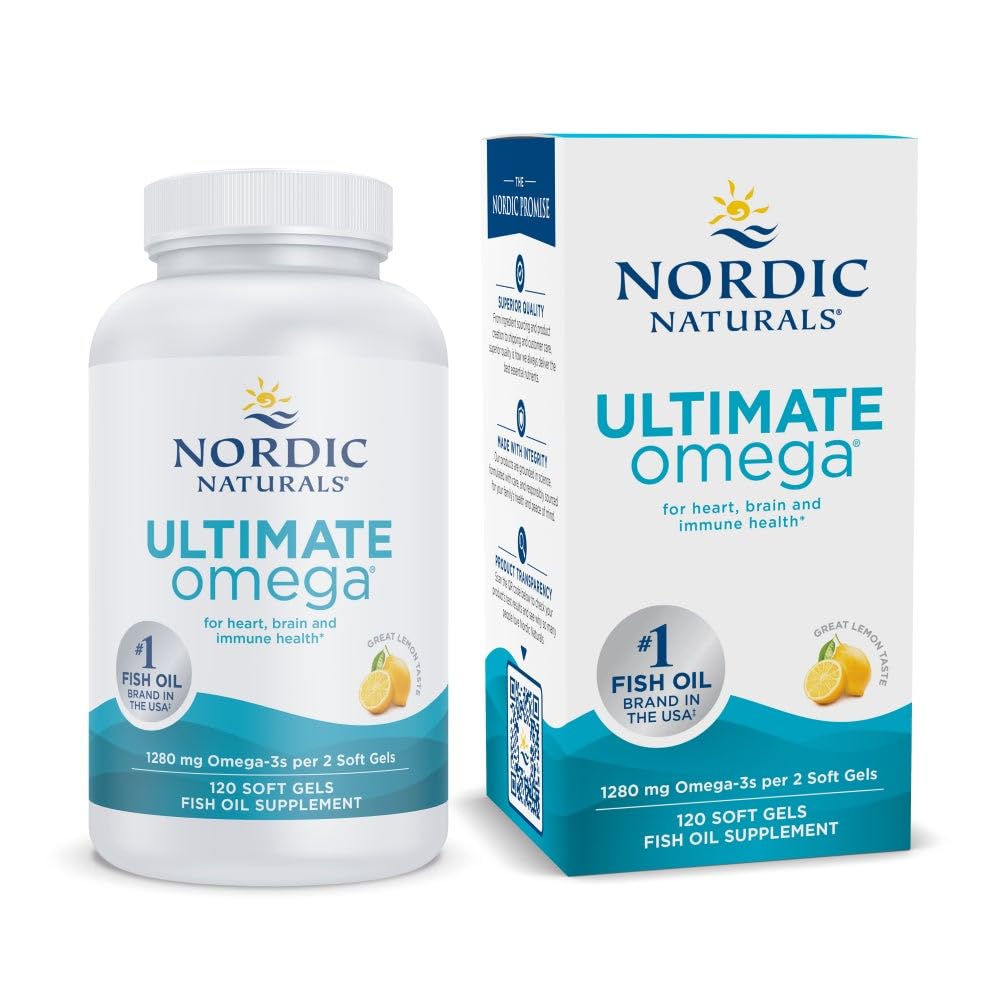
At 2 softgels daily, Solgar's label delivers 1,764mg EPA+DHA. At 73% relative absorption for EE form, effective uptake is approximately 1,288mg EPA+DHA — a 476mg difference that disappears into unabsorbed material. To match the effective tissue dose of an rTG-form product at 1,280mg label dose (e.g., Nordic Naturals Ultimate Omega at identical rTG absorption), you need roughly 1.75 Solgar softgels vs. one Nordic softgel. This is not an argument to avoid Solgar — it is an argument to take the 2-softgel dose, not 1, and to take it with a fat-containing meal to maximise EE absorption.
Taking EE fish oil: meal fat matters more than with rTG
EE-form omega-3 absorption is significantly meal-dependent. A fat-containing meal raises EE-form absorption to approximately 60–65% efficiency vs. 28–33% in a fasted state — a 2× difference. rTG form shows a smaller meal effect (natural TG absorbs well regardless). Always take Solgar Triple Strength with food containing dietary fat — a meal with ghee, avocado, paneer, nuts, or fatty fish is ideal. Taking it on an empty stomach is the single largest error EE-form fish oil users make. RCT
The amber glass advantage — and its limits in India
The amber glass bottle is a legitimate quality differentiator. Glass is oxygen-impermeable in a way no plastic is. Amber glass blocks most UV-A and visible light that accelerates lipid peroxidation. Once you open the bottle and introduce oxygen by removing the foil seal, the game changes — store opened bottles in the refrigerator and finish within 60–90 days. The bottle's photo-protection advantage is, however, entirely negated if the product was stored in a sunlit warehouse or delivery vehicle before reaching you.
The India import supply chain problem
Solgar is a US brand now owned by Nestlé Health Science. Products reaching India travel through sea freight (14–28 days, unrefrigerated), Indian customs inspection, distributor warehouses, and either pharmacy shelves or Amazon fulfilment centres — none of which maintain a cold chain for supplements. Indian summer temperatures in logistics hubs regularly exceed 40°C interior. PUFA oxidation rate roughly doubles for every 10°C temperature increase above storage optimum. The amber glass protects from light during this journey. It does not protect against heat.
Receipt check — mandatory for Indian buyers
When your bottle arrives, examine the foil inner seal: it should be intact and dome-shaped outward (slight internal vacuum). Open a softgel and smell it — Solgar uses no flavour masking, so the oil's true condition is detectable. Fresh fish oil at Solgar's quality level has a mild, clean oceanic smell at most. Rancid fish oil smells sharp, stale, or strongly fishy. If you detect rancidity, do not consume the product — request a replacement immediately. Check the expiry date: avoid stock with fewer than 18 months remaining. Do not purchase from sellers with old or ambiguous lot codes. If buying via Amazon, check whether the listing is Fulfilled by Amazon (preferred, as FBA stock moves faster) versus a third-party seller shipping from their own warehouse.
What the clinical literature shows for this dose of EPA + DHA
Cardiovascular — the strongest evidence tier
The JELIS trial (Yokoyama et al., 2007; n=18,645) found a statistically significant 19% reduction in major coronary events with 1,800 mg/day EPA added to statin therapy. RCT The REDUCE-IT trial (Bhatt et al., 2019; n=8,179) found a 25% reduction in major adverse cardiovascular events with 4,000 mg/day icosapentaenoic acid (Vascepa — a prescription-only EPA ethyl ester). RCT Note: the REDUCE-IT mineral oil placebo controversy is active — some meta-analysts argue the placebo may have artificially elevated LDL and inflammation markers in control subjects, inflating the apparent treatment effect. Independent re-analyses estimate the true benefit may be smaller, though still statistically significant.
At Solgar's 2-softgel daily dose (1,764 mg EPA+DHA), effective EPA delivery via EE absorption is approximately 734 mg EPA — within the JELIS dosing range. For general cardiovascular maintenance in a low-to-moderate risk Indian population, this is an adequate and clinically grounded dose. For pharmacological triglyceride lowering, you would need 3–4 softgels daily (prescribe under medical supervision).
Cognitive function and DHA
The MIDAS trial (Yurko-Mauro et al., 2010; n=485) found significant improvement in episodic memory over 24 weeks with 900 mg/day DHA supplementation in adults ≥55 with mild age-related cognitive decline. RCT Solgar at 2 softgels delivers 756 mg DHA — below the MIDAS dose. At 3 softgels (not the recommended dose, but clinically feasible), DHA rises to 1,134 mg, exceeding the MIDAS dose. For cognitive endpoints in older adults, the evidence supports higher DHA dosing than most cardiovascular protocols use.
For healthy adults under 50 seeking cognitive maintenance, the evidence base for omega-3 supplementation is weaker — observational associations are consistent but RCT data is mixed. The mechanism (DHA membrane fluidity) is plausible and the safety profile impeccable, but effect sizes in younger, cognitively healthy populations are not reliably replicable across trials. Observational
Joint inflammation and rheumatoid arthritis
A Cochrane systematic review (Miles & Calder, 2012; 23 RCTs) found significant reductions in joint pain intensity, morning stiffness, and analgesic use with EPA+DHA supplementation at doses of 1,800–2,700 mg/day for ≥12 weeks. Solgar at 2 softgels/day delivers 1,764 mg EPA+DHA — approaching the lower boundary of this effective dose range. For established rheumatoid arthritis with active inflammation, 3 softgels daily (2,646 mg EPA+DHA) would be more consistent with the evidence base. This is worth noting for Indian patients with RA or ankylosing spondylitis who are evaluating supplementation alongside DMARD therapy.
Triglyceride lowering
EPA+DHA at 2,000–4,000 mg/day reduces fasting triglycerides by 15–30% — one of the most consistent and dose-dependent effects in the omega-3 literature. Solgar at 2 softgels delivers 1,764 mg EPA+DHA — below the clinical range for triglyceride lowering. You would need 3–4 softgels daily, amounting to ₹210–280/day at India import prices. At that dose, the value argument for a domestic alternative becomes even more compelling.
Dry eye disease
The DREAM trial (Asbell et al., 2018; n=535) found no significant benefit of omega-3 supplementation over refined olive oil placebo in symptomatic dry eye. RCT Note: the olive oil placebo is not inert — oleic acid has membrane effects that may have reduced the apparent treatment difference. Earlier meta-analyses (Molina-Leyva et al.) found positive effects at higher EPA doses. The dry eye evidence remains genuinely uncertain at typical supplementation doses.
A note on the EE-form evidence base
This is the part Solgar — and every EE-form producer — gets right: the landmark cardiovascular trials (JELIS, REDUCE-IT, GISSI-P, ORIGIN) all used ethyl ester concentrates, not rTG. The evidence that omega-3 supplementation reduces cardiovascular events was built on products with this molecular form. The absorption disadvantage of EE is real and measurable, but it does not mean EE products don't work — it means you need to take more of them to achieve equivalent serum omega-3 elevation. At Solgar's dose, you are delivering enough EPA+DHA even through EE absorption to expect clinically meaningful effects.
GOED-compliant quality controls — but no public per-batch COA
| Test parameter | Standard applied | Status | Notes |
|---|---|---|---|
| EPA+DHA potency accuracy | ±10% of label (GOED) | Verified — not publicly posted per batch | Solgar internal QA confirmed to GOED monograph |
| Mercury (Hg) | <0.1 ppm (GOED) | Removed via molecular distillation — below detection | Small pelagic fish source minimises baseline Hg load before distillation |
| Lead (Pb), Cadmium (Cd), Arsenic (As) | WHO/GOED limits | Passes per GOED programme | Not publicly posted per Indian batch |
| PCBs and dioxins | GOED / WHO TEQ | Passes per GOED programme | Molecular distillation specifically removes organochlorine contaminants |
| TOTOX (total oxidation value) | TOTOX <26 meq/kg (GOED); <10 excellent | Meets GOED at production — no post-import freshness data | Amber glass limits photo-oxidation; heat during India import is the unverified variable |
| Peroxide value (PV) | <5 meq/kg (GOED) | Passes at production | PV is temperature-sensitive — rises if stored above 25°C |
| IFOS public certification | Publicly posted batch results | Not enrolled | Solgar runs its own programme — results not searchable by lot number at ifos.com |
| NSF / Informed Choice (sport) | Banned substance screen | Not enrolled | Relevant only for WADA-tested athletes. Fish oil is a low-risk category for doping. |
| Per-batch COA publicly accessible | Best practice | On request only | Must contact Solgar directly with lot number — not an accessible workflow for Indian consumers |
The core quality gap is transparency, not quality. Solgar's manufacturing is GOED-compliant and Nestlé Health Science's resources mean genuine quality controls are in place. The problem is that none of this is verifiable at a batch level for consumers buying through Amazon India. The standard for a ₹7,000 supplement should include publicly searchable batch COAs. Both IFOS and the NSF provide this infrastructure at relatively low cost per brand. Solgar's decision not to enrol in either programme means every Indian consumer is taking their quality record on trust.
Who needs supplemental EPA+DHA, what Indian dietary sources exist, and the honest INR cost comparison
Indian dietary context — who actually needs this
India has the world's largest vegetarian population but also some of its highest-volume fish-consuming populations. The dietary omega-3 picture is sharply bimodal. Coastal communities in Kerala, Tamil Nadu, West Bengal, Odisha, Goa, and coastal Andhra Pradesh consume hilsa, mackerel, sardine, and anchovy regularly — a single 100g serving of Indian mackerel (Rastrelliger kanagurta) provides approximately 800–1,200 mg EPA+DHA. For this population, a fish oil supplement is redundant unless prescribed for a specific clinical indication.
The supplementation argument is strongest for: strict vegetarians and vegans (algae oil remains the only correct choice here — Solgar is derived from fish and contains bovine gelatin); inland urban professionals in cities like Delhi, Ahmedabad, Lucknow, Bhopal, and Bengaluru's tech corridors who cook in refined sunflower oil and eat minimal fish; pregnant and lactating women avoiding fish due to mercury concerns (for whom 200–300 mg/day DHA is the EFSA recommendation); and patients with established cardiovascular disease, hypertriglyceridaemia, or inflammatory joint conditions managed under physician supervision.
INR pricing comparison — Solgar vs. the Indian market
| Product | EPA+DHA / softgel | Molecular form | Pack price (India) | ₹ / 100 mg EPA+DHA | Public COA? |
|---|---|---|---|---|---|
| Solgar Triple Strength Omega-3 (this product) | 882 mg | EE | ~₹7,000 / 100ct | ₹7.94 | No |
| Nordic Naturals Ultimate Omega | 1,100 mg (rTG) | rTG | ~₹4,299 / 90ct | ₹8.50 | On request |
| Carbamide Forte Omega-3 Triple Strength | 600 mg | EE (likely) | ₹999 / 60ct | ₹1.67 | Partial COA |
| HK Vitals Fish Oil 1000mg | 300 mg | Form undisclosed | ₹699 / 60ct | ₹2.33 | No COA |
| Now Foods Ultra Omega-3 (import) | 500 mg | EE | ~₹1,499 / 90ct | ₹3.00 | IFOS certified |
Solgar is the most expensive option per 100mg EPA+DHA after accounting for EE-form absorption discount — costing approximately ₹7.94/100mg at label dose, or effectively ~₹10.87/100mg correcting for the ~27% EE absorption gap relative to rTG. For the same effective absorbed omega-3 dose, Carbamide Forte costs approximately one-sixth of Solgar. The quality gap is real. The clinical outcome gap, for a healthy adult supplementing at 1g EPA+DHA/day, is not — both products will raise serum omega-3 index over 12 weeks. The question is whether the Solgar brand history, amber glass packaging, and molecular distillation documentation justifies the 5× price differential. For most Indian consumers: probably not.
Solgar against four key alternatives at different price points and form quality


Oil
Full category rankings: Best Omega-3 supplements India 2026 → | Why Himalayan Organics Plant Omega scored 2.1/10 → | Nordic Naturals Ultimate Omega 8.4/10 →
Buy / consider alternatives
Buy if
- You want the highest per-softgel EPA+DHA dose available in a standard Indian import supplement — 882mg per softgel is genuinely strong
- You have a documented sensitivity to plastic-packaged fish oil degradation — the amber glass is a real quality advantage for light protection
- You prefer taking fewer capsules — one softgel delivers more EPA+DHA than two capsules of most domestic 300mg fish oils
- You are supplementing for joint inflammation at 3 softgels/day — at that dose, EPA+DHA is within the Cochrane-meta range for RA symptom reduction
- You are comfortable with ethyl ester form and take the product consistently with fat-containing meals to maximise absorption
- You trust the Solgar brand's 75-year track record and are willing to pay the import premium for that provenance
Consider an alternative if
- You are vegetarian or vegan — this product contains fish oil and bovine gelatin; algae oil is the only correct choice
- You want the best-absorbing form at any price — Nordic Naturals Ultimate Omega's rTG form delivers more EPA+DHA to circulation per mg of label dose
- You want publicly verifiable per-batch test results — Now Foods IFOS certification provides this; Solgar does not
- Budget is a meaningful constraint — Carbamide Forte delivers adequate EPA+DHA at one-fifth the per-serving cost
- You are supplementing purely for cardiovascular maintenance at 1g EPA+DHA/day — any well-formulated EE product at verified dose achieves this; the Solgar premium is not clinically justified at this endpoint and dose
- You are pregnant or breastfeeding and vegetarian — algae-derived DHA is the only appropriate choice
Storage and usage — EE-form specific
Keep the amber glass bottle in a cool, dark cabinet. Refrigerate after opening. Take with your largest meal of the day — ideally one containing visible fat (ghee on roti, a small serving of nuts, or a non-skim paneer preparation). Do not take fasted. Consume within 90 days of opening. The foil inner seal, when intact, provides a rough freshness indicator — if it's been punctured before you open the bottle or appears bubbled outward rather than inward, treat the product as suspect.
Three specific improvements that would justify a higher score
Fix the "natural ethyl ester / natural triglyceride" language contradiction on the product page
Solgar's product page currently lists "Natural Ethyl Esters – natural triglyceride form of omega-3 fatty acids enhanced with EPA/DHA" as a product feature. This is an internally contradictory statement. Ethyl esters and triglycerides are chemically different molecular forms — they cannot both describe the same product simultaneously. A consumer reading this line will reasonably conclude they are getting triglyceride-form oil. They are getting ethyl ester. The label of the physical product does not appear to use this language — it is the digital marketing copy that misleads. Solgar should either rewrite this to clearly state the EE form, or invest in re-esterification to actually produce the rTG form they are currently implying. Either solution is acceptable. The current situation is not.
Enrol in IFOS or publish per-batch COAs publicly indexed by lot number
Solgar is a Nestlé Health Science brand with the quality infrastructure and resources of one of the world's largest food companies. The cost of IFOS batch certification is approximately USD 500–800 per test. There is no commercial or operational reason for a brand with Solgar's scale to not have publicly searchable batch results by 2026. The current situation — where an Indian consumer who paid ₹7,000 for 100 softgels cannot independently verify the freshness and potency of the batch they received without making an international phone call — is a transparency failure that the brand should treat as reputational risk.
Consider re-esterification for the Indian market SKU
Solgar already sells a "VM-75" multivitamin and other premium formulations at significant cost. The brand clearly targets the top end of the supplement market. rTG-form omega-3 production is more expensive than EE — but Solgar charges a price premium that should fund it. Nordic Naturals delivers rTG form at a lower India retail price point than Solgar EE. At ₹7,000 for 100 softgels, Indian consumers are paying a premium that they reasonably expect to buy them the best-absorption molecular form. A rTG conversion of this formulation, with publicly posted IFOS certification, would score 9.2–9.4 and become the unambiguous premium recommendation in this category for the Indian market.
References & citations
- Dyerberg J et al. (2010). Bioavailability of marine n-3 fatty acid formulations. Prostaglandins Leukot Essent Fatty Acids, 83(3):137–141. RCT · crossover — rTG vs TG vs EE absorption comparison.
- Bhatt DL et al. (2019). REDUCE-IT: Cardiovascular risk reduction with icosapentaenoic acid. N Engl J Med, 380(1):11–22. RCT
- Yokoyama M et al. (2007). JELIS: Effects of EPA on major coronary events in hypercholesterolaemia. Lancet, 369(9567):1090–1098. RCT
- Yurko-Mauro K et al. (2010). MIDAS: DHA supplementation and cognitive function in healthy older adults. Alzheimers Dement, 6(6):456–464. RCT
- Miles EA, Calder PC. (2012). Influence of marine n-3 polyunsaturated fatty acids on immune function and a systematic review of their effects on clinical outcomes in rheumatoid arthritis. Br J Nutr, 107 Suppl 2:S171–84.
- Asbell PA et al. (2018). DREAM: n-3 fatty acid supplementation for the treatment of moderate-to-severe dry eye disease. N Engl J Med, 378(18):1681–1690. RCT
- Harris WS et al. (2008). Omega-3 fatty acids and coronary heart disease risk: Clinical and mechanistic perspectives. Atherosclerosis, 197(1):12–24.
- GOED Voluntary Monograph v7.0 (2022). Global Organization for EPA and DHA Omega-3 — quality standards for omega-3 concentrates.
- ICMR-NIN Expert Group (2020). Nutrient Requirements for Indians — 2020. National Institute of Nutrition, Hyderabad.
- Calder PC (2020). Eicosanoids and the modulation of inflammation. Biochem Soc Trans, 48(4):1–12. Mechanistic
Not medical advice. Omega-3 supplementation above 3g/day can affect platelet aggregation and may interact with anticoagulants (warfarin, clopidogrel, aspirin). If you are on blood thinners, scheduled for surgery, pregnant, or managing a cardiovascular condition, consult a physician before starting or increasing fish oil supplementation. Nothing here constitutes a clinical recommendation.