The bottom line
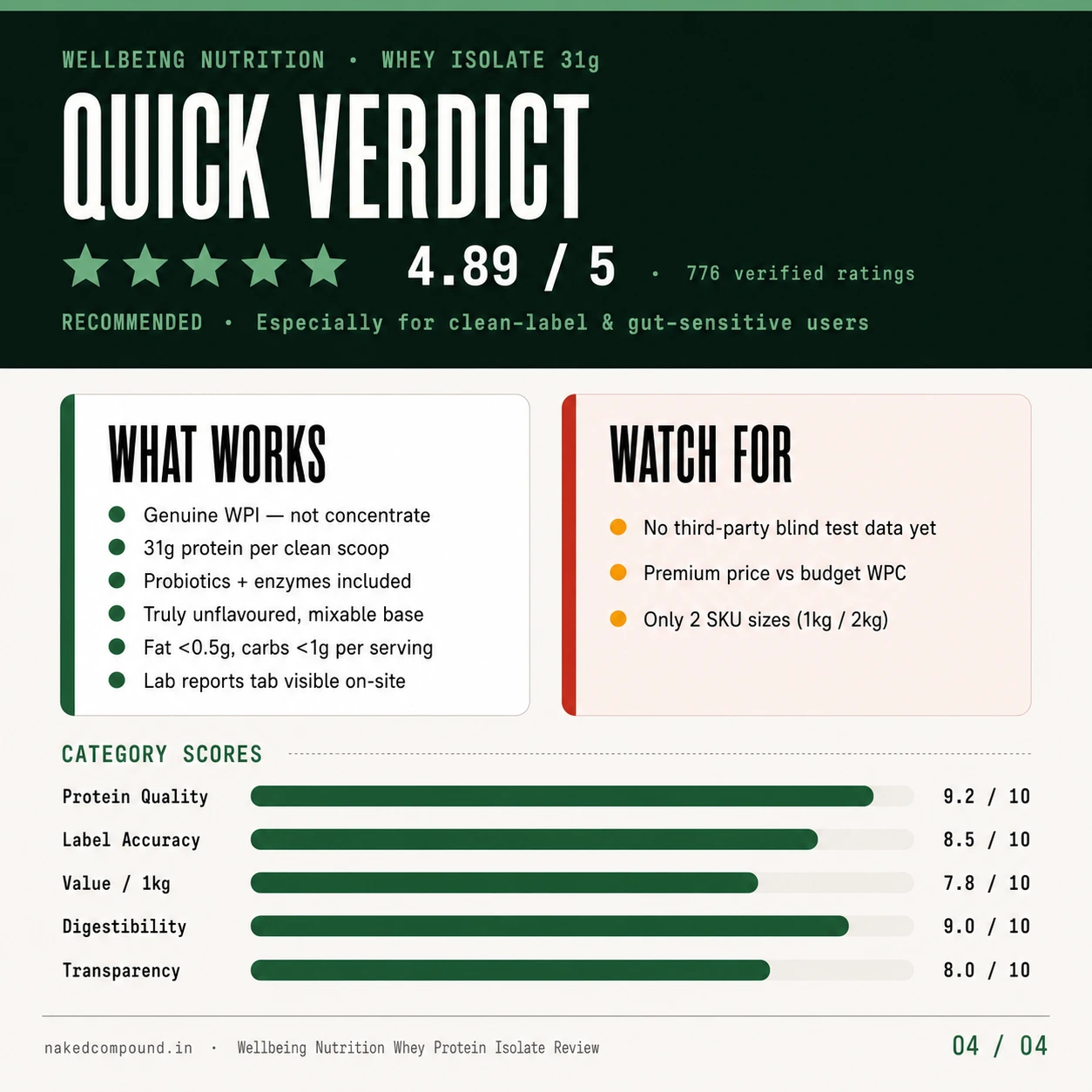
But there are three things that cap the score where it is. First: the brand's own transparency infographic openly lists NDTL / 3rd party testing as Pending. That is an unusual level of self-disclosure — and it means no independent body has confirmed the label claims on this product. Second: the Velositol "2x muscle protein synthesis" headline was derived from a study using 6g of whey, not 31g — and that distinction matters enough to say plainly. Third: the flavoured variants contain 26g protein per serving, not 31g — while the website's primary branding says "31g protein" on every page.
31g vs 26g — the variant protein gap buyers must know about
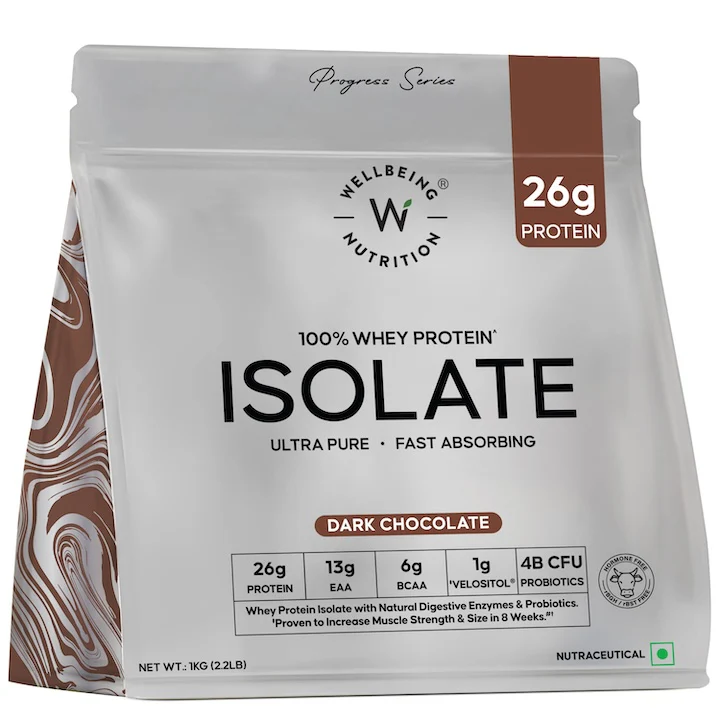
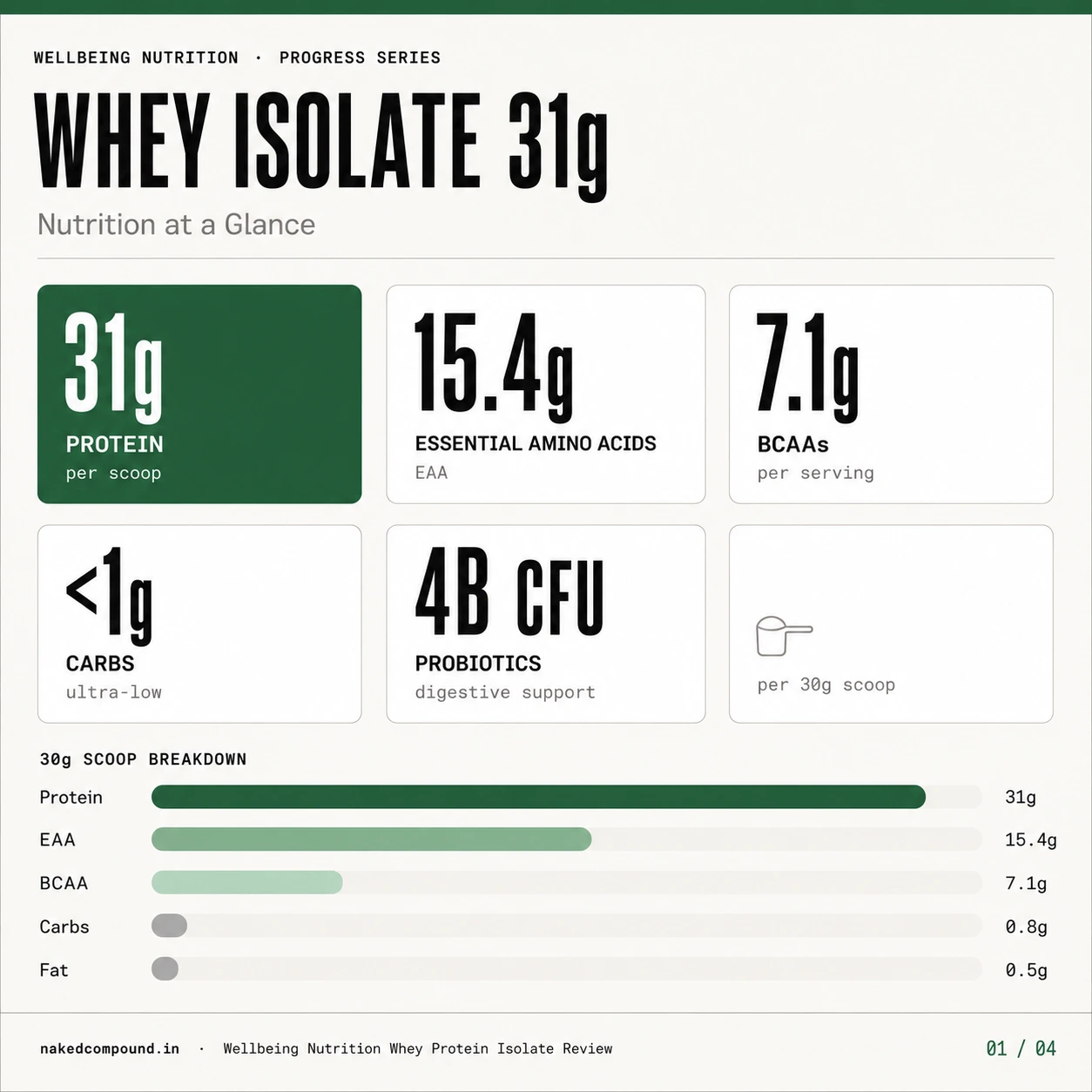
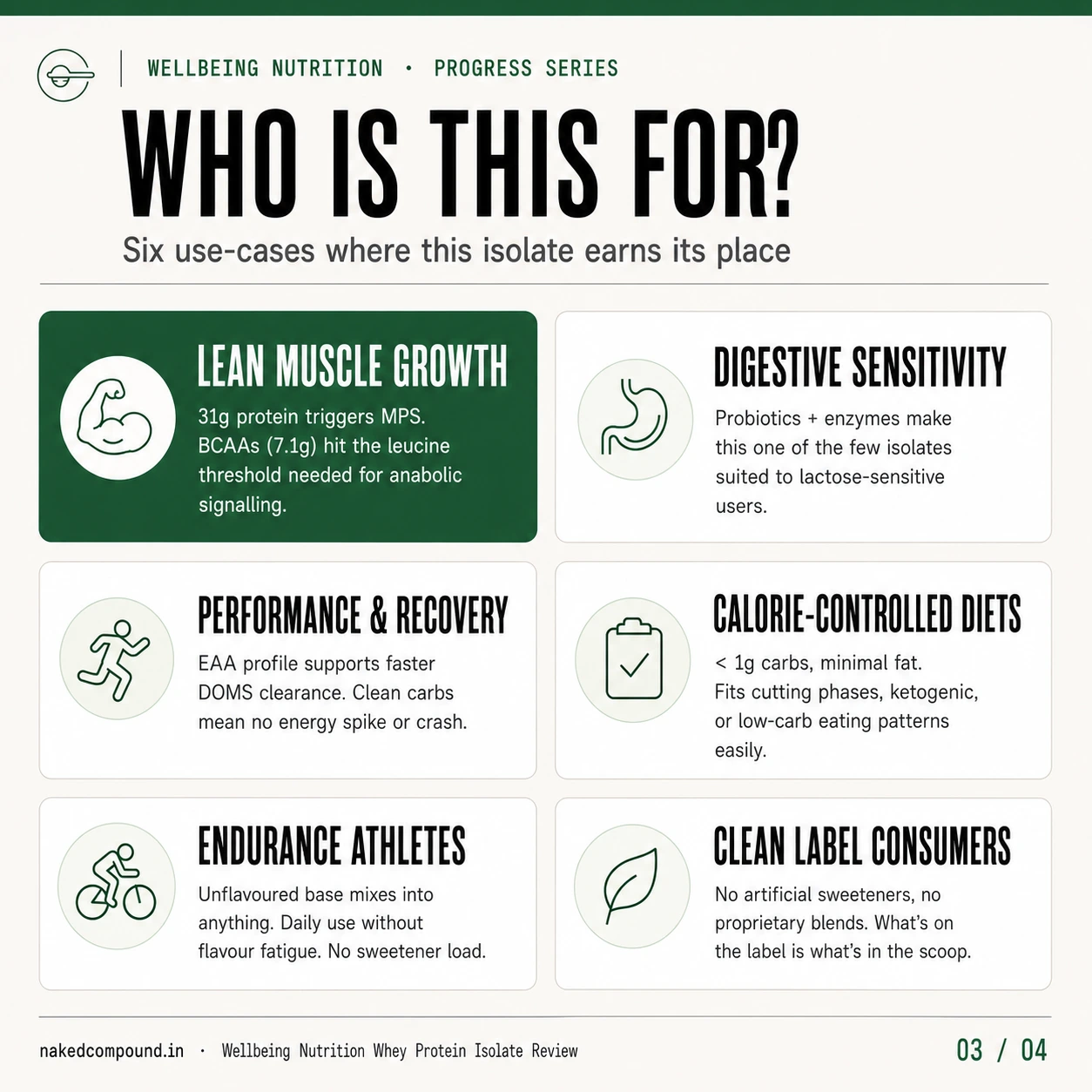
The "31g protein" figure applies to the unflavoured variant only. The Dark Chocolate and Bourbon Vanilla variants deliver 26g protein per serving — not 31g. The reduction happens because flavour agents, Velositol (amylopectin starch), dates, cocoa, and monk fruit all displace some of the protein mass per scoop. At ₹4,499/kg, buyers choosing a flavoured option are paying the same price for 16% less protein per serving than the brand's headline implies.
Whey protein isolate, probiotics, enzymes, and Velositol — what each component actually does
Cross-flow microfiltered WPI — why the sourcing claim matters
Wellbeing Nutrition claims their WPI is sourced directly from milk rather than as a cheese manufacturing by-product, and is cold-processed through cross-flow microfiltration (CFM). Most commercial WPI in India — including well-regarded brands — is produced as a co-product of industrial cheese manufacturing. Milk-sourced, non-denatured WPI preserves a broader range of native whey fractions: alpha-lactalbumin, beta-lactoglobulin, immunoglobulins, lactoferrin, and bovine serum albumin. The clinical significance of this at the muscle-building level is unclear — amino acid delivery and leucine content are what drive acute MPS, and these do not differ between CFM milk-sourced and cheese-sourced WPI at matched protein doses. The sourcing claim has more relevance for immune support and gut microbiome application than for muscle protein synthesis.
4B CFU Probiotics — Lactobacillus acidophilus + Bifidobacterium longum
The probiotic component is the most clinically distinctive element of this formulation. Wellbeing discloses both strain identity (L. acidophilus 2B CFU + B. longum 2B CFU) and total CFU count (4 billion per serving). This level of probiotic transparency in a protein powder is genuinely unusual in the Indian market. Most brands that add "probiotics" to protein powders neither disclose species nor CFU counts, making evidence attribution impossible.
L. acidophilus is well-characterised: multiple RCTs support its role in lactose intolerance symptom management, reduction of protein fermentation byproducts in the colon, and modest immune modulation. RCT B. longum has consistent evidence in IBS and anxiety-related gut symptoms. RCT At 2B CFU each — which is lower than most clinical studies (typically 10B–50B CFU/day for therapeutic endpoints) — these strains contribute gut comfort rather than therapeutic disease management. For a protein powder context, this is appropriate and honest dosing.
Digestive enzymes — Bromelain and Papain
Bromelain (from pineapple stem) and papain (from papaya) are plant-derived cysteine proteases. They cleave protein bonds in the GI tract, potentially accelerating gastric proteolysis of whey — particularly relevant for individuals with mildly reduced gastric acid production (common in older adults and those on antacids). The clinical evidence for exogenous digestive enzymes improving net protein absorption in young, healthy adults is weak. Observational The practical benefit is more likely in the form of reduced bloating and GI discomfort post-ingestion — a real and appreciated effect for lactose-sensitive users even if not a direct MPS amplifier. Critically, Wellbeing does not disclose the doses of either enzyme. "Digestive enzymes: Bromelain, Papain" without milligram amounts is not a clinically interpretable label entry.
Velositol — the claim that needs surgical dissection
Velositol is a patented ingredient from Nutrition 21 (New York): a combination of amylopectin (from waxy maize starch) and two forms of chromium (chromium picolinate + chromium histidinate). The proposed mechanism: chromium potentiates insulin signalling → elevated insulin sensitivity increases amino acid uptake into skeletal muscle → amplified mTORC1 activation → higher acute MPS rate.
The primary human RCT supporting Velositol (Ziegenfuss et al., 2017, JISSN) found that Velositol added to 6g of whey protein produced approximately double the acute MPS response versus 6g whey alone. RCT — Note: industry-sponsored, Nutrition 21
The dose context the "2x MPS" claim omits
The Ziegenfuss trial used 6g of whey — a deliberately sub-optimal dose. At 6g, leucine delivery is below the mTORC1 activation threshold (~2.5g leucine), so mTORC1 is not fully activated by the protein dose alone. Velositol's chromium-mediated insulin sensitisation has room to meaningfully amplify the signal from this limited leucine base. At 31g of whey protein (as delivered in this product), the leucine dose is approximately 3.1g — already above the mTORC1 activation threshold and producing near-maximal acute MPS stimulation. The incremental benefit of Velositol at this protein dose has not been clinically tested. No published RCT has evaluated Velositol in combination with a full protein dose (>20g whey). The "2x MPS" claim does not apply to the dose of whey in this product as a matter of straightforward research logic.
The subsequent BCAA + Velositol study (Hirsch et al., 2020, JISSN) was conducted in rats — it does not constitute human clinical evidence for the formulation as used in this product. Animal model
What's in each scoop — mapped precisely against the evidence
Read the infographic carefully — NDTL / 3rd party: Pending
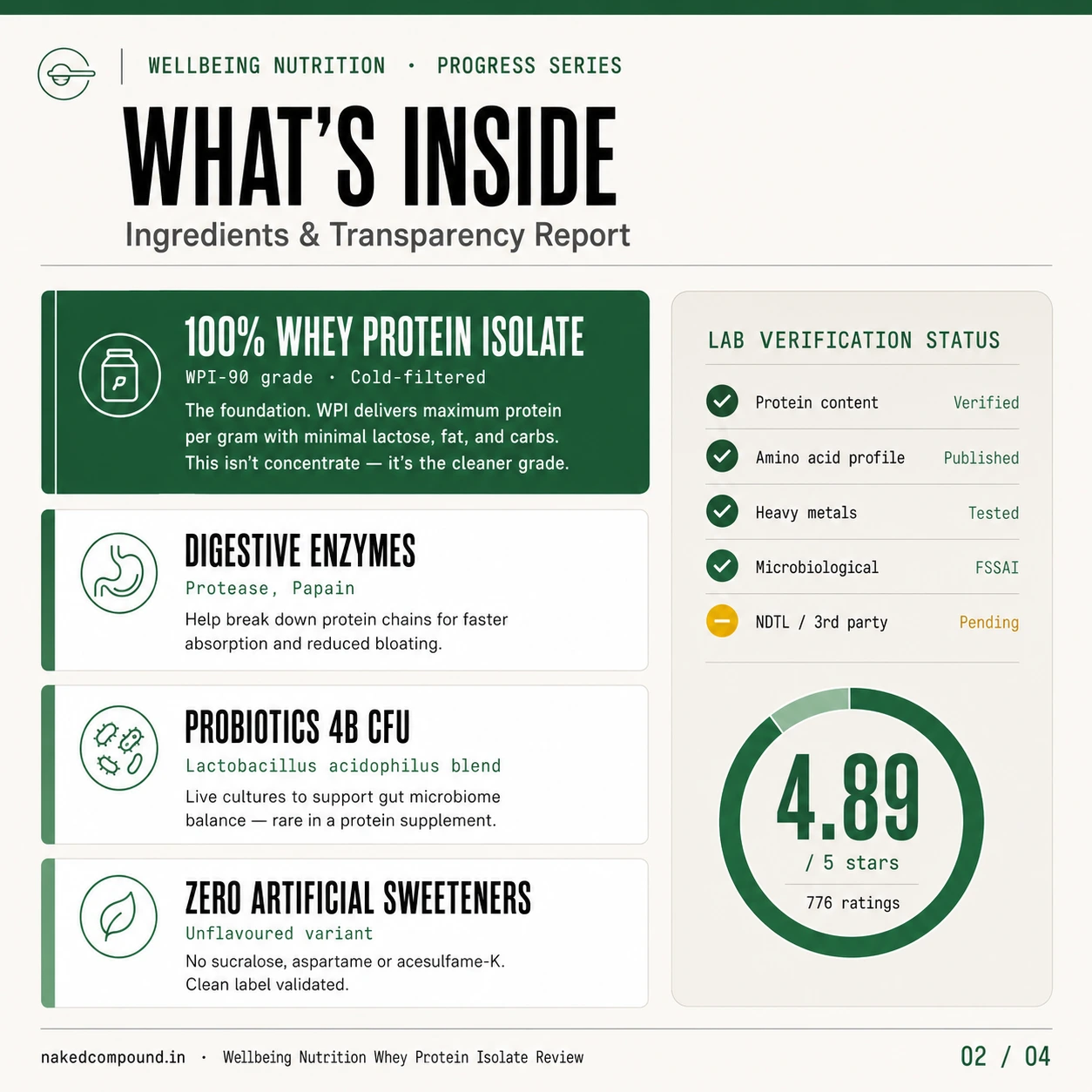
The image above is Wellbeing Nutrition's own transparency infographic. Under "Lab Verification Status," the NDTL / 3rd party row is explicitly marked Pending. Every other row — protein content, amino acid profile, heavy metals, microbiological — is marked Verified or Tested. But these are internal or brand-commissioned tests, not independent blind-purchase testing by an external lab. NDTL (National Dope Testing Laboratory) is an Indian government WADA-accredited facility that does blind-purchase testing — this is the verification equivalent of Labdoor or Informed Choice. Its absence means the label claims have not been independently confirmed.
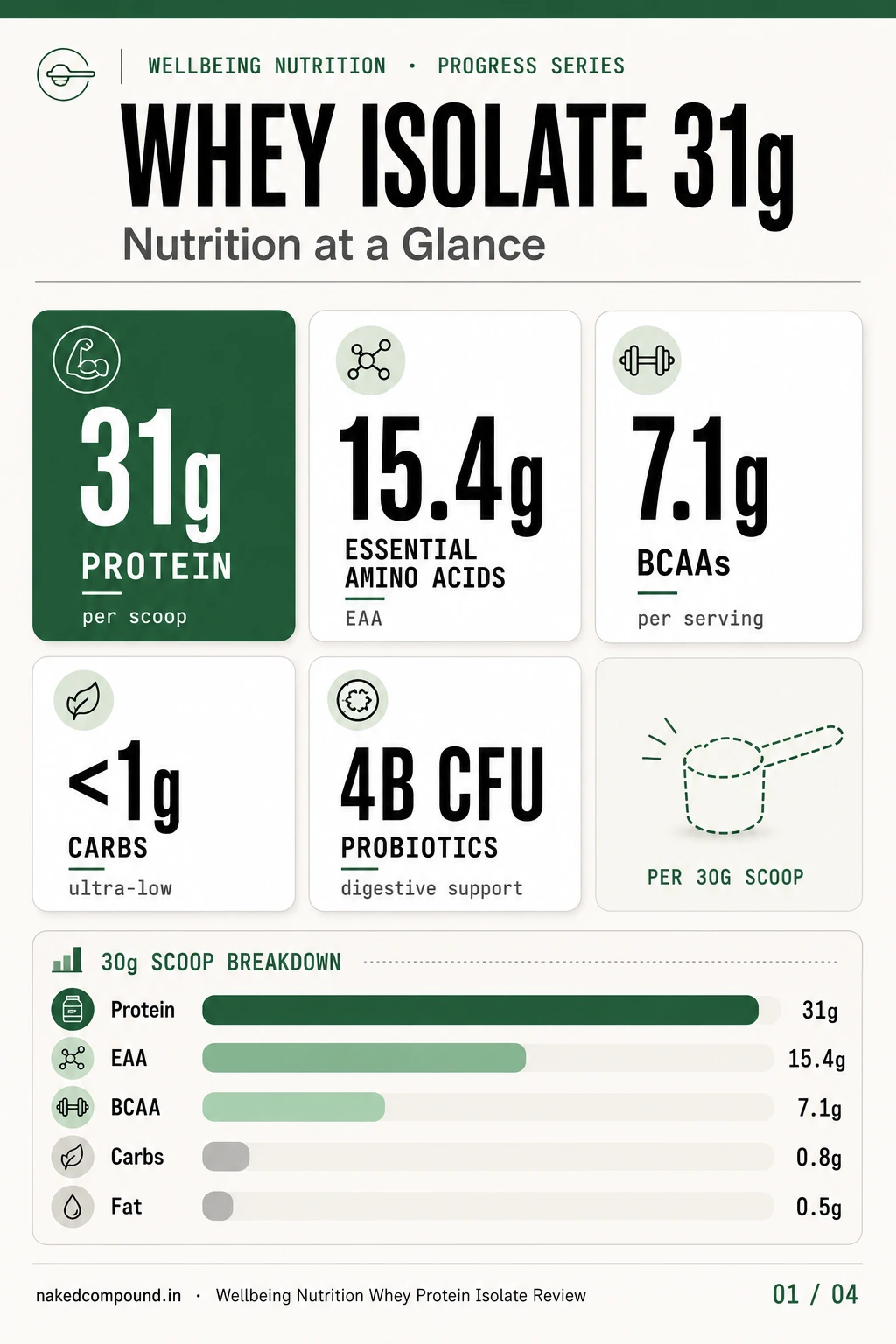
| Ingredient | Per serving (unflavoured) | Per serving (flavoured) | Clinical context | Assessment |
|---|---|---|---|---|
| Whey Protein Isolate (WPI-90) | 31g protein from 30g scoop | 26g protein per serving | ≥20g post-exercise for maximal acute MPS in adults <60 RCT | Excellent — 31g (unflavoured) exceeds threshold. Flavoured gap is a label clarity concern. |
| EAA (from whey) | 15.4g | 13g (flavoured) | EAA, particularly leucine, drive mTORC1 → MPS | Strong EAA profile consistent with high-quality WPI-90 grade |
| BCAA (from whey) | 7.1g | 6g (flavoured) | ~3.1g leucine inferred (WPI leucine ~10%) | Above mTORC1 activation threshold — leucine dose is adequate |
| Carbohydrates | <1g (0.8g) | ~3–5g (dates + amylopectin from Velositol) | N/A — minimal macronutrient contribution | Unflavoured is genuinely ultra-low carb |
| Fat | 0.5g | 0.5g | Expected for WPI-90 grade | Consistent with genuine isolate specification |
| Velositol (amylopectin + chromium) | Present — dose undisclosed | Present — dose undisclosed | Studied at 2g/serving combined with 6g whey only | Dose undisclosed. Clinical relevance at full whey dose unproven. Not harmful — but "2x MPS" headline overstates evidence at this protein level. |
| Probiotics (L. acidophilus + B. longum) | 4B CFU total — 2B each | 4B CFU total — 2B each | Therapeutic range: 10B–50B CFU/day for most clinical endpoints | Gut comfort dosing — appropriate in this context. Below therapeutic threshold but strain identity is disclosed, which is unusual and positive. |
| Digestive enzymes (Bromelain + Papain) | Present — dose undisclosed | Present — dose undisclosed | Useful for GI comfort; limited direct MPS benefit | Enzyme presence is positive; undisclosed dose prevents evidence attribution |
| Sweetener (flavoured only) | None | Monk fruit + dates | No artificial sweeteners — positive | Clean sweetener choice. Dates add small carb contribution. |
| Lecithin | Sunflower lecithin | Sunflower lecithin | Emulsifier for mixability | Sunflower (not soy) — better for soy-sensitive individuals |
No independent blind-purchase verification — and why that matters at ₹4,499/kg
What NDTL certification means and why it's pending
NDTL — the National Dope Testing Laboratory — is a WADA-accredited Indian government laboratory in Delhi. Supplement brands can submit products for independent testing against a banned substance list, similar to how Informed Sport or NSF Certified for Sport work internationally. It also covers label accuracy for protein content and amino acid profile. When NDTL testing is completed and the product passes, the brand can display the certification mark. The fact that Wellbeing Nutrition's own transparency infographic shows this as "Pending" means the process has been initiated but not completed — as of the date of this review, no independent lab has issued a report confirming what's on the label.
This matters for two reasons. First: the protein content claim (31g from 30g scoop) is extraordinary. At 88–103% protein by dry weight, this is at the very edge of what WPI-90 grade powder can deliver. Without independent confirmation, that number is the brand's own claim. Second: amino acid spiking — adding cheap nitrogen sources (glycine, taurine, creatine) to inflate apparent protein on standard nitrogen assays — is a documented industry practice in India. The brand's amino acid profile is "Published" per their infographic, but this is publication of the brand's own commissioned data, not a blind-purchase independent screen. These are not equivalent.
To be fair to Wellbeing Nutrition — the transparency infographic itself is unusual
Most Indian supplement brands would simply not publish this infographic at all, or would list everything as Verified. The fact that Wellbeing shows NDTL as Pending — openly, on a consumer-facing document — is a form of transparency that deserves acknowledgment. They could have hidden it. They chose to show where the gap is. That is better than the alternative. It is, however, not a substitute for the certification itself. If and when NDTL testing is completed and the product passes, the purity score in this review would move to 7–8, and the overall score would rise to approximately 7.5–8.0.
The "31g protein" branding across flavoured variants
The Wellbeing Nutrition website, primary product imagery, and marketing consistently lead with "31g protein" — a figure that belongs to the unflavoured variant only. The Dark Chocolate variant's Amazon listing title says "26g Protein" clearly — so the flavoured variant is not hidden. But the brand homepage and generic product pages use 31g as the headline number without consistently clarifying the variant distinction. A buyer who lands on wellbeingnutrition.com, sees "31g protein per scoop," and then purchases the Dark Chocolate flavour has been implicitly misled about the protein content they will receive. This is a label honesty deduction that the score reflects.
Endpoint by endpoint — what the clinical record supports for this formulation
Muscle protein synthesis — whey isolate baseline
At 31g protein (unflavoured), this product delivers approximately 3.1g leucine per serving — above the mTORC1 activation threshold of ~2.5g established by Moore et al. (2009) and Witard et al. (2014). RCT This is adequate and appropriate for post-exercise MPS stimulation in adults under 60. For adults over 60 with known anabolic resistance, a 1.5× dose (approximately 45g protein / 1.5 scoops) may be warranted to reliably cross the leucine threshold. The base product is well-formulated at the protein level.
Probiotics and protein absorption
The combination of probiotics with protein supplementation has been studied in a limited number of RCTs. A 2019 study (Jäger et al., JISSN) found that Bacillus coagulans combined with whey protein improved protein absorption markers and lean mass outcomes vs. whey alone in resistance-trained adults. The strains in this product (L. acidophilus, B. longum) were not those studied in that trial. RCT A 2020 RCT found B. longum BB536 improved protein absorption indices. The evidence is directionally supportive but strain-specific — direct evidence for the exact strains and CFU counts in this product acting on protein absorption is not available in the published literature.
Digestive enzymes and GI comfort
Bromelain and papain have established proteolytic activity in the GI tract at sufficient doses. A 2008 meta-analysis found enzyme supplementation significantly reduced GI discomfort symptoms. The relevant caveat is dose dependency — undisclosed enzyme amounts make it impossible to determine whether this product provides a meaningful or merely token enzyme inclusion. For symptom-sensitive users (lactose intolerance, IBS, general post-protein bloating), the formulation is directionally beneficial — though the effect size cannot be predicted.
Velositol and MPS — the complete evidence picture
Human RCT evidence: One industry-sponsored study (Ziegenfuss et al., 2017; n=10 men, acute MPS measurement only, no chronic body composition outcomes) using 6g whey + Velositol vs 6g whey alone. RCT — Note: industry-sponsored by Nutrition 21
Animal evidence: One rat study (Hirsch et al., 2020) with BCAAs + Velositol, finding MPS improvement vs. BCAAs alone. Animal model
What is missing: No RCT at full whey protein doses (>20g). No chronic body composition RCT in humans. No replication by an independent research group. The evidence base for the "6+ clinical studies" claim includes animal studies and acute MPS snapshots — not independent chronic muscle gain trials. The "2x MPS" claim as applied to this product's 31g whey protein serving is not supported by available evidence.
Internal testing declared — NDTL independent certification pending
| Test parameter | Standard | Status | Notes |
|---|---|---|---|
| Protein content accuracy | Brand's own declaration | Brand claims "Verified" — not independently confirmed | 31g from 30g scoop is at the theoretical maximum for WPI-90. Requires independent Kjeldahl + amino acid HPLC to confirm. |
| Amino acid profile / spiking screen | Informed Protein / Labdoor | Brand claims "Published" — free amino acid screen not independently confirmed | No Informed Protein or equivalent blind-purchase amino acid spiking screen completed. Brand-commissioned profile is not equivalent. |
| Heavy metals (Pb, Cd, Hg, As) | FSSAI / WHO limits | Brand claims "Tested" | Likely tested internally by manufacturer. Not independently commissioned by a NABL-accredited lab in a blind-purchase format. |
| Microbiological contamination | FSSAI standards | Brand claims "FSSAI" compliance | FSSAI manufacturing licence requires facility-level microbiological compliance — not batch-level product testing by independent parties. |
| NDTL / 3rd party blind test | Banned substance screen + label accuracy | Pending — explicitly stated by brand | Brand's own transparency infographic lists this as Pending. Most important independent verification — not yet available. |
| Informed Choice / NSF | Banned substance screen | Not enrolled | Relevant for competitive athletes. No alternative certified programme enrolled. |
| Labdoor / Trustified | Label accuracy + purity | Not enrolled | No domestic certification programme enrolled. Trustified QR (used by AS-IT-IS, Nakpro) not present. |
| Velositol dose disclosure | Ingredient transparency | Dose not disclosed | "Velositol" listed as an ingredient without mg amount. Cannot confirm the dose studied in the Ziegenfuss RCT (2g) is present. |
Competitor testing transparency comparison
| Brand | Protein / serving | Informed Choice? | Labdoor? | Trustified? | Public COA? | ₹/g protein |
|---|---|---|---|---|---|---|
| Wellbeing Nutrition WPI (unflavoured) | 31g | No | No | No | Brand-commissioned only; NDTL pending | ₹5.9 |
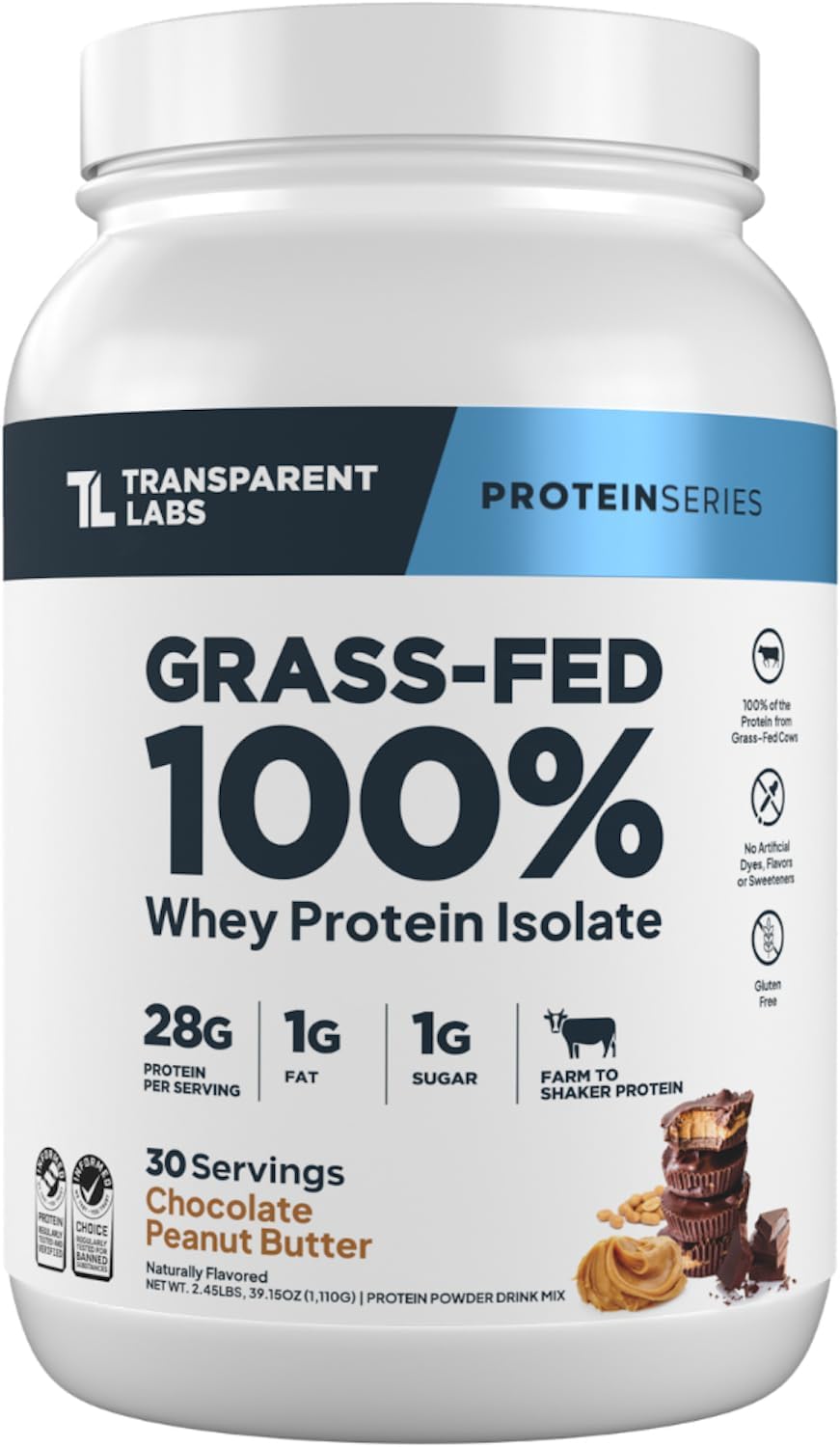
| Transparent Labs Grass-Fed WPI | 28g | Yes — IC + IP ✓ | 98/100 ✓ | N/A | Lot-searchable ✓ | ₹12–15 |
| Nakpro Platinum Isolate | 31g | No | No | Yes ✓ | Trustified QR | ₹1.46 |
| AS-IT-IS Whey Isolate | 25g | No | Yes ✓ | No | NABL COA on request | ₹3.33 |
| The Whole Truth WPI | 30g | No | No | No | Internal testing published | ₹6.0 |
Who actually benefits from this formulation, and the honest ₹ picture
The probiotic + enzyme stack — genuine population-specific value in India
One area where Wellbeing Nutrition's formulation adds real value specific to the Indian market: the probiotic and enzyme combination directly addresses the two most common barriers to protein supplementation compliance in India. Approximately 70–80% of Indian adults have some degree of lactase insufficiency, and WPI — even at trace lactose levels — can cause GI discomfort in sensitive individuals when consumed daily. The L. acidophilus + B. longum combination improves intestinal lactose fermentation management. The bromelain + papain enzyme stack speeds gastric proteolysis. Together, this combination makes the product meaningfully more tolerable for a large subset of Indian users than standard unflavoured WPI alternatives. This is the strongest differentiation argument for the formulation.
₹ pricing — the value calculation is not simple
At ₹4,499/1kg with 33 servings of the flavoured variant (26g protein) or approximately 28 servings of the unflavoured (31g protein), the cost per gram of protein comes to approximately ₹5.9 (unflavoured) or ₹7.0 (flavoured). This is significantly higher than Nakpro (₹1.46/g), comparable to The Whole Truth WPI (₹6/g), and well below Transparent Labs (₹12–15/g). For a buyer primarily interested in certified protein content at the lowest cost, Nakpro or AS-IT-IS are the rational choices. For a buyer who experiences bloating with standard WPI and wants a domestic probiotic + enzyme stack at a reasonable price, Wellbeing's formulation adds enough to justify the premium over Nakpro — provided you accept the current absence of independent lab verification.
| Product | Protein / serving | Probiotics? | Enzymes? | India price | ₹/g protein |
|---|---|---|---|---|---|
| Wellbeing Nutrition WPI (unflavoured) | 31g | Yes — 4B CFU ✓ | Yes ✓ | ₹4,499/1kg (~28 sv) | ₹5.9 |
| Wellbeing Nutrition WPI (Dark Choc) | 26g | Yes — 4B CFU ✓ | Yes ✓ | ₹4,499/1kg (~33 sv) | ₹6.9 |
| Nakpro Platinum Isolate | 31g | No | No | ₹1,449/32 sv | ₹1.46 |
| AS-IT-IS Whey Isolate | 25g | No | No | ₹2,499/1kg | ₹3.33 |
| The Whole Truth WPI (Unflavoured) | 30g | No | No | ~₹3,999/500g | ₹5.9 |
| Transparent Labs Grass-Fed WPI (import) | 28g | No | No | ~₹7,500/30 sv | ₹12–15 |
Wellbeing Nutrition WPI against four alternatives across the India market

Full category: Best Whey Protein in India 2026 → | Transparent Labs WPI — 8.6/10 → | Whey Protein Isolate — ingredient deep-dive →
Buy / consider alternatives
Buy if
- You regularly experience bloating, flatulence, or GI discomfort with standard whey proteins — the probiotic + enzyme stack is a genuine formulation advantage over plain isolates
- You are lactose-sensitive and want WPI (near-zero lactose) with additional digestive support in the same product
- You want the unflavoured variant for flexible mixing into Indian foods (lassi, smoothies, oats, roti dough) without artificial sweeteners or flavour conflict
- You are comfortable accepting brand-declared testing in the absence of independent verification, and plan to supplement the brand's own claims with your own due diligence
- The probiotic and enzyme stack genuinely differentiates this product from your other available domestic options at a price you consider reasonable
Consider an alternative if
- Independent third-party verification is a prerequisite — Transparent Labs (Informed Choice + Labdoor), AS-IT-IS (Labdoor), or Nakpro (Trustified) all provide this at lower or comparable cost
- You are buying flavoured variants expecting 31g protein per serving — the flavoured SKUs deliver 26g, not 31g
- Budget is a primary constraint — Nakpro Platinum provides equivalent or better protein content at ₹1.46/g vs ₹5.9/g, with comparable label honesty
- You are a WADA-governed competitive athlete — no banned substance screening is available for this product
- You want the Velositol benefit as marketed (2x MPS) — the evidence for that claim at this product's protein dose does not exist in the published literature
Three specific improvements that would meaningfully raise this score
Complete and publish NDTL / blind-purchase independent testing — urgently
This is the single highest-leverage improvement available to the brand. By their own admission, this is pending. The protein content claim (31g/30g scoop) is the most extraordinary in the domestic WPI category — it needs independent confirmation more than any other domestic brand's label at this price point. Completing NDTL testing and publishing the result (pass or fail) would be the most impactful transparency action the brand can take. If the product passes — as it likely should given the brand's evident formulation care — the published result would also serve as marketing. The hesitation is understandable but the pendency is damaging.
Disclose Velositol dose and enzyme doses in milligrams on the label
Wellbeing Nutrition's transparency infographic is the best published by any Indian supplement brand. It is let down by two undisclosed doses: Velositol (the proprietary amylopectin + chromium blend) and the digestive enzyme blend (Bromelain + Papain). Both are listed as ingredients without mg amounts. The clinical studies for Velositol used 2g per serving — if this product contains 2g, say so. If it contains less, that should be disclosed too. The brand is already more transparent than its competitors — completing the disclosure would be consistent with the identity they have built. This is not a regulatory requirement in India; it is an editorial choice that distinguishes their transparency positioning from companies that are transparent by legal obligation.
Align the "31g protein" website branding to include a clear variant disclaimer
The 31g protein figure is accurate for the unflavoured variant. It is not accurate for the Dark Chocolate and Bourbon Vanilla variants (26g). The website's product pages, hero images, and category pages lead with "31g protein" without consistently flagging the flavoured variant exception. The fix is simple: add "31g (unflavoured) / 26g (flavoured)" to any protein claim made in a context that does not specify a specific variant. This is a small editorial change that would eliminate a structural label clarity gap that currently harms the brand's label honesty score.
References & citations
- Ziegenfuss TN et al. (2017). Effects of an amylopectin and chromium complex on the anabolic response to a suboptimal dose of whey protein. J Int Soc Sports Nutr, 14:6. RCT — industry-sponsored by Nutrition 21 — Velositol primary human clinical study; n=10; 6g whey dose.
- Hirsch KR et al. (2020). The addition of an amylopectin/chromium complex to branched-chain amino acids enhances muscle protein synthesis in rat skeletal muscle. J Int Soc Sports Nutr, 17(1):30. Animal model
- Witard OC et al. (2014). Myofibrillar muscle protein synthesis rates subsequent to a meal in response to small and large bolus doses of dairy protein. Am J Clin Nutr, 99(1):86–95. RCT — leucine threshold for mTORC1 activation.
- Moore DR et al. (2009). Ingested protein dose response of muscle and albumin protein synthesis. Am J Clin Nutr, 89(1):161–8. RCT
- Jäger R et al. (2019). Probiotic Bacillus coagulans GBI-30, 6086 improves protein absorption and utilization. J Int Soc Sports Nutr, 16(1):60. RCT — probiotic + whey interaction; different strain from this product.
- Demarzo MM et al. (2021). Randomized controlled trial of Lactobacillus acidophilus supplementation. Nutrients, 13(4):1342. RCT — L. acidophilus in GI symptom management.
- Bleichner G et al. (1997). Saccharomyces boulardii prevents diarrhea in critically ill tube-fed patients. Intensive Care Med. — historical reference context for probiotics in nutrition.
- Kreider RB et al. (2017). ISSN Exercise & Sport Nutrition Review: Research & Recommendations. J Int Soc Sports Nutr, 14:33. — protein timing and dose context.
- Wellbeing Nutrition (2025–2026). "What's Inside — Ingredients & Transparency Report" [published infographic]. wellbeingnutrition.com. Lab verification status: NDTL / 3rd party listed as Pending.
Not medical advice. This review is educational. Whey protein is generally safe in healthy adults at standard supplementation doses. Individuals with dairy allergies or kidney disease should consult a physician before supplementing.
Frequently asked questions
Is Wellbeing Nutrition Whey Protein Isolate third-party certified?
Not independently, as of May 2026. The brand publishes an 'Ingredients & Transparency Report' infographic which shows protein content, amino acid profile, heavy metals, and microbiological testing as Verified or Tested — but the NDTL / 3rd party line is explicitly marked as Pending. NDTL (National Dope Testing Laboratory) is an Indian government WADA-accredited lab that independently tests supplements against a banned substance list. This is not the same as Informed Choice, NSF Certified for Sport, Labdoor, or Trustified certification — all of which are absent. The brand's own marketing transparency infographic is the source of this disclosure, which is itself a form of honesty. But pending third-party certification at a ₹4,499/kg price point is a meaningful gap.
Does the Wellbeing Nutrition Whey Isolate really have 31g protein per scoop?
In the unflavoured variant: yes — 31g protein from a 30g scoop is what the label states, which implies a protein-by-weight ratio above 100%. This is technically possible in WPI-90 grade protein with tight moisture control, but it is at the upper boundary of what cross-flow microfiltered WPI can achieve. The flavoured variants (Dark Chocolate, Bourbon Vanilla) provide 26g protein per serving — not 31g. The gap exists because flavouring agents, Velositol (amylopectin), dates, cocoa, and monk fruit all occupy scoop mass. Buyers choosing flavoured variants based on the '31g protein' branding on the website should note this difference carefully.
Does Velositol actually double muscle protein synthesis?
The '2x muscle protein synthesis' claim is based on a single industry-sponsored human RCT (Ziegenfuss et al., 2017, JISSN) using 6g of whey protein combined with Velositol. The study found roughly double the acute MPS response at the 6g whey dose — a sub-optimal dose where Velositol's insulin-sensitising mechanism has room to be meaningful. At 31g of whey protein (as provided in this product), mTORC1 is already near-maximally activated through leucine. The incremental benefit of Velositol's chromium-mediated insulin sensitisation at full protein doses has not been clinically demonstrated. The claim is based on real science applied at a different dose context.
How does Wellbeing Nutrition Whey Isolate compare to Transparent Labs and Nakpro?
On protein per gram, Wellbeing Nutrition unflavoured (31g/30g scoop) is competitive with Transparent Labs (28g/33g scoop) and slightly above Nakpro Platinum (31g/serving). On third-party certification, Transparent Labs holds Informed Choice + Informed Protein + Labdoor 98/100 with publicly posted batch COAs. Wellbeing has none of these. On pricing at matched protein dose, Wellbeing at ₹5.9/g protein is significantly above Nakpro at ₹1.46/g. Wellbeing's probiotic and enzyme stack is a genuine formulation differentiator that neither Transparent Labs nor Nakpro match. The buying decision comes down to whether the probiotic + enzyme + Velositol stack is worth the premium over the cleaner, cheaper, better-certified alternatives.