
Carbamide Forte Omega-3 Triple Strength
The bottom line
Our verdict · Omega-3 / Fish Oil
Solid dose. Credible label. One open question that matters in India.
Carbamide Forte delivers 550 mg EPA + 350 mg DHA per softgel — one of the highest concentrations in the Indian mass-market segment. The enteric coating solves burpback and marginally improves upper-GI tolerability. The label is honest about what's in the capsule. The problem isn't the formulation. It's everything that happens between the factory and your medicine cabinet. Fish oil oxidises. Heat accelerates that process by an order of magnitude. Indian climate and warehousing conditions mean the oxidation risk for any softgel is non-trivial — and Carbamide Forte publishes no TOTOX data. At ~₹13–20 per day of use, it is competitive but not the cheapest, and better-audited international options exist for marginally more money. For most urban Indian adults who eat fish fewer than twice a week, this product will do its job adequately. Just store it correctly and don't expect the enteric coating to compensate for a rancid capsule.
Scores: Dose 8/10 · Form 7/10 · Purity 5/10 · Value 7/10 · Label Honesty 7/10 · Overall 6.4/10
How omega-3s actually work — the receptor-level picture
Eicosapentaenoic acid (EPA) and docosahexaenoic acid (DHA) are long-chain n-3 polyunsaturated fatty acids. Their physiological effects operate through at least four distinct pathways, and conflating them is where most supplement marketing goes wrong.
1. Membrane incorporation and G-protein receptor signalling
Both EPA and DHA incorporate into phospholipid bilayers, displacing arachidonic acid (AA, n-6). This structural substitution alters the fluidity and microdomain composition of cell membranes — particularly lipid rafts — which affects the clustering and signalling efficiency of toll-like receptors (TLR4, TLR2) and receptor tyrosine kinases. DHA is the primary driver here; its 22-carbon, six-double-bond structure creates greater membrane fluidity than EPA's 20-carbon, five-double-bond structure.
1EPA and DHA also act as endogenous ligands for GPR120 (also called FFAR4), a G-protein coupled receptor highly expressed on macrophages, intestinal L-cells, and adipocytes. GPR120 activation suppresses TLR4-mediated NF-κB signalling and the downstream inflammatory cascade — providing a mechanistic basis for the anti-inflammatory effects seen in human trials.2 (Evidence tier: in vitro + rodent models, with human trial data corroborating the downstream endpoints)
2. Eicosanoid and specialised pro-resolving mediator (SPM) synthesis
The COX and LOX enzyme pathways convert AA, EPA, and DHA into eicosanoids with opposing potency profiles. AA produces thromboxane A2 (TXA2) and leukotriene B4 (LTB4) — pro-aggregatory and pro-inflammatory. EPA competes for the same enzymes, producing thromboxane A3 and leukotriene B5, which are biologically weaker. This competitive displacement is dose-dependent; clinically meaningful AA:EPA ratio shifts require sustained intake of ≥2 g combined EPA+DHA/day.3
Beyond competitive inhibition, EPA and DHA serve as precursors to resolvins, protectins, and maresins — collectively called specialised pro-resolving mediators (SPMs). These are not merely anti-inflammatory; they actively programme the resolution of existing inflammation. Resolvins E1 and E2 are derived from EPA; resolvins D-series, protectin D1, and maresins from DHA. SPM synthesis is the mechanistic basis for the cardiovascular endpoint data we discuss below. (Evidence tier: RCT evidence for CVD endpoints; SPM biochemistry primarily in vitro/ex vivo)
3. PPAR-α nuclear receptor activation
Both EPA and DHA activate peroxisome proliferator-activated receptor alpha (PPAR-α), a nuclear transcription factor that upregulates fatty acid β-oxidation genes, reduces triglyceride synthesis in the liver, and suppresses inflammatory gene expression (via cross-talk with NF-κB). This is the primary mechanism behind the triglyceride-lowering effects observed in meta-analyses — effects large enough that the FDA has approved high-dose prescription EPA (icosapentaenoic acid ethyl ester, Vascepa) for this endpoint.4 (Evidence tier: RCT, with Bhatt et al. REDUCE-IT trial as anchor study)
4. What ALA (alpha-linolenic acid) cannot do
Several Indian products marketed as "omega-3" contain only ALA (alpha-linolenic acid from flaxseed). ALA conversion to EPA in humans is 5–10%; conversion to DHA is under 1% in most individuals. ALA does not activate GPR120 with meaningful potency, does not meaningfully shift the AA:EPA ratio, and does not generate resolvins or protectins at physiological doses. It is nutritionally distinct from EPA/DHA. Carbamide Forte correctly uses fish oil — this is a call-out for the category, not this product.
What Carbamide Forte actually gives you
The label reads: Fish Oil 1250 mg per softgel, of which EPA 550 mg and DHA 350 mg. That is a 72% concentration of active omega-3s per gram of oil — high for a mass-market product. Most standard-strength Indian fish oil capsules contain 180 mg EPA / 120 mg DHA in a 1000 mg softgel (30% concentrate). This product is genuinely in the "triple strength" bracket by concentration, not just by marketing convention.
| Per Softgel | Carbamide Forte Label | Clinically Validated Range | Assessment |
|---|---|---|---|
| Fish Oil | 1250 mg | — | Carrier |
| EPA | 550 mg | 500–1800 mg (CV outcomes) | Adequate |
| DHA | 350 mg | 250–1000 mg (brain, CVD) | Adequate |
| EPA + DHA total | 900 mg | ≥1000 mg/day (general health); ≥2000 mg (TG reduction) | 1 softgel marginal; 2 optimal |
| Other fatty acids | Not disclosed | — | Gap |
| TOTOX value | Not disclosed | <10 mEq/kg (GOED standard) | Not published |
Dose context: what the trials actually used
The REDUCE-IT trial (Bhatt et al., 2019, NEJM) used 4 g/day of pure EPA ethyl ester and showed a 25% relative risk reduction in major adverse cardiovascular events in statin-treated patients with elevated triglycerides.5 That is a prescription product at a dose four times higher than this supplement's single-softgel serving. The OMEGA trial (Rauch et al., 2010, NEJM) found no mortality benefit with 1 g/day fish oil in post-MI patients already on modern treatment.6 (Evidence tier: RCT)
The practical translation: one Carbamide Forte softgel daily (900 mg EPA+DHA) is within the evidence range for general cardioprotective and anti-inflammatory intent. For meaningful triglyceride reduction — the clearest mechanistic effect — you need 2 softgels daily (1800 mg EPA+DHA). The recommended dosing should reflect this distinction. It doesn't. The label says "1–2 capsules daily" without clinical rationale.
The problem nobody sells you on: oxidation
Fish oil is composed of highly unsaturated fatty acids. Every additional double bond in the carbon chain creates an additional site susceptible to free-radical attack. EPA (5 double bonds) and DHA (6 double bonds) are among the most oxidation-prone molecules in human nutrition. Rancid fish oil isn't just unpleasant — it may be actively counterproductive.
A 2015 study by Rundblad et al. (published in the British Journal of Nutrition) showed that oxidised fish oil failed to produce the expected improvements in lipid profiles seen with fresh oil, and elevated markers of oxidative stress in participants.7 Earlier work by Ottestad et al. (2012) demonstrated that fish oil oxidation products — including 4-hydroxynonenal (4-HNE) and malondialdehyde (MDA) — are bioavailable and may contribute to pro-oxidant burden.8 (Evidence tier: small RCT, limited n)
India's oxidation problem is structural
Omega-3 oxidation rate roughly doubles for every 10°C rise in temperature (the Q10 rule). Mumbai summer warehouse temperatures routinely exceed 35°C. Bengaluru is relatively cooler, but last-mile delivery vehicles are not temperature-controlled. A product that clears TOTOX testing at the factory may arrive significantly degraded depending on the supply chain it traverses. Carbamide Forte publishes no TOTOX, TOTOX trend, or third-party freshness certificates on its product page or Amazon listing as of our review date.
The Global Organisation for EPA and DHA Omega-3s (GOED) sets a voluntary TOTOX standard of ≤10 mEq/kg for finished fish oil products. Testing by independent labs in Europe and the US has found that many fish oil supplements sold in retail exceed this at point of purchase. India has no equivalent FSSAI standard for fish oil oxidation markers, and there is no mandatory TOTOX disclosure on supplement labels.
What the enteric coating does (and doesn't do)
Carbamide Forte uses an enteric-coated softgel. The coating delays dissolution until the capsule reaches the small intestine (pH >6), which accomplishes two things: it eliminates the fishy burp associated with gastric dissolution, and it marginally improves absorption in individuals with low gastric acid (common in the elderly). What it does not do is protect the oil inside from oxidation during storage. Enteric coating is a delivery mechanism, not a preservation mechanism. A rancid softgel with enteric coating is still a rancid softgel — it just doesn't announce itself with a burp.
Triglyceride vs. ethyl ester — form matters
Fish oil exists in commerce in two primary forms: natural triglyceride (TG) form and re-esterified or synthetic ethyl ester (EE) form. Concentration and form are separate variables that most Indian supplement brands do not disclose.
A head-to-head RCT by Dyerberg et al. (2010, Prostaglandins, Leukotrienes and Essential Fatty Acids) showed that re-esterified TG form had 124% relative bioavailability compared to ethyl ester form when taken fasted.9 With food, the gap narrows substantially. A 2012 pharmacokinetics study by Neubronner et al. (European Journal of Clinical Nutrition) confirmed that TG form produces meaningfully higher plasma EPA+DHA levels over 6 months compared to EE form at the same nominal dose.10 (Evidence tier: small RCT)
Carbamide Forte's label does not specify whether the fish oil is in TG or EE form. This is a meaningful omission. Highly concentrated fish oil products are frequently made by concentrating EE form (which is cheaper to process) and then optionally re-esterifying to TG form (more expensive). The label silence is not unusual for the Indian market — almost no Indian brand discloses this — but it is a gap.
Take fish oil with your largest meal of the day — ideally one with dietary fat. Co-ingestion with fat stimulates bile secretion and pancreatic lipase, which significantly improves omega-3 absorption regardless of form. This single behavioural change can increase plasma EPA+DHA more reliably than paying a premium for TG-form oil.
What the evidence says about outcomes
Cardiovascular: the clearest signal
Meta-analyses consistently show that omega-3 supplementation reduces circulating triglycerides by 15–30% at doses of ≥2 g EPA+DHA/day — one of the most reproducible effects in nutritional pharmacology.11 The effect is dose-dependent. At 900 mg/day (one Carbamide Forte softgel), the triglyceride effect is detectable but modest. Two softgels place you in the lower-effective range. (Evidence tier: meta-analysis of RCTs — strong)
All-cause mortality and MACE reduction remains contentious. REDUCE-IT's dramatic results with 4 g pure EPA have not been consistently replicated with mixed EPA+DHA at lower doses. The STRENGTH trial (Nicholls et al., 2020, JAMA) used high-dose mixed EPA+DHA (4 g/day) and found no CV benefit, raising questions about whether the REDUCE-IT effect is EPA-specific, dose-specific, or confounded by the mineral oil comparator.12 (Evidence tier: conflicting RCTs — moderate, contested)
Inflammation and joint health
At ≥2.7 g/day combined EPA+DHA, fish oil demonstrably reduces disease activity scores in rheumatoid arthritis — Kremer et al. established this in a series of RCTs from the 1990s, replicated by Fortin et al. (1995, Arthritis & Rheumatism).13 At 900 mg/day, you are below the threshold established in these trials. One softgel of Carbamide Forte is not a therapeutic anti-inflammatory dose for joint pathology.
Cognition and mental health
DHA is the dominant structural fatty acid in neuronal membranes. Observational data linking low DHA status to depression risk is compelling. RCT evidence for EPA as an adjunct in major depression is more interesting: Sublette et al.'s meta-analysis (2011, Journal of Clinical Psychiatry) found that supplements with >60% EPA showed significant antidepressant benefit while DHA-dominant formulations did not.14 (Evidence tier: meta-analysis, but heterogeneous trials — moderate) The 550 mg EPA in Carbamide Forte is within range, though the DHA is useful only for structural maintenance, not acute neurological endpoints at this dose.
Third-party lab testing — what exists and what doesn't
Carbamide Forte has not enrolled this product in any published third-party testing programme — IFOS, Labdoor, NSF, or equivalent. No batch-specific Certificate of Analysis (COA) for TOTOX, heavy metals, PCBs, or EPA/DHA label accuracy is publicly accessible on the product page, Amazon listing, or brand website as of this review's publication date.
What third-party testing for fish oil actually measures
Not all testing programmes are equivalent. The three that matter for fish oil are tiered by what they verify:
| Programme | Tests for | TOTOX limit | Heavy metals | Banned substances | Carbamide Forte status |
|---|---|---|---|---|---|
| IFOS (Nutrasource) | EPA/DHA potency, oxidation (PV, AV, TOTOX), PCBs, dioxins, heavy metals | TOTOX ≤26 (pass); ≤10 (5-star) | Yes — Pb, Hg, As, Cd | No | Not enrolled |
| Labdoor | Label accuracy (EPA/DHA ±10%), oxidation, heavy metals | Custom; uses FDA rancidity guidelines | Yes | No | Not tested |
| NSF Certified for Sport | Label accuracy, contaminants, banned substances (WADA list) | Not omega-3 specific | Yes | Yes | Not certified |
| FSSAI licence (India) | Manufacturing facility compliance only | None specified | Regulatory only | No | Licensed |
What the absence of testing means in practice
The absence of IFOS or Labdoor certification does not mean the product is adulterated or rancid. It means there is no external verification that it isn't. Most Indian fish oil brands — including competitors at similar price points — are in the same position. The ones that are independently certified (NOW Foods Ultra Omega-3 via IFOS, WHC UnoCardio via Eurofins) cost materially more for that credential.
The simplest oxidation test you can perform at home: open a softgel and smell the oil directly. Fresh fish oil has a mild marine/oceanic smell. Rancid oil has a sharp, acrid, distinctly unpleasant odour — like old frying oil. If your softgels fail this basic test, discard the bottle regardless of expiry date. This does not replace TOTOX testing but catches gross oxidation reliably.
Industry context: why Indian brands rarely publish TOTOX
IFOS certification costs approximately USD 1,500–3,000 per product per year plus per-batch testing fees. For a domestic brand selling at ₹800–1,200 per 60-softgel bottle with thin margins, this represents a meaningful cost addition. The Indian regulatory framework does not require it, and consumer awareness of TOTOX as a quality signal remains low outside enthusiast communities in Bengaluru, Mumbai, and Delhi. This will change — but it hasn't yet. Until it does, the burden of evidence falls on the consumer to store correctly, buy fresh, and either accept the uncertainty or pay the premium for certified products.
India market reality
Who actually needs supplemental omega-3 in India?
The traditional Bengali and coastal South Indian diet — with regular intake of hilsa (ilish), pomfret, rohu, or mackerel — provides meaningful EPA+DHA through food. A 100 g serving of mackerel (bangda) provides roughly 1.5–2 g combined EPA+DHA. An inland North Indian diet with minimal fish consumption, or a vegetarian diet, leaves most urban adults with chronic EPA+DHA insufficiency. The estimated dietary intake of omega-3 in most urban vegetarians in India is under 100 mg/day EPA+DHA combined — far below any therapeutic threshold.
FSSAI status
Carbamide Forte carries an FSSAI licence number on its label. This is a manufacturing and quality compliance licence, not a therapeutic or health-claim approval. FSSAI has no equivalent of the European EFSA or US FDA's qualified health claims framework for omega-3 specific outcomes. The FSSAI licence certifies that the facility meets food safety manufacturing standards — it says nothing about EPA/DHA purity, oxidation status, or label accuracy for specific nutrient claims. Treat it as a minimum floor, not a quality ceiling.
Price per gram of EPA+DHA
| Brand | EPA+DHA per softgel | Price per 60 softgels (approx. Amazon.in) | Cost per gram EPA+DHA | TOTOX published? |
|---|---|---|---|---|
| Carbamide Forte Triple Strength | 900 mg | ₹799–₹1,199 | ₹15–22/g | No |
| NOW Foods Ultra Omega-3 (imported) | 750 mg (500 EPA+250 DHA) | ₹1,400–₹1,800 / 90 softgels | ₹21–27/g | IFOS certified |
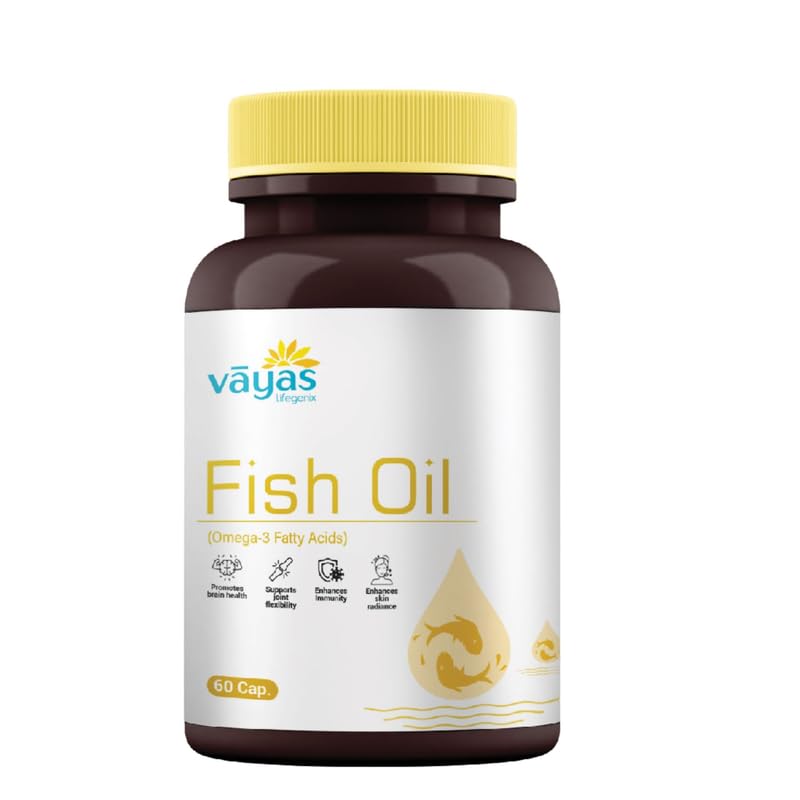
| Vaya Naturals Omega-3 | 600 mg | ₹850–₹1,050 / 60 softgels | ₹24–29/g | No |
| Neuherbs Deep Sea Omega-3 | 330 mg (180+150) | ₹599–₹799 / 60 softgels | ₹30–40/g | No |
| WHC UnoCardio (imported) | ≈1250 mg (EPA+DHA) | ₹3,000–₹4,500 / 30 softgels | ₹80–120/g | TOTOX <3, published |
On pure gram-for-gram cost, Carbamide Forte is among the most competitive Indian-brand options. The gap with WHC UnoCardio or IFOS-certified international products is real and material. Whether that gap matters depends on how much you trust an uncertified Indian supply chain — and that's a personal risk calculation, not a purely economic one.
How it stacks up against serious competition

NOW Foods Ultra Omega-3
Vaya Naturals Omega-3

Neuherbs Deep Sea Omega-3
Who should buy this — and who shouldn't
You eat fish fewer than 2x per week, live in a city with reliable refrigerated storage (keeping the bottle in the fridge), want an Indian brand that actually doses adequately per capsule, and are willing to take 2 softgels/day for meaningful CV or inflammation support. At ₹30–40/day for two softgels, this is in the reasonable-value zone for 1800 mg EPA+DHA.
You have diagnosed hypertriglyceridaemia and need therapeutic-grade EPA+DHA with documented freshness — this is not the right product without a prescription-level intervention. Similarly, if you are supplementing specifically for depression adjunct therapy, the absence of purity documentation is a meaningful gap. Spend the additional ₹500–800/month for an IFOS-certified product.
Storage instruction (non-negotiable)
Store away from heat and light. Ideally, refrigerate after opening. Do not store in a bathroom cabinet or above a stove. Discard if capsules smell distinctly fishy/rancid (oxidised fish oil has a sharp, acrid smell, distinct from the mild marine smell of fresh oil). Check the manufacturing date, not just the expiry — fish oil bought close to its manufacture date is meaningfully fresher than end-of-shelf product.
What would make this product better
Carbamide Forte has a credible formulation. Three changes would materially improve it:
1. Publish TOTOX data. Commission quarterly TOTOX testing and post batch-specific certificates on the product page. This costs approximately ₹5,000–15,000 per batch to test independently and is the single highest-ROI quality signal available. The GOED standard (<10 mEq/kg) is the benchmark.
2. Disclose oil form (TG vs. EE). Consumers and clinicians cannot make comparative decisions without this information. It is a standard disclosure in EU-market fish oil labels and should be in India.
3. Add tocopherol or rosemary extract at a meaningful concentration. Natural antioxidants in the oil phase extend shelf-life and partially offset transit-related oxidation. This is standard practice in quality fish oil manufacturing and adds minimal cost.
References
Disclosures: Naked Compound participates in the Amazon.in affiliate programme. Some links on this page earn a small commission at no additional cost to you — placement is not influenced by commercial relationships with reviewed brands. No manufacturer provided samples or funding for this content. Full policy: conflicts-policy