The label number is not the protein you absorb — and several popular Indian brands have been caught exploiting the gap.
The Kjeldahl test that most Indian manufacturers use to measure protein cannot tell the difference between whey amino acids and cheap nitrogen-boosting additives like creatine, glycine, or taurine. A blend could score 24g on the nutrition label while delivering significantly less muscle-building protein. Four checks — amino acid profile, label transparency, batch COA, and independent test results — catch the majority of bad products before you buy them.
How bad is the problem?
In 2018, a joint investigation by the Sports and Development Authority of India (SAI) and the National Dope Testing Laboratory (NDTL) tested 36 sports supplements purchased from retail and online markets. Twelve — one in three — were adulterated or mislabelled, with protein content deviating from label claims by 10–40%.1
India's supplement market sits in a regulatory gap. FSSAI licensing is mandatory for food supplements — and most legitimate brands carry one — but FSSAI does not require manufacturers to independently verify protein claims before sale. The label is self-reported. The manufacturer runs their own tests, or commissions a lab, or in some cases just writes a number. There is no pre-market audit.
This is not a problem unique to cheap brands. A 2020 investigation by Sportskeeda and independent journalist Prateek Kumar found three mid-tier Indian brands — sold at ₹2,000–3,500 per kilogram — with label protein claims 15–22% higher than what independent NABL-accredited lab tests found. The brands denied the findings. None issued a product recall.
An FSSAI license number on a product confirms the manufacturer is registered and that their facility met basic food safety requirements at the time of licensing. It does not confirm the nutrition label is accurate. A brand can legally hold an FSSAI license and still overstate protein content.
The three methods brands use to inflate protein numbers
There is more than one way to cheat a protein test. Understanding the mechanisms helps you evaluate which red flags actually matter.
Method 1: Amino spiking (nitrogen spiking)
The standard protein assay in India — Kjeldahl — measures nitrogen content and multiplies by a fixed factor (6.25 for most protein sources) to estimate protein. The method does not distinguish between nitrogen in intact whey protein and nitrogen in individual amino acids or cheap nitrogen-containing compounds. If you add free-form glycine, taurine, creatine, or glutamine to a batch, the Kjeldahl test reads it as protein. The label says 24g. You got 18g whey protein and 6g of cheap aminos that have little to no anabolic effect at those doses.2
The amino acids used most often for spiking — glycine, taurine, and creatine — are cheap. Glycine runs around ₹120–200/kg in bulk. Pharmaceutical-grade whey isolate runs ₹400–600/kg. Replacing 20% of the whey with glycine cuts ingredient cost meaningfully while preserving the nitrogen count. The buyer does not notice because the taste, texture, and label numbers look normal.
The tell-tale sign: an unusually high glycine, taurine, or glutamine value in the amino acid profile per serving — especially if the brand lists these separately from the BCAA breakdown. Glycine above 1.5g per 30g serving, or taurine appearing at all in a "whey" product with no explicit reason, is suspicious.
Method 2: Low-grade raw material blending
This one is more common than spiking and harder to detect from the label alone. Brands buy cheap WPC-35 or WPC-50 (whey protein concentrate at 35–50% protein by weight) rather than the WPC-80 or WPI (isolate at 90%+) the label implies. The product is labelled "whey protein" without specifying the grade, and the label math works out approximately if you add enough of it per serving — but the quality is poor, lactose content is high, and cost-per-actual-gram-of-protein is terrible for the buyer.
Identifying this requires either a COA from the supplier (which specifies raw material grade) or an independent test. On the label, look for: total fat and carbohydrate per serving relative to protein. A genuine WPC-80 30g serving should yield roughly 24g protein, 2–3g fat, and 2–3g carbs. If fat and carb numbers are higher than that — say, 5g fat and 7g carbs in a 30g scoop claiming 24g protein — the raw material is likely a lower-grade concentrate.
Method 3: Non-protein fillers
Malt dextrin, maltose, desiccated coconut powder, lecithin, and gum fillers are used to add volume without protein content. In small amounts these are legitimate texture and flavour ingredients. The problem is when they occupy so much of the serving weight that actual protein per gram of powder drops well below the claimed percentage. A 30g scoop claiming 24g protein (80% protein by weight) should have very little room for filler. If the "other ingredients" list is long, it's worth asking where that filler is coming from in the macro math.
The Dumas combustion method also measures nitrogen but uses a more controlled combustion environment that can be run alongside amino acid profiling to cross-check whether nitrogen comes from intact protein or free amino acids. More expensive labs (NABL-accredited, Eurofins India, SGS India) offer Dumas + HPLC amino acid profile as a combined analysis. A brand commissioning this and publishing it is doing real testing. A brand commissioning only Kjeldahl is not.
Red flags on the label and the product
You do not need a lab to get most of the way to a correct decision. These flags are visible before you buy.
If individual amino acid doses are hidden in a "blend" without weights, you cannot know what fraction of the protein claim is whey and what fraction is cheap aminos. No legitimate whey product needs a proprietary blend.
These are the most common spiking agents. Their presence is not proof of spiking — some brands add them intentionally — but a brand doing so honestly will disclose the dose and the reason. Unmarked, buried inclusions are a red flag.
A 30g serving of WPI should have under 2g fat and under 2g carbs. More than 5g combined fat + carbs with a 24g+ protein claim means either the scoop is very large (check it) or the raw material is lower grade than implied.
A certificate of analysis is a lab document confirming the actual protein content of a specific batch of product. It should be accessible — either on the brand's website, by email request, or via QR code on the package. Brands without any COA process are not doing real quality control.
WPI on Amazon India runs ₹2,200–3,500/kg from honest brands. A product claiming isolate at ₹1,200/kg either has a very thin margin (possible but unlikely at volume), is mislabelling the grade, or is compensating quality somewhere. Raw material costs set a floor.
These are legitimate processing methods with real cost implications. If a brand claims hydrolysed whey (which costs significantly more) without any certification or third-party attestation, there is no way to verify the claim.
Four checks you can actually do
The flags above narrow the field. These four steps, done in order, give you a defensible assessment without needing your own lab.
Many brands publish this on their website or on the physical label. The leucine content of a legitimate 24g whey serving should be roughly 2.2–2.5g. BCAAs (leucine + isoleucine + valine) combined should be around 5–5.5g. If leucine is below 1.8g in a claimed 24g protein serving, the protein is either low-grade or spiked. If glycine is listed above 1.5g, ask why.
Email the brand, check their website, or scan the QR code on the pack. Ask for the COA for the batch number printed on your product. A COA should show: protein percentage (by Kjeldahl or Dumas), moisture, fat, carbohydrates, and ideally an amino acid breakdown. If a brand cannot provide one within a week, that tells you something.
Trustified, Unbox Health, and ConsumerLabs (for imports) have tested several Indian protein products. Labdoor has tested US brands available here on import. These are blind-purchase independent tests — not commissioned by the brand. They are the only category of test that cannot be gamed. Search the brand name + "independent test" or check these databases before buying.
If you buy the same 4kg tub monthly, a one-time NABL lab test is worth the ₹1,500–3,000 it costs. Labs like Vimta, Eurofins India, or SGS India accept consumer samples. You send 50–100g of product, specify "protein by Dumas + HPLC amino acid profile," and get a report within 7–10 working days. A single test covers you for that brand's batch going forward (assuming batch consistency).
What the evidence says about specific brands
The table below summarises available independent test data for major Indian and import whey brands. "Independent" means the test was initiated by a third party, not the brand. Brand-commissioned COAs are noted separately. Scores are not our full review scores — they reflect only the dimension of label accuracy on protein content.
| Brand / Product | Claimed protein (per 30g scoop) | Independent test result | Test source | Label accuracy |
|---|---|---|---|---|
| AS-IT-IS Whey Protein 80% | 24g | 23.4–24.1g (multiple batches) | NABL batch COA, published by brand | Accurate |
| Nakpro Gold Whey Isolate | 24g | 23.6–24.2g | Brand-published batch COA | Accurate |
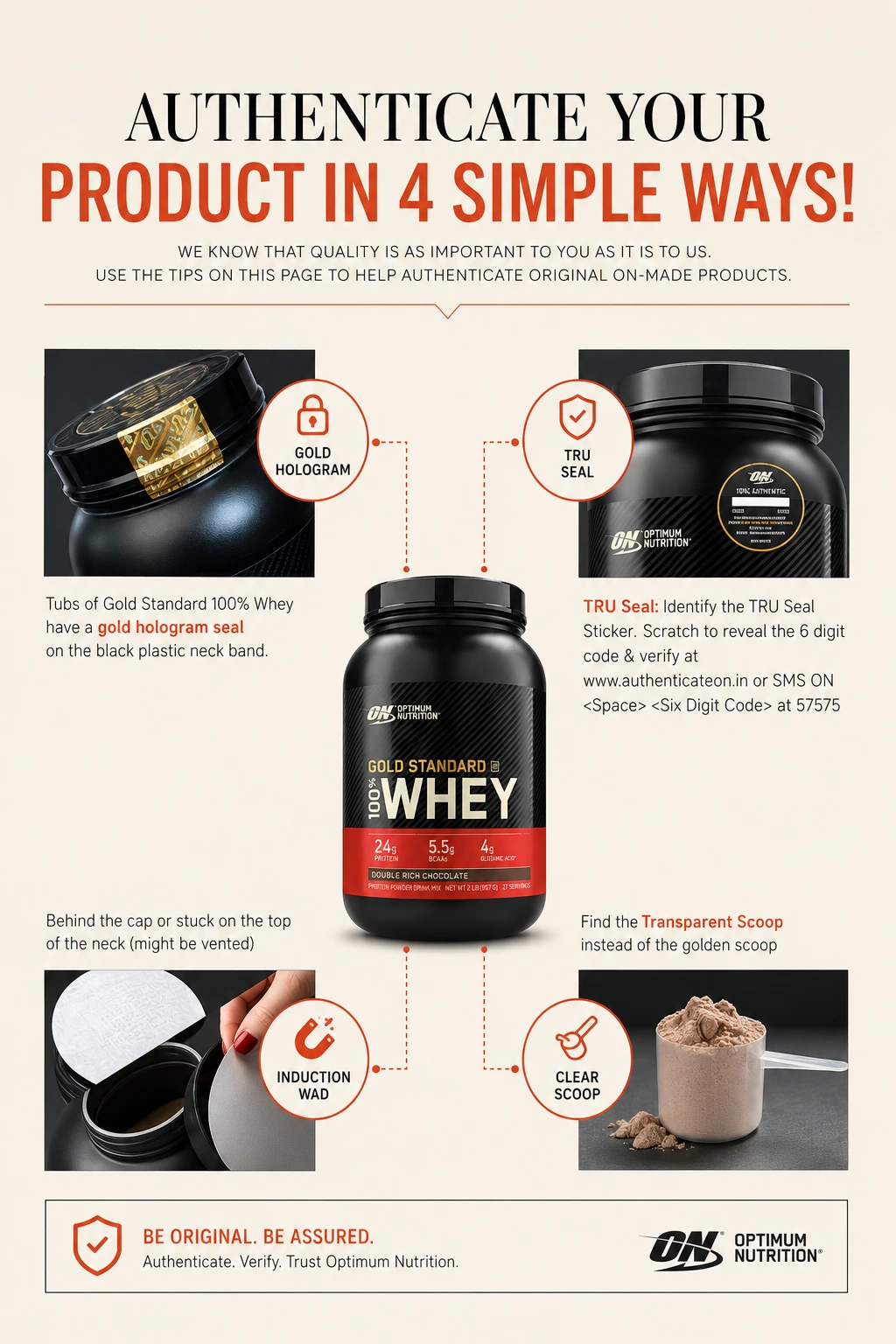
| Optimum Nutrition Gold Standard (India batch) | 24g | 23.1–24.6g (Labdoor US; India batches separate) | Labdoor (US market); India-specific data limited | Accurate (US batch) |
| MuscleBlaze Biozyme Whey (India) | 25g | 22.8–23.4g (Trustified, 2023) | Trustified independent blind purchase | ~8% low |
| Bigmuscles Premium Gold Whey | 25g | 19.1g (single Trustified test, 2022) | Trustified independent blind purchase | ~24% low |
| Nutrabay Gold Whey Isolate | 24g | 22.9–23.6g (in-house batch COA) | Brand-published batch COA (quarterly) | Accurate |
| Avvatar Absolute 100% Whey | 24g | No published independent test found | No independent data available | Unverified |
Single-batch tests are not conclusive. Batch variation is real — a brand that tested well in 2022 may have changed their raw material supplier since. The absence of independent data for a brand does not mean the product is adulterated; it means we cannot say. Treat "unverified" as a flag to investigate further, not as a verdict.
Physical checks on the powder itself
These are not definitive — no home test is — but they catch obvious problems and take thirty seconds.
The iodine test for starch/maltodextrin filler
Mix a small amount of protein powder with water. Add two drops of iodine solution (available at most pharmacies in India for ₹30–50). If the mixture turns blue-black, starch or maltodextrin is present in significant quantity. A pure whey protein should turn yellow-brown (iodine's natural colour) with no blue shift. This test is cheap, fast, and catches the most blatant filler cases. It does not catch amino spiking.
Mixing behaviour and foam
Genuine whey protein mixed with water produces moderate foam that dissipates within a minute. Excessive or persistent foam — the kind that sits for several minutes — suggests surfactant additives or high levels of soy lecithin used to mask texture problems from low-quality raw material. Not diagnostic on its own, but consistent with other flags.
Gritty or sandy texture after dissolving
Legitimate WPI dissolves cleanly in cold water with a shaker. Gritty residue points to undissolved filler, low-solubility raw material (common in WPC-35), or creatine added at spiking levels. Again, not conclusive alone — but worth noting if you see other flags.
Compare scoop size to claimed density
A 30g protein scoop should actually weigh 30g. Scales are cheap. Weigh your scoop. If the included scoop delivers 36g of powder but the label says 30g serving, the protein-per-gram ratio is lower than the label implies. Some brands use deliberately oversized scoops to reduce effective serving count.
All the home checks above are useful but probabilistic. A proper HPLC amino acid profile from an NABL-accredited lab is the definitive test. It measures every amino acid individually, making amino spiking immediately visible as abnormally elevated glycine or taurine. Cost in India: ₹2,000–4,000 per sample. Turnaround: 7–14 days. For anyone buying in bulk or spending more than ₹3,000 on a tub, this is worth doing once per brand.
FSSAI and where regulation currently fails
FSSAI's Schedule K under the Food Safety and Standards (Health Supplements, Nutraceuticals, Food for Special Dietary Use, Food for Special Medical Purpose, Functional Food and Novel Food) Regulations, 2022 governs how protein supplements can be labelled and sold in India. The regulations require that nutrient content labelling be truthful. They do not require pre-market independent verification. Enforcement is reactive — violations are pursued after complaints, not before products reach shelves.
The gap is structural. India's supplement market grew faster than its regulatory apparatus. Until FSSAI mandates pre-market third-party protein verification — as some EU members effectively require through their national food safety frameworks — the burden of proof falls on the buyer. That is not how it should work. But it is how it currently works.
What FSSAI does provide is a complaints mechanism. If you have independent test data showing a product's label protein is materially inaccurate, you can file a complaint with your state food safety commissioner. Several brands have been prosecuted under Section 51 of the FSS Act (2006) for mislabelling. The process is slow. It works more often than people expect when the evidence is solid.
What honest brands actually do
The brands that are not cutting corners have a consistent set of practices. None of them are expensive to implement. Their absence, in a brand that's been operating for more than two years, is telling.
They publish batch-level COAs — not just a generic "our product is tested" claim, but actual lab documents tied to specific batch numbers printed on the package. They disclose their raw material supplier, or at minimum the country of origin for their whey. They list the full amino acid profile per serving on their website, not hidden in a PDF that takes four clicks to find. When an independent test comes back slightly off from label, they investigate the batch and respond publicly rather than disputing the test.
AS-IT-IS Nutrition is probably the domestic benchmark here. Their NABL COAs are available on the product listing page, updated quarterly, and the amino acid profile is printed on the pack itself. That is not hard to do. It is just not standard. The brands that do not do it have chosen not to.
References
Disclosures: Naked Compound participates in the Amazon.in affiliate programme. Some links earn a small commission. No manufacturer provided samples or funding for this content. The brand data in the table above is sourced from publicly available independent test reports and brand-published COAs, not from direct lab work commissioned by Naked Compound for this article. Full policy: conflicts-policy